

With people being murdered on American streets by their own government, it seems ludicrous (if not contemptible) to prattle on about small space design. And yet, we all have to keep going with jobs and business, right?
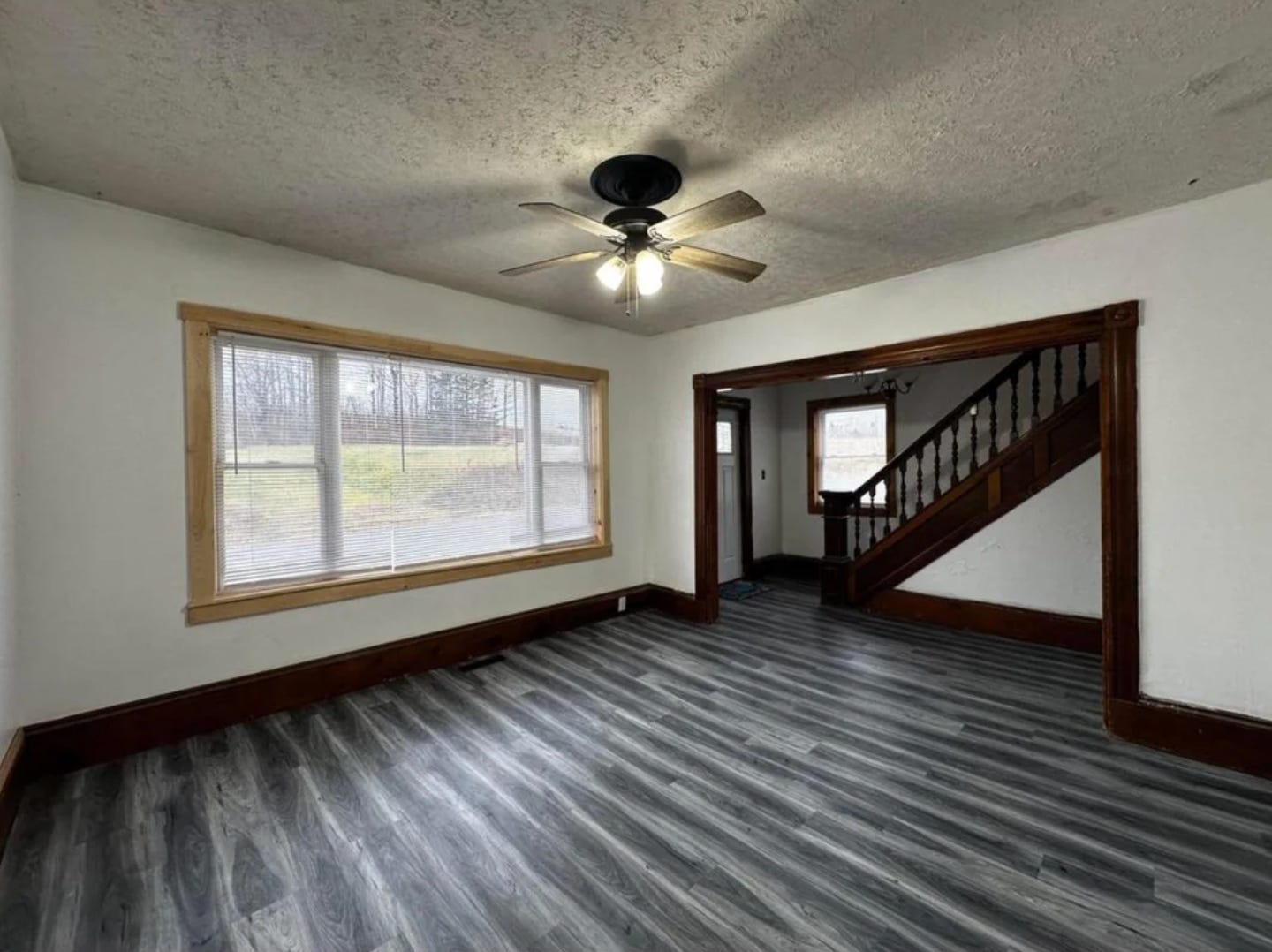
So this week, I chose a topic to reflect my mood. Gray laminate flooring, especially the design that’s supposed to look like wood, is everywhere, casting its pall on floors, walls, and furnishings. Like a dull cloud of sameness that makes everything around it look worse, this flooring resembles the inside of my brain right now.
It occurs to me that I may be insulting some readers who deliberately chose gray laminate flooring in their latest remodel. I’ll answer that with two points: One, I didn’t start out hating it; and two, I currently live with it in the house we rent in San Pedro (it’s in two of our bathrooms).
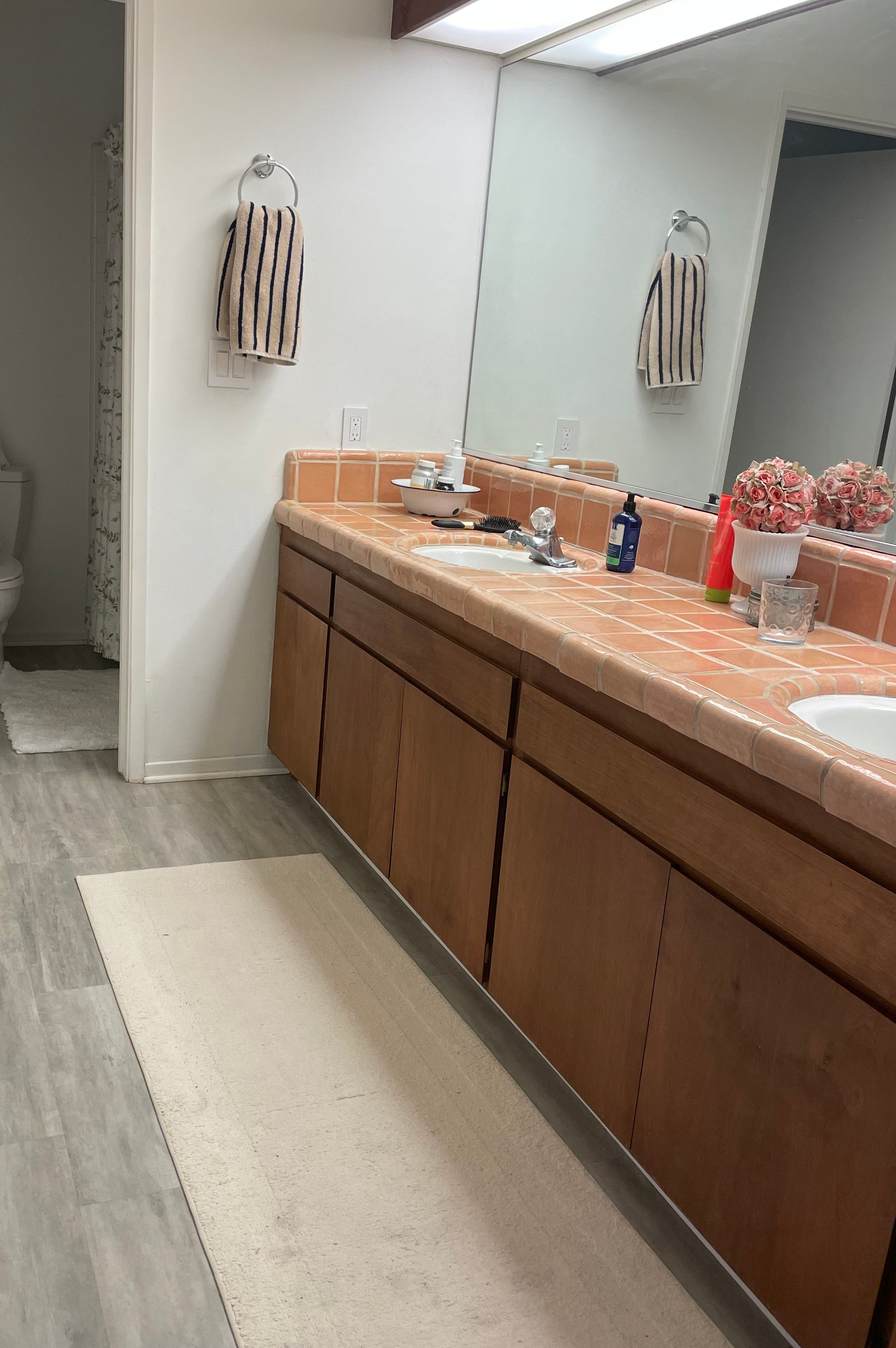
This is our master bathroom—a far cry from House Beautiful. I had the bright idea to lay down a cream rug instead of a white one. It still looks terrible. Keep going to see what I did to improve it.
I’ll discuss why I think it does very little to enhance a room, and throw out some ideas on making it better.
The birth of aluminum oxide/fiberboard/plastic flooring
A few decades ago, wood-grained laminate flooring was marketed as a durable, budget-friendly alternative to wood, wall-to-wall carpet or tile. Pergo was the first commercially successful laminate and came to the U.S. in 1994. In a few years, Pergo and its competitors made flooring that locked in place without adhesives, thus easier to install for homeowners. The image of wood graining got better and better. At the same time, engineered wood flooring and wood-grained tiles rose in popularity, reflecting homeowners’ desire for a wood-esque look even if they couldn’t have the real thing.
So everyone likes the idea of wood floors, but they usually settle for something else.
Where did all the hardwoods go?
What happened to hardwood? My husband will tell you this: “It’s too expensive.” Upscale new builds typically offer engineered wood flooring; it’s less expensive (but not by much) and very pretty. Engineered flooring is marketed as a consistent, durable alternative to traditional wood slabs and that visually the two are nearly indistinguishable.
Hardwood flooring is expensive, probably three to four times the price per square foot of laminate. It is hygroscopic, meaning it absorbs moisture, so it expands and contracts as humidity changes. Which makes it a little tricky to install.
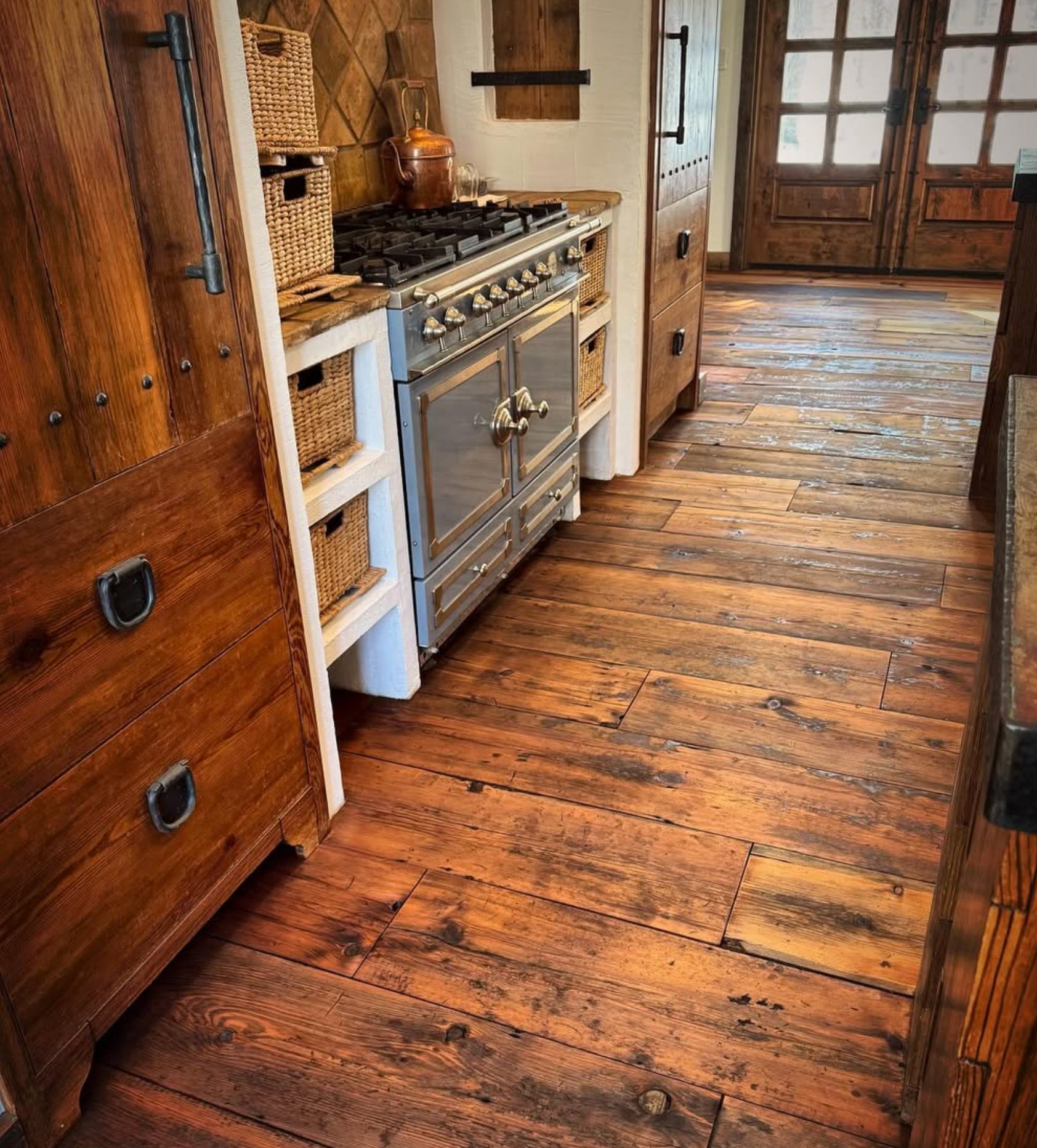
(Photo: Tom Peter Flooring)
But let me ask you this: If you were considering two houses for buying or renting, would you get excited about the one that was all tile and gray wood laminate, or would you want the one with original oak hardwood flooring throughout?
I thought so.
Hardwood is truly the gold standard in a house.
Scale back the gray
But let’s go back to gray laminate. There was a lot of excitement about how “cool” and “neutral” and “clean” it was when it first came out. It was supposed to mimic unstained barn wood that weathered over time.
The problem is that it’s everywhere now, paired with stark white walls and sometimes even flourescent lighting that does nothing to warm things up. Gray flooring is a gray hole that sucks down everything in its grayness. And it does NOT look like barn wood at all.
So the three best things to do when you’re stuck with gray faux wood laminate are PAINT IT, DISTRACT FROM IT, and COVER IT:
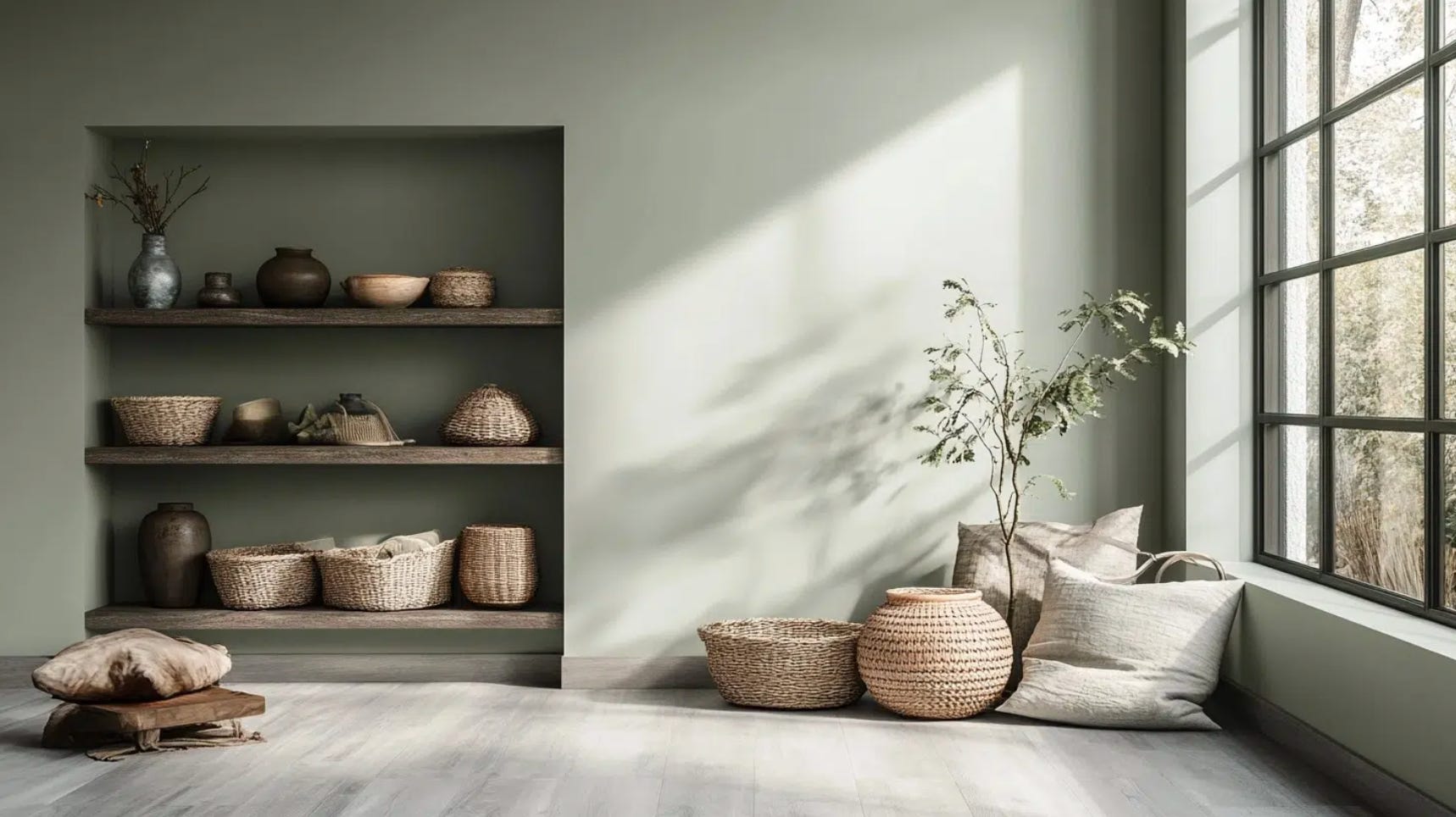
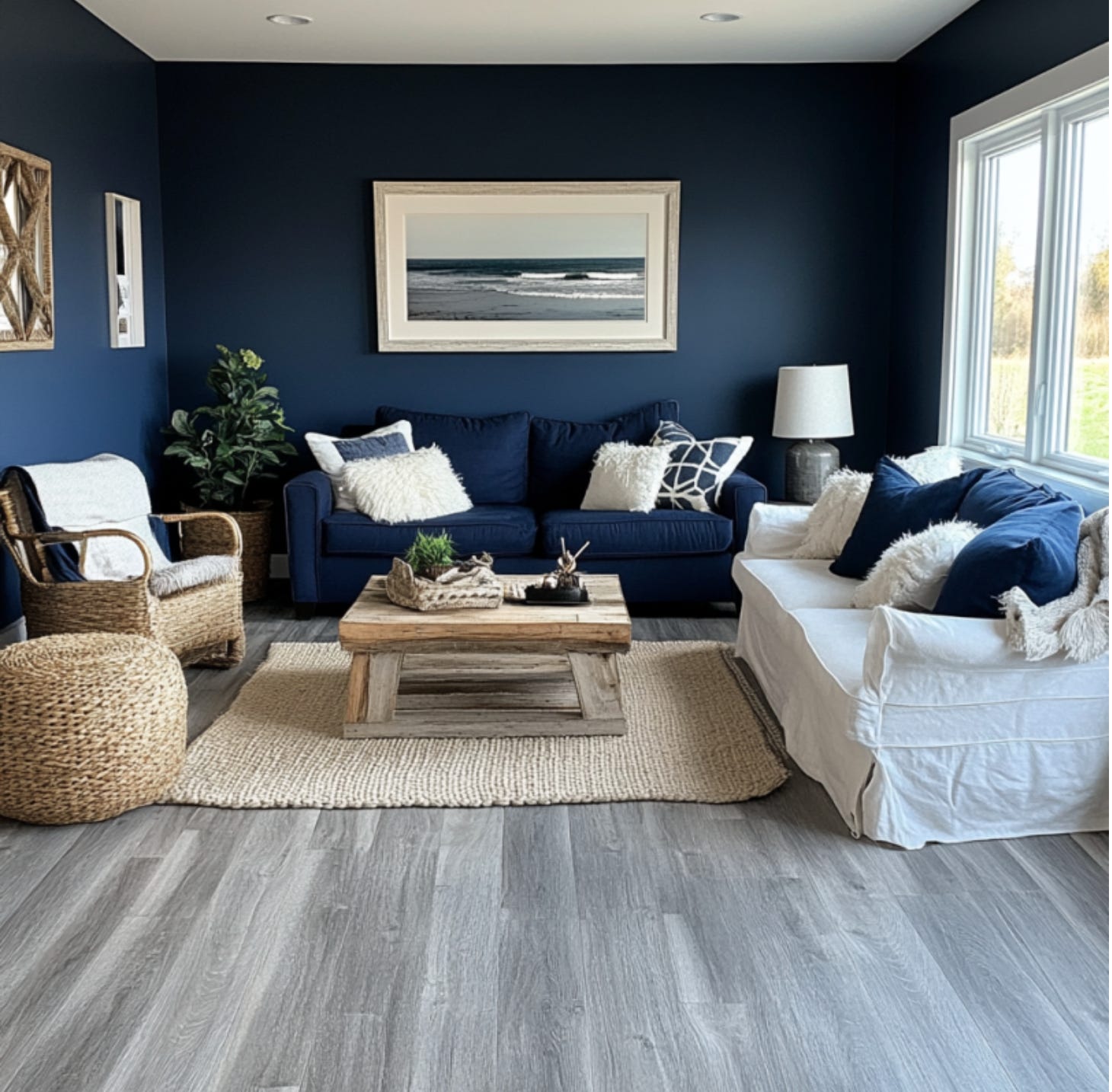
Paint it. The walls, not the floors. Choose colors that add warmth and vibrancy to the room. Depending on your gray floor’s undertones (are they more cool and bluish, or are they more warm and tan/beige-y?), you want to match cool with cool, and warm with warm. I’m not great at distinguishing undertones so I have to do a lot of testing with colors at different times of the day.
Some designers recommend additional neutral colors for a modern look but I disagree. It’s like adding fuel to the fire, in reverse. At the very least, stay away from stark whites like my bathroom, OK?
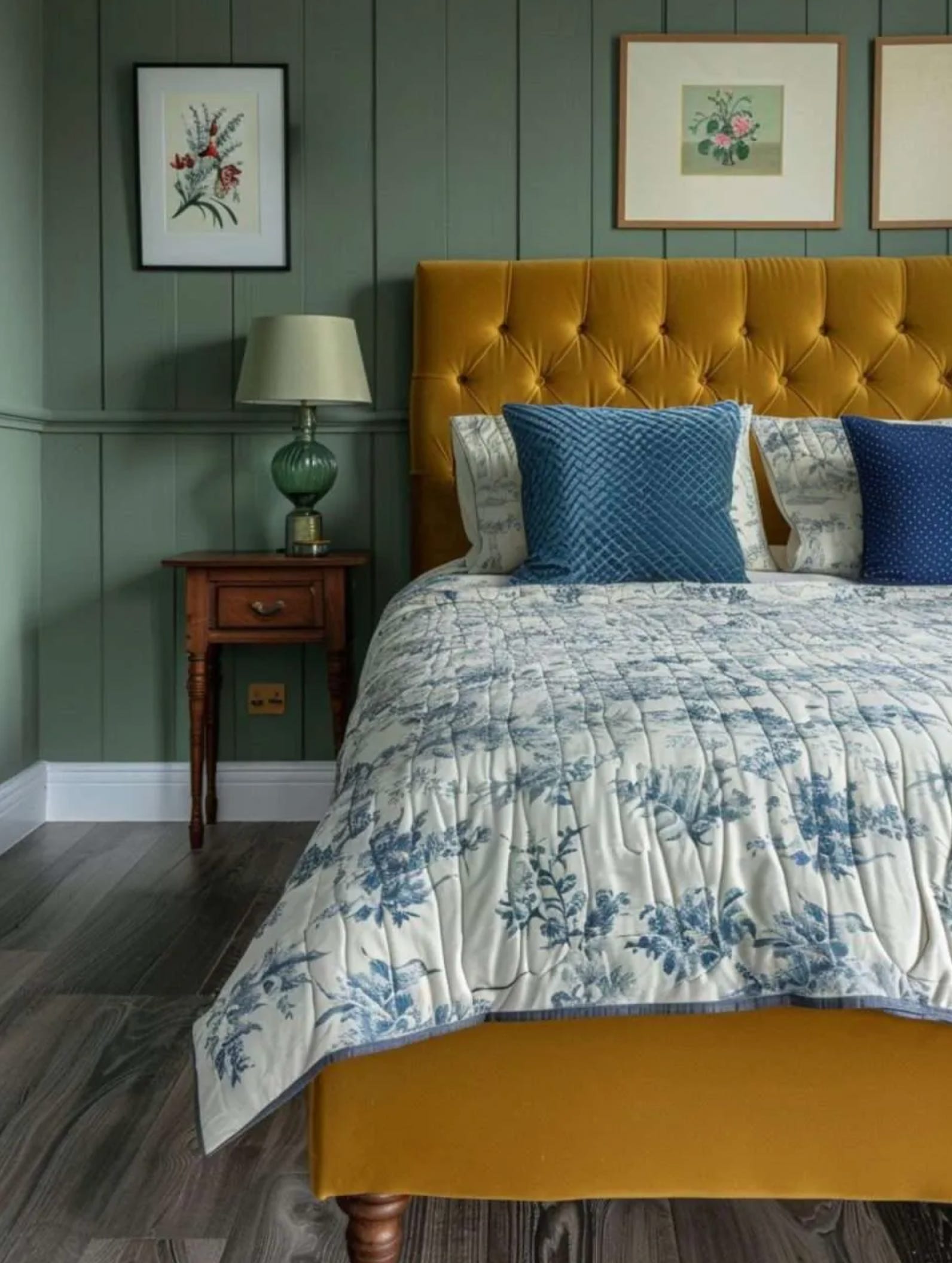
(Photo: Melanie Jade Design)
Distract from it. Use your furnishings to add depth and interest. Natural wood goes with everything and it has a softening effect on gray floors. Luxurious jewel tones mixed with some creamy or patterned pieces make the bedroom above really spectacular.
Cover it. Rugs are a gray floor victim’s best friend. They add softness, contrast, and camouflage. I made a simple rug switch in my bathroom and below is the result.
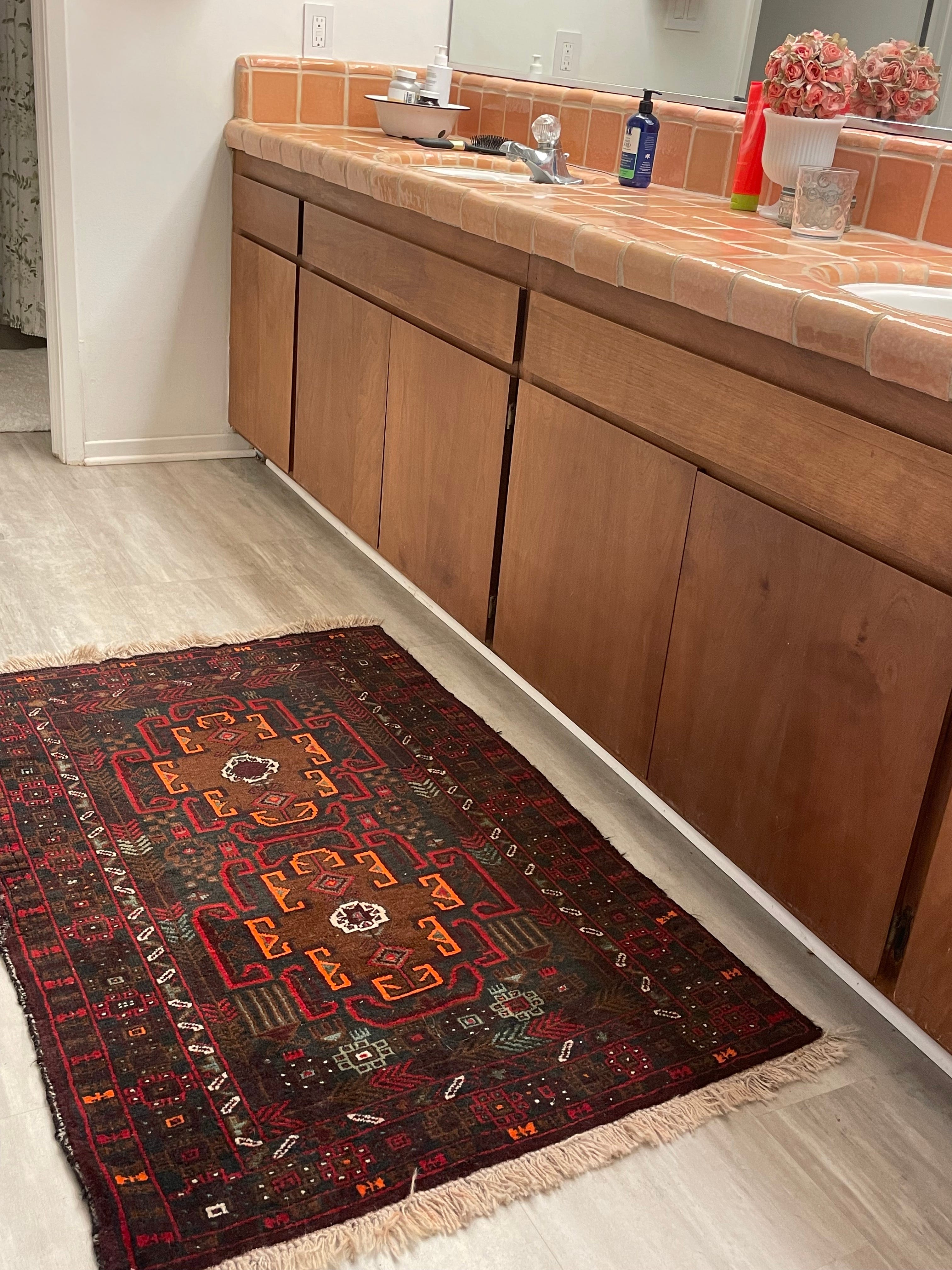
I never thought about putting a Turkish rug in the bathroom but I like the results. I need either a longer rug or a second rug that is similar but we’re headed in the right direction. Note how the colors complement the tile and brown cabinets.
I feel bad hating on gray laminate and hope that you take it all in stride. Your best revenge is to show me how you made it an asset and not a liability in your house. I’ll be the first to admit of exceptions.
And in these troubling times, we can derive comfort from having a roof over our head and flooring underfoot, no matter what the material or color.
This is such a great feature, so positive in that it is appropriate to almost anyone’s decorating tastes and/or budget. We had gray plank-esque” floors in the sunroom (an addition) of our first home, 200-year-old
I know the focus was on the floors but the opening concept is something I keep struggling with too: we need to keep our lives going so the evil doesn't win but damn it sucks to be living in a country that feels like upside down world right now. All that seems to matter to this government is power over people that simply don't matter like we use to. And we're not accustomed to not mattering, so we'll be working harder to address that lunacy. And to do that, we have to keep vibing at the higher frequencies. And surrounding ourselves with beauty and appreciating what is good as part of that. And The Velvet Chaise helps me on that front, so thanks!