

Is an heirloom a thing of the past?
The obvious way to answer this question is yes. Heirloom, a centuries-old compound word, was first associated with tools of the trade (i.e. a loom) that were passed down from parent to child, who would then continue plying that trade. Today, although you probably won’t inherit a loom, that silk ào dái tunic your great uncle brought over from Vietnam and gave to your mom who then gave it to you would qualify.
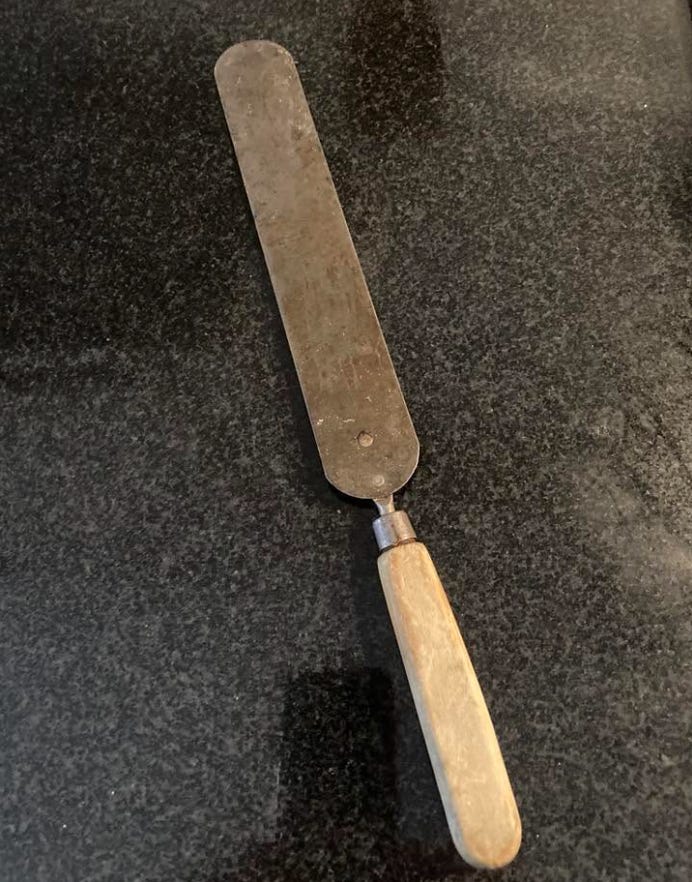
Often very humble kitchen tools are imbued with deep meaning, as Gunilla Akesson can attest. “This pancake spatula is what I chose first of all when my three sisters and I sorted through my mother’s belongings after she passed,” she says. “I watched her make hundreds and hundreds of Swedish pancakes with it, since I was a child. I love it.”
“An heirloom is any object that carries meaning across generations, whether that meaning comes from its history, monetary value, or the story attached to it,” explains Lauren Thomann, antiques expert and founder of Ageless Heirlooms and Heirlooms at Home. “In practice, they tend to fall into a few broad categories: furniture, jewelry, kitchenware, textiles like quilts or clothing, and paper goods like letters, photos, or books. But they can be pretty much anything.”
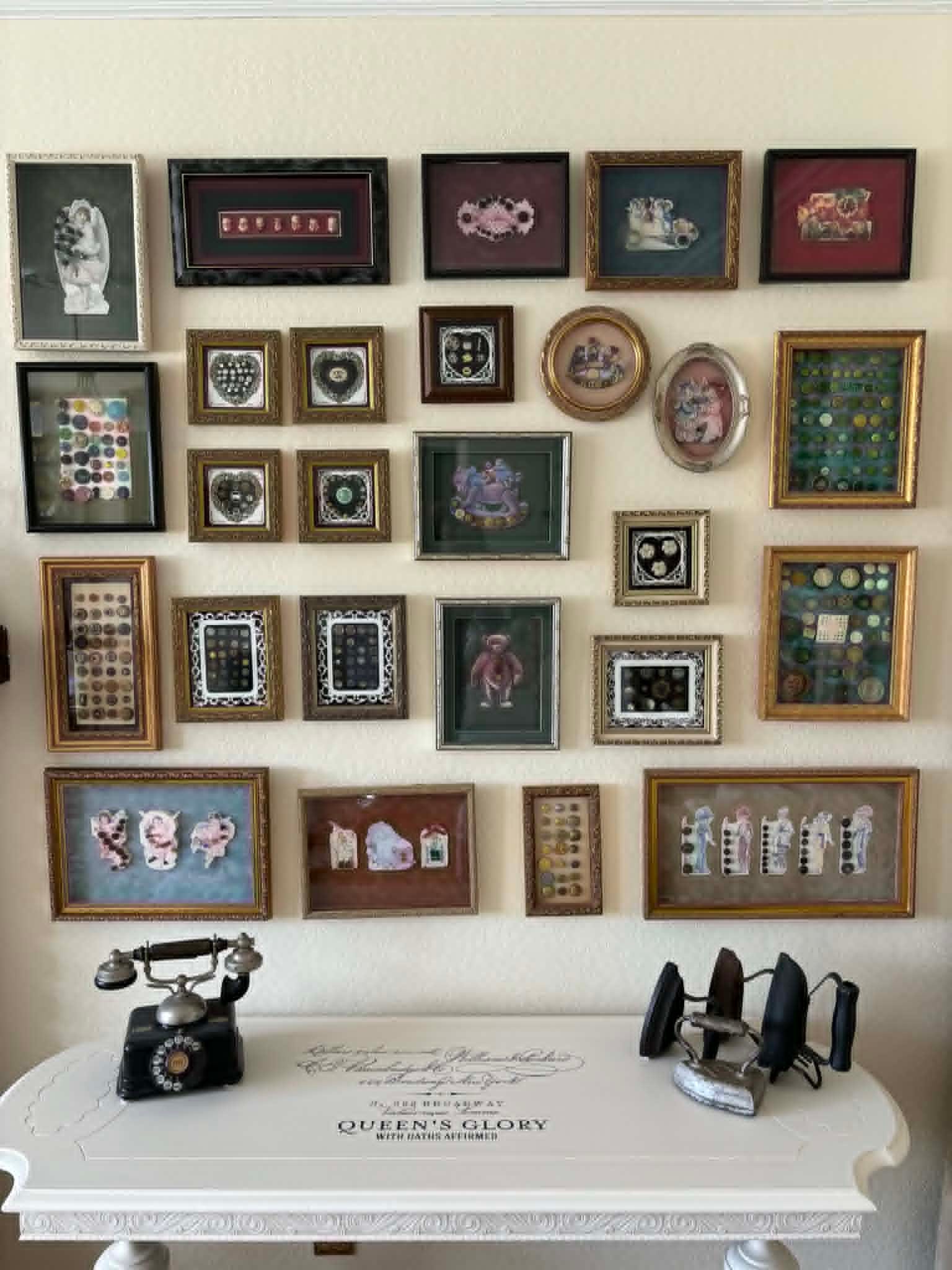
Years ago, Anita Rackerby’s grandmother told her about girls who met for a button club during World War II. “She presented her button collection to me as a gift,” Rackerby says. “I framed them all and to this day it is my most cherished heirloom.”
For hundreds of years, heirlooms have enjoyed a lofty position as the manifestation of generational wealth. The rich and titled passed down valuable items—art, furniture, tapestries, jewelry—so that their family would continue to prosper and declare their importance by displaying their ancient possessions.
The working classes had a much harder time cultivating a tradition of handing down precious objects. Theirs were often in the form of high-quality tools, as mentioned above, or humble pieces that were nevertheless beautiful and old. This is when the stories of hardship, bravery, family eccentricities, and more began to weave themselves in, adding emotional value to objects that otherwise lacked importance.
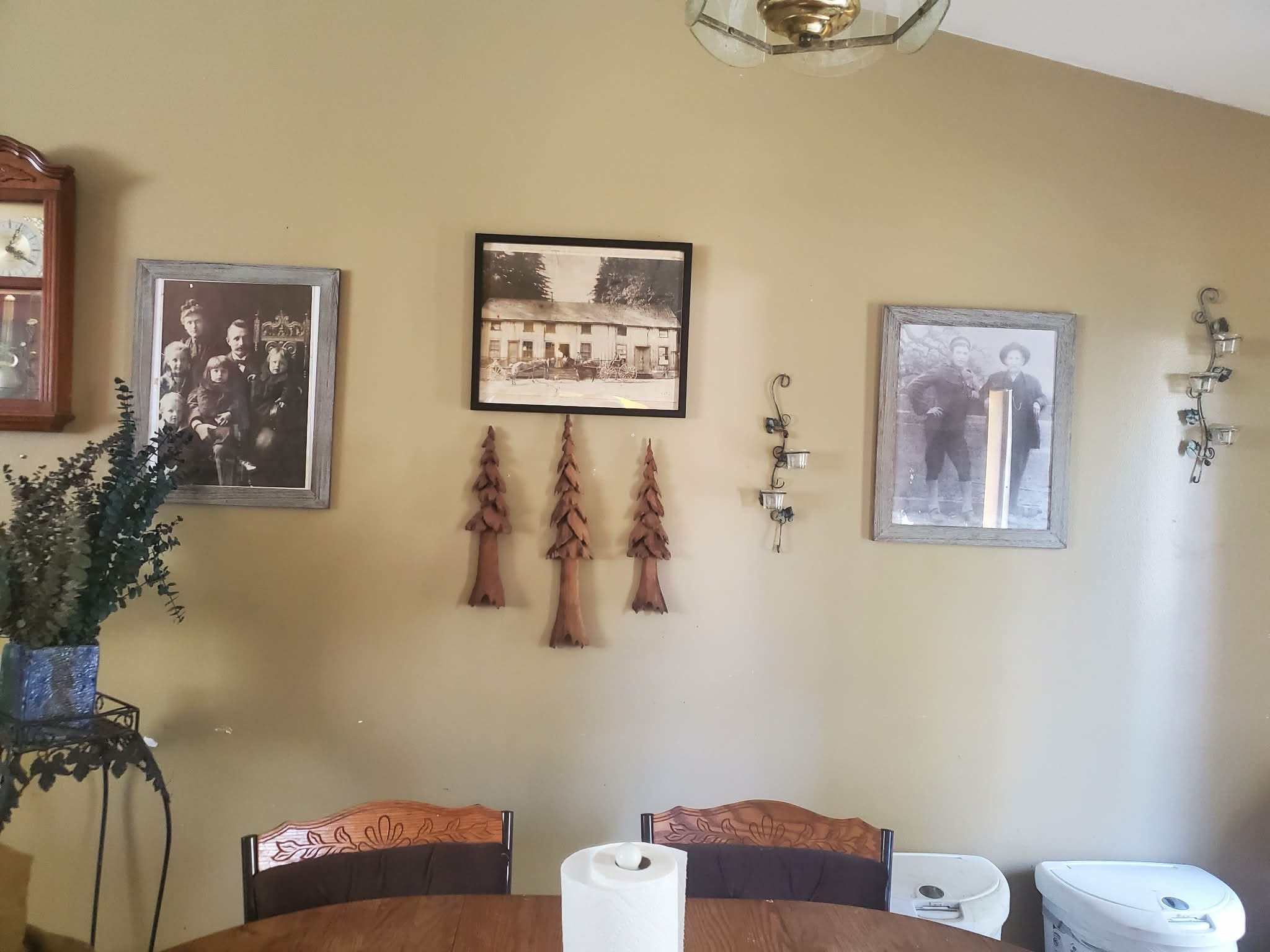
Nancy Pennewell cherishes the photos of her ancestors, and keeps them framed in her dining room. The center photo is an early 20th-century store in Half Moon Bay owned by her great-grandfather; on the left are great aunts and uncles, including a great-aunt who was a nun. “She gave me a flying nun doll,” Nancy remembers, and says she will pass these down to her kids.
Is an heirloom a thing of the past?
Another way of looking at this question is more fraught: That treasured possession, given to you by parents, grandparents, or even acquired with the intention of making it an heirloom for your kids, could very likely end up in landfills or a thrift shop after you die. Taken to its logical conclusion, it spells the end of the heirloom-passing tradition.
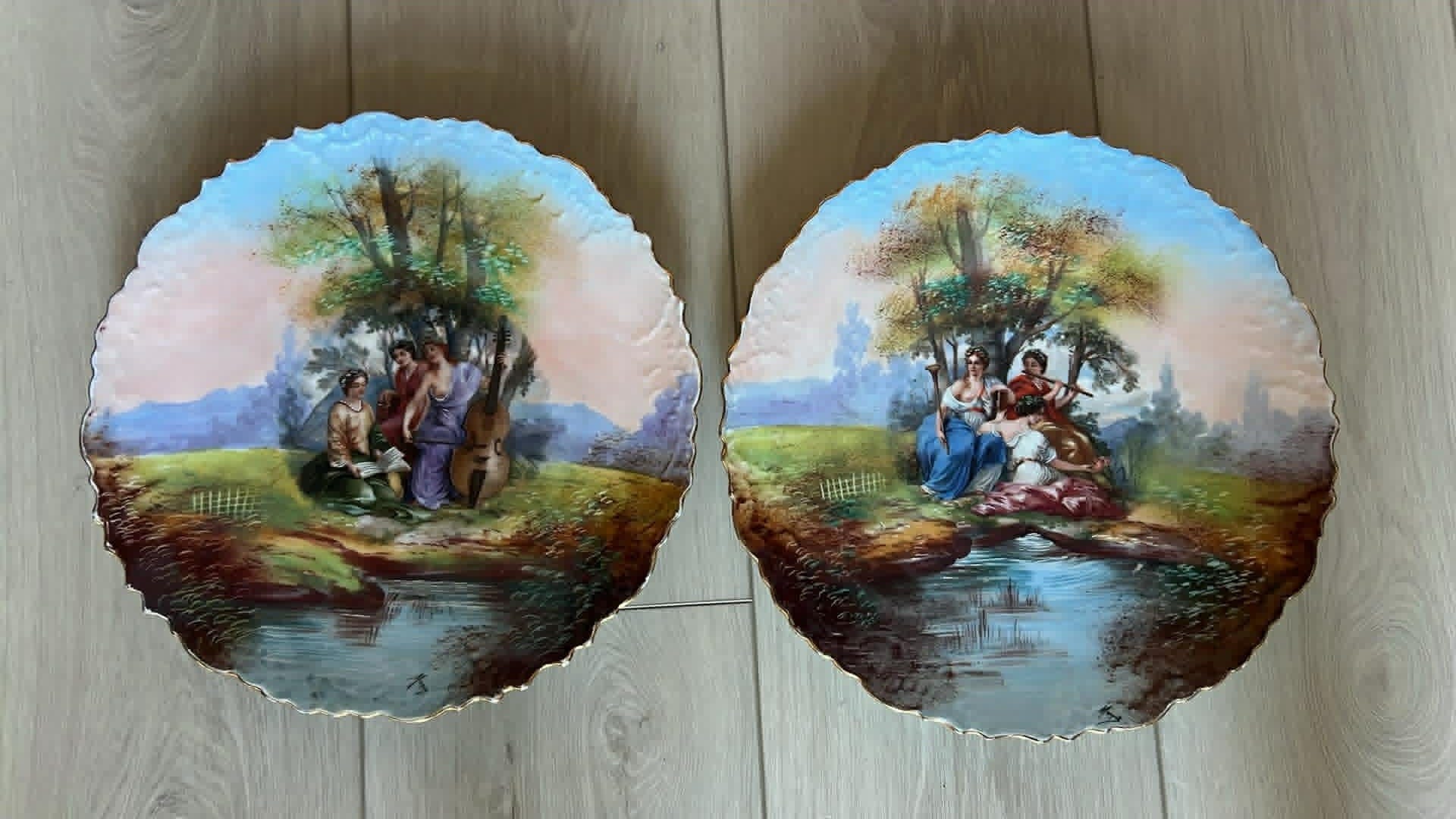
Leanne DuPay’s grandmother had this pair of antique plates hanging in her home. “My brother and I would giggle and call them ‘the boobie plates’ because of the exposed breasts,” she remembers. “So they hold memories for me because of Grandma and her love of fine things and the silliness of childhood. Today they hang in my home.”
A Diminishing Stream
Bleak as it may sound, the idea of heirlooms winding down as a family tradition is based on very real socioeconomic and cultural changes. Families are shrinking as birthrates continue downward. Skyrocketing mortgage costs, limited housing stock, and wages that have not kept up with the cost of living put single family homes out of reach for young people much longer than in decades past. In 1960, the average age of a first-time homebuyer was 24. Today, it’s 38.
In a Wall Street Journal article titled “The Family Heirlooms that Our Children Don’t Want,” a commenter had this to say about her situation:
My parents had a four-bedroom house with an attic and a garage. They were able to afford that with no college degrees and a stay-at-home mom. Forty years later, it’s all my degreed husband and I can do to afford a two-bedroom condo, no attic, no storage. It’s not even that we don’t want the stuff ... where would we put it?? I told my mom I can take whatever can fit inside of a shoebox, because that’s all I have room for.
Not ever having enough space seems to be the number-one reason people don’t bring heirlooms into their home. Spacious single-family homes are the exception rather than the rule for many early- and mid-career adults. Most city apartments are small with extremely limited storage. Condos and townhomes often do not have garages, basements or attics. So if the heirloom doesn’t quite fit in to the house immediately, there is nowhere to put it until circumstances change (or until it’s time to hand it down).
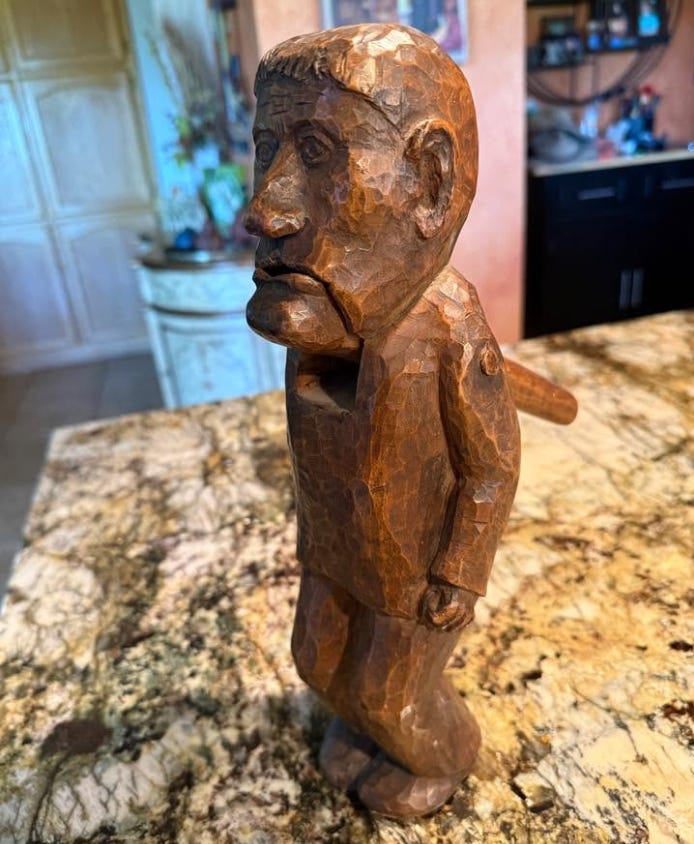
Sheri Hoeger’s father-in-law was a master cabinetmaker in Germany. To earn his certificate, he made a cabinet, but he also carved this nutcracker from one block of wood. “It is so precious to us,” she says.
Another troubling phenomenon is one of family dynamics: traditional ties holding families together are slowly eroding. They include the shrinking of close horizontal family ties (such as cousins and extended family relationships), less value placed on ancestry and family “lore,” and children moving long distances in order to accept a better job or to buy a home.
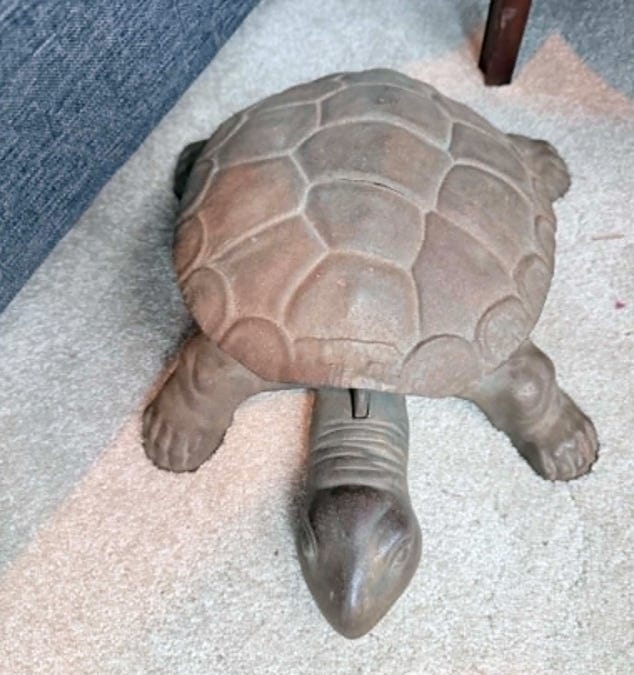
“When I was asked what I wanted from my grandparents house I asked for this,” says Michelle Kelly of her cast-iron turtle spittoon. “My mom thought it should go to my brother because it’s boy-like but I’m the only one who knew the story. It is from my great- grandfather’s bar.” She says it’s worth about $600 but she’d never sell. “I liked it before I knew what it was worth.”
At its extreme, eroding parent/child relationships has led to what some are calling a “no-contact epidemic.” One researcher found that 27% of American adults 18 years or older had severed ties with a family member, usually their parents. This increasing choice of personal well-being over unquestioning filial duty has made post-Boomer generations more likely to distance themselves from their family.
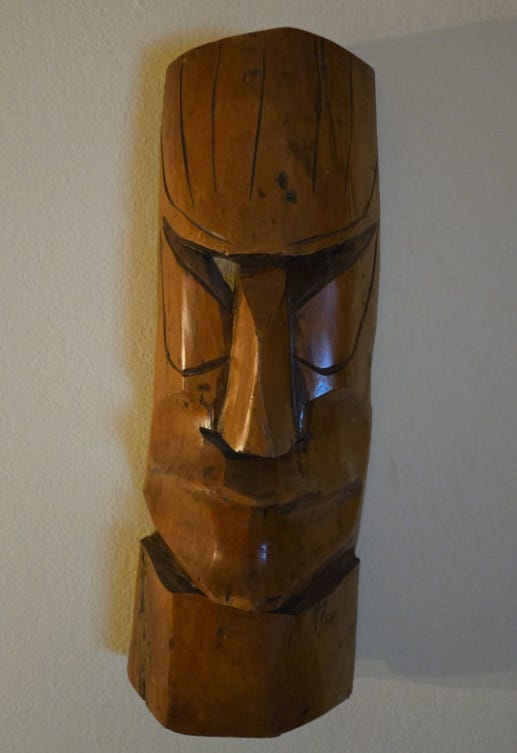
Melanie Griffin thinks her father bought this carved mask when he was in the Navy. “His name is Sam and at Christmas he dons a Santa hat,” she says. “I love Sam because my dad loved Sam.”
Divorce, single-parent households, even the rising number of older family members selling their homes and moving into a senior community and perhaps being forced to part with their valuables earlier than they expected, also play a part.
The weight of all these changes bears down at the same time with significant shifts in home furnishings taste. Antique furnishings wax and wane in popularity, and since the 1990s have suffered a steady decline. Heavy solid-wood (or “brown”) furniture is not in vogue at all. “Flat-pack” pieces that are plain, modern, lightweight, easy to ship, and budget friendly are what the three youngest generations are leaning towards today.
Reddit user ExtremelyRetired confirms the changing tastes of her younger family members. “I used to entertain frequently, and I loved having good china, silver, and glass,” she says. “Now that I’m retired, I’m getting ready to downsize, and not a soul in the family wants so much as a teaspoon. They have no associations or memories for specific objects as I do, and they use paper plates or order in. I’ve already tried to sell some things, but there’s absolutely no market for “brown furniture” and it’s even hard to give away most Victorian pieces.”
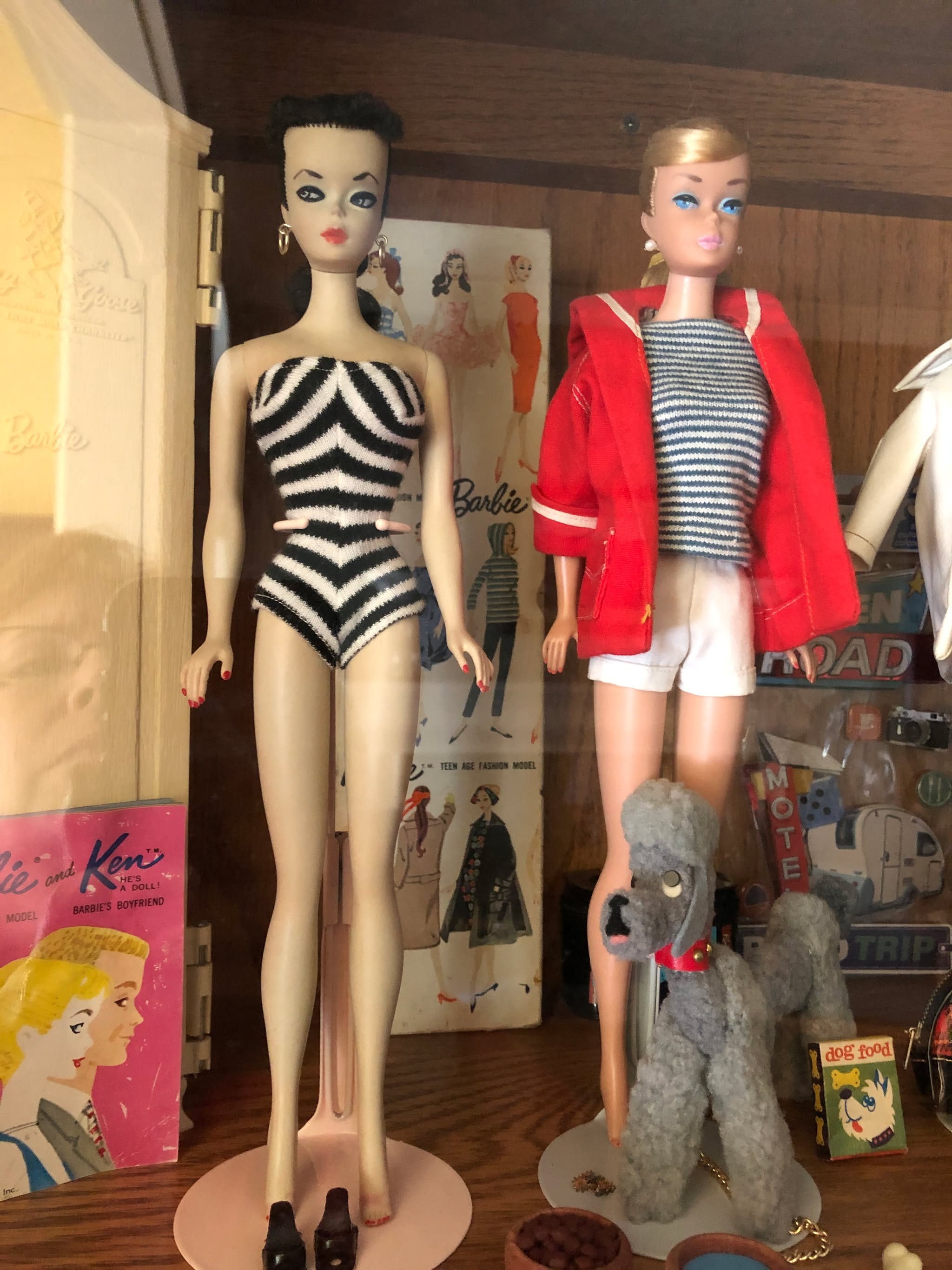
Ellie Hubbard’s late husband gave her the first edition 1959 Barbie doll on the left. The gift inspired her to continue adding early Barbies and now she has an extensive collection. “My children will inherit them,” she says. They know the value and will keep anything that they want and then sell the rest.”
Boomers (born between 1945-1964) are the last super-sized stronghold of possessions. Between keeping the stuff that was left to them and acquiring a great deal of their own stuff along the way, aging Boomers are singlehandedly keeping the stream of Depression glass, christening gowns, mahogany dining sets, and eight-piece Royal Worcester china sets flowing for a while. Lots of household items are left for heirs to sort through and get rid of but the things we try and save are dwindling.
Will we know what we are missing?
This is a tragedy for some, and a complete non-issue for others. The two extreme positions are these: Either you honestly have no desire to hang onto old stuff even if it’s “been in the family” for several generations, OR you feel strong connections with people you loved through the things they have handed down to you, and will not willingly part with anything.
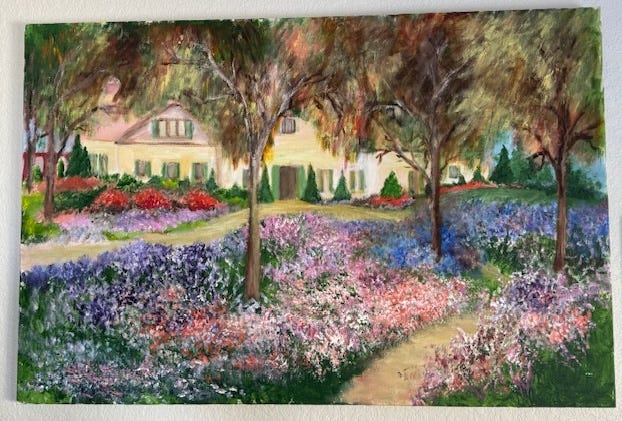
Lee McCall was very close to her maternal grandmother, who became a painter later in life. “In truth, I could write an entire book about her life, her resilience, and the countless ways she shaped the person I became,” Lee says. “Having something created by her hands—a piece of her creativity and spirit that remains present in my daily life—is one of the greatest blessings I could ask for.”
Once you determine which camp you are in, try wearing the shoes of the opposite side. Can you imagine yourself happily awash in old things, some with stories remembered, some without? Alternatively, do you yearn for liberation from family possessions that have piled up over the years?
The majority of us probably have a little window of understanding for both sides.
Reddit user reebeebee had wealth in her family a few generations back, and still has a few items of sentimental value passed down to her. Her great-great-grandmother’s engagement ring with engraved initials actually fits her. She also has an Italian silver sugar and creamer set she believes was purchased while her great-great-grandmother was on a Grand Tour with her parents in the 1880s.
“I’m probably not going to have children, and neither is my brother,” she says. “It is a little sad that there’s nobody to pass these stories and objects on to, but there’s no guarantee that any kids we had would be interested in any of this anyway. Many people just see this stuff as old crap to be sold, melted down, or tossed.”
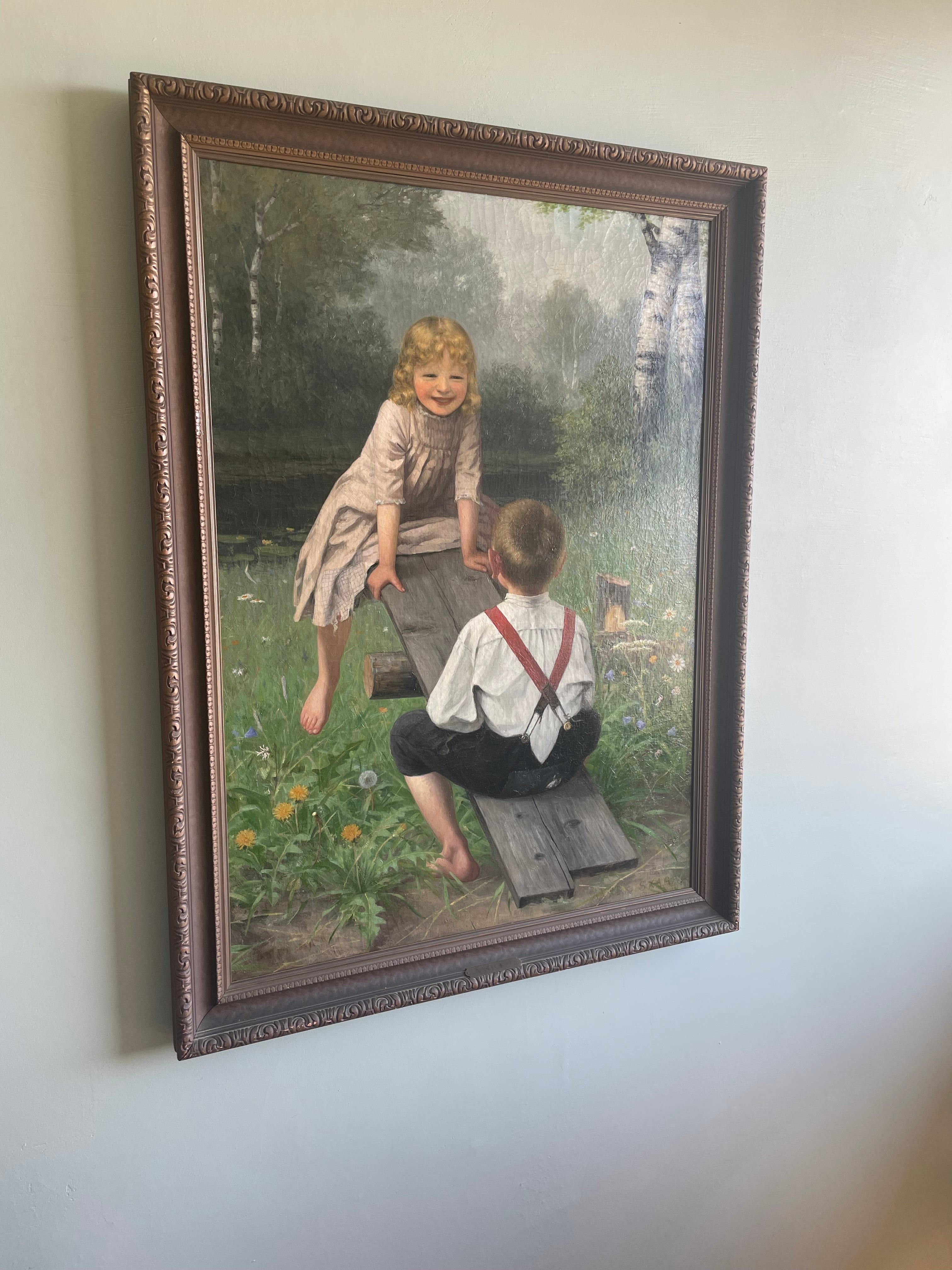
This 1889 painting is probably my most treasured heirloom. Painted by Anker Skaga, an obscure Norwegian artist, it’s worth only about $1,500. It has deep emotional/familial value because it belonged to my grandparents, then my father, and then me.
Some things never change
Statistics and biased opinions aside, family connections through treasured physical objects continue to have a potent hold on people. Thomann has seen many instances where family heirlooms have languished in garages for years before their owners finally came around.
“I’ve seen many people inherit something they didn’t initially want, like an old but sturdy-as-a-horse rocking chair, and then eventually loving it (or regretting it for decades if they let it go),” she says. “Once they understand where it came from or start using it in a way that fits their life, it shifts from feeling like an obligation to something they genuinely value.”
The heirloom may come to you with its own story; the secret is adding to it with the story you are living yourself, today. Then maybe it will carry on with a story tomorrow. No guarantee, but a hope.
I was lost in my memories and imagination so completely that I didn’t want this read to end. What a gift. Thank you.
Thank you, Erika, gorgeous article. Technology has replaced the understanding of legacy, and heirloom disinterest is one of many casualties. I hold, with both hands, the single, sole demi-tasse spoon, given to me by my late FIL, during what was the last visit to France where I saw him, healthy and well. It is a delight, and I use it only on Sundays, for our cherished "coffee au salon" - another gone "legacy" of drinking that decaf in a proper porcelain cup and saucer, and sipping it slowly, in a device free space. Lots of love, JB