

In a way, putting a television in your living room in 1958 was a lot easier than it is today. A TV back then was a substantial piece of furniture that was a point of pride for any family who could afford one. It would hold a dominant place in the room and would define everything else around it. At the very least, it offered a very handy flat surface for framed photos, ashtrays, and potted plants.
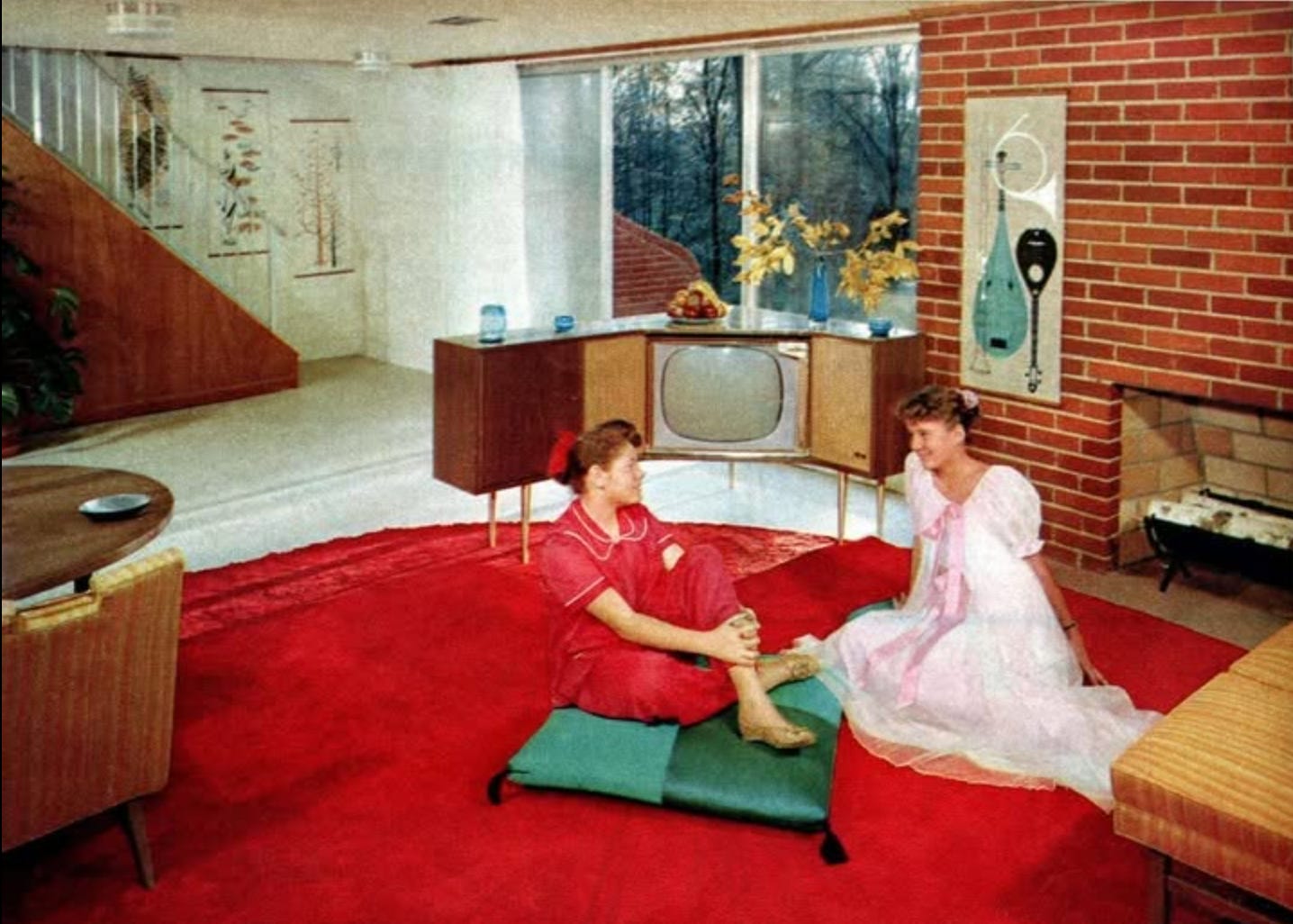
In the room where families gather, the central core was first a fireplace, then a radio, and in the 1950s, it became the television set.
Since then, the television has undergone remarkable changes. Screens grew inch by inch every year, color was introduced, and the remote control was invented. In the 1970s, an unfortunate detour into projection TVs gave people a huge screen (like being at the movies!) at the cost of terrible picture quality. The first flat-screen TVs in the 1990s were plasma and pretty heavy; they were sold with special mounting hardware that could bear the weight.
By the late 2000s when TVs became smart, skinny, and tubeless with LCD technology, they were no longer rooted to the floor or incorporated into furniture. For the first time, TVs were treated more like necessary appliances and less like a substantial feature of the living room. And that’s when things got awkward.
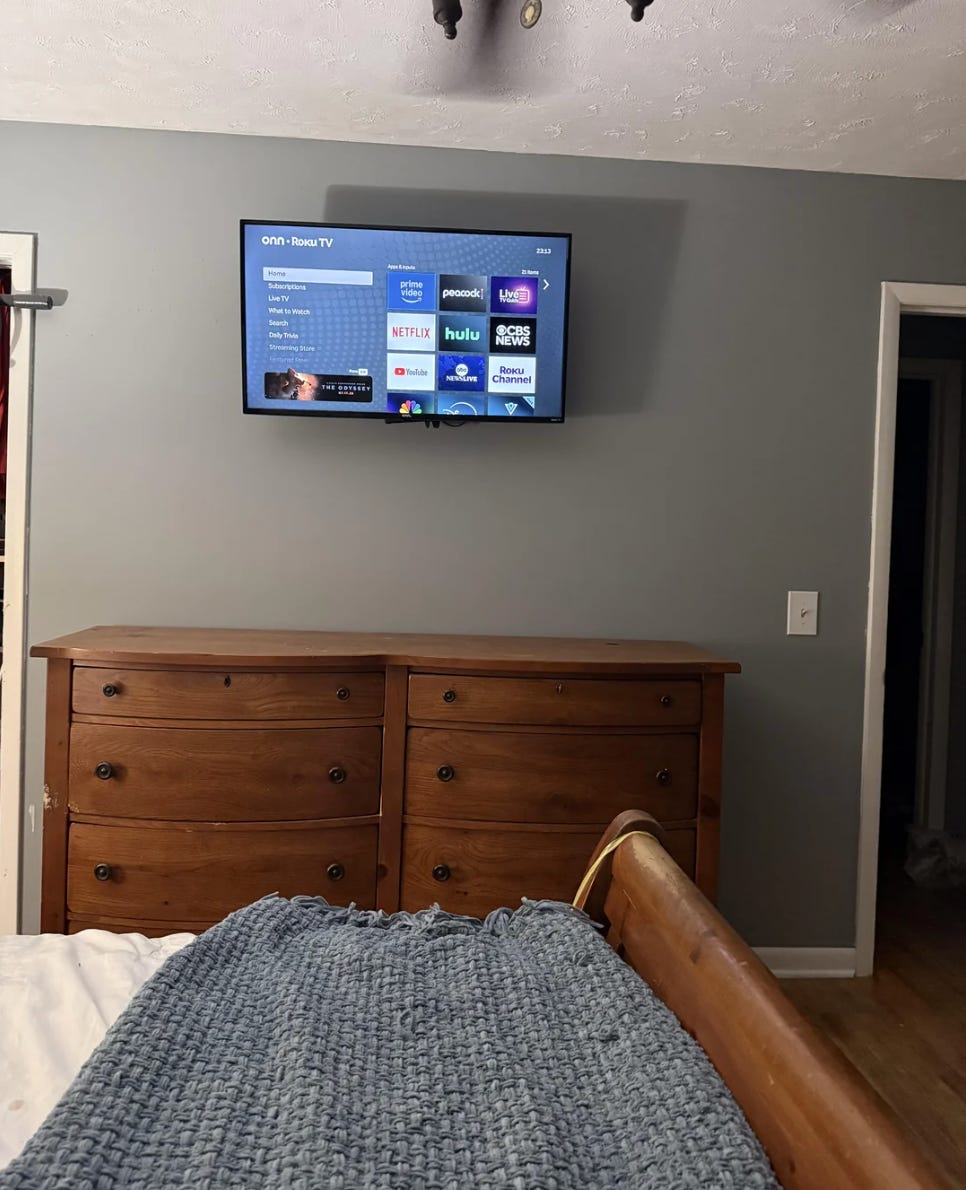
A guy on Reddit wanted help decorating his room so that the pre-existing wall-hung TV wouldn’t look like it was floating in space.
Here’s where we are: Supersized flat-screen LCD TVs (98 inches and higher) with gorgeous, crisp screen quality. The cost of a TV has plummeted (unless you count all the streaming services you subscribe to) so many people can afford to put one in every room. All of this means that large black rectangles are taking up more and more of our wall space.
A good deal of design dilemma conversations in the 2020s involves where to put the TV. Or rather, how to hang the TV on the wall facing the couch and avoid hanging it over the fireplace. (Honestly, I never loved this solution but wasn’t aware of it being considered a design faux pas. More on this later.)
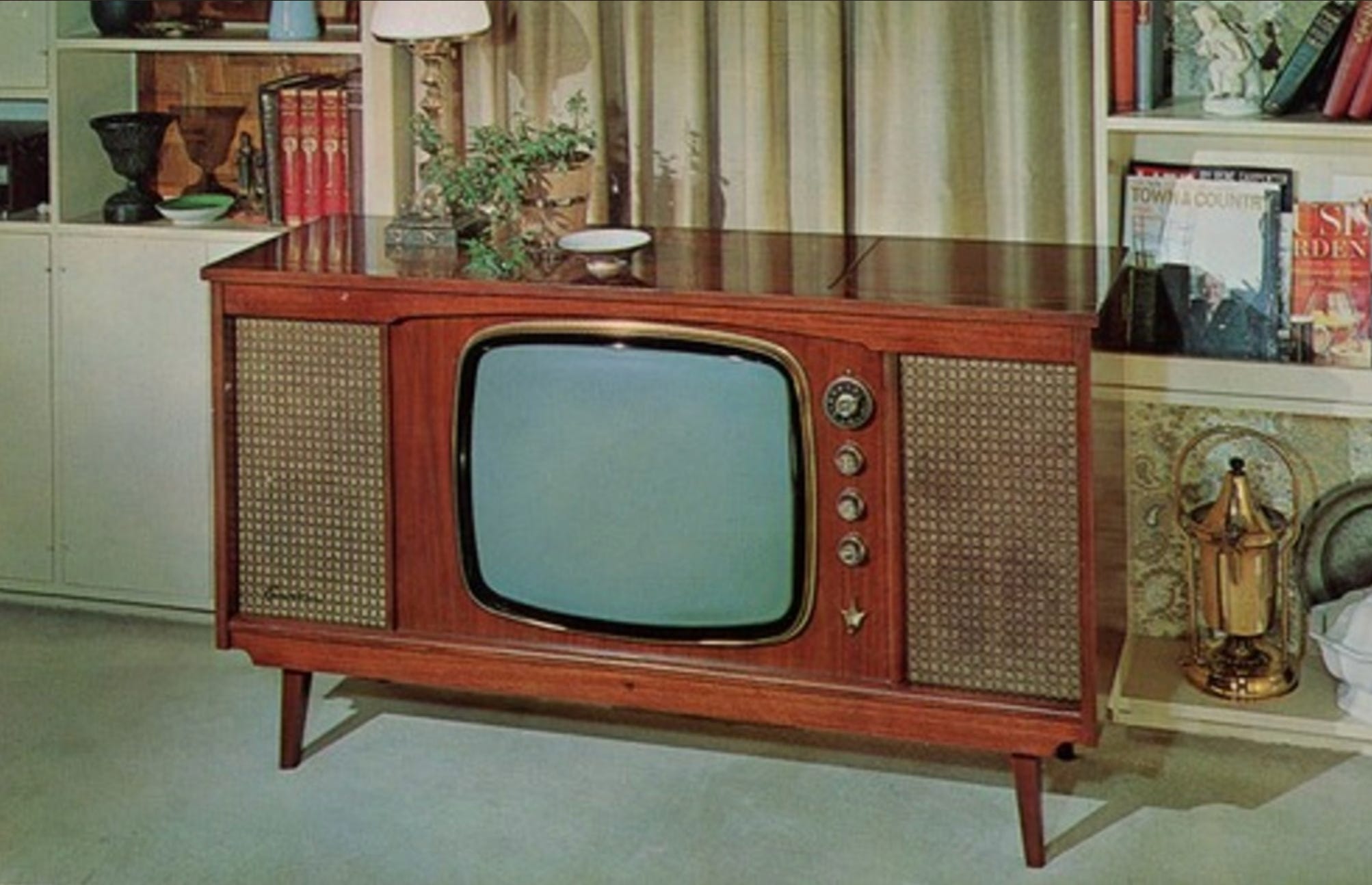
A TV “set” in the 50s and 60s often included speakers, a record player, and a radio.
Decorating decisions for a changing TV
When TVs became widely popular in the middle of the last century (5% of U.S. households had one in 1954, and around 90% did in 1962), they had 12-inch screens with huge, heavy vacuum tubes behind them. Manufacturers encased TVs in cabinets, or consoles, in order to protect the tubes and also hide the fact that the TV was essentially a large piece of heavy machinery.
These cabinets were marketed as fine pieces of craftsmanship, suitable for even the most elegant of homes.
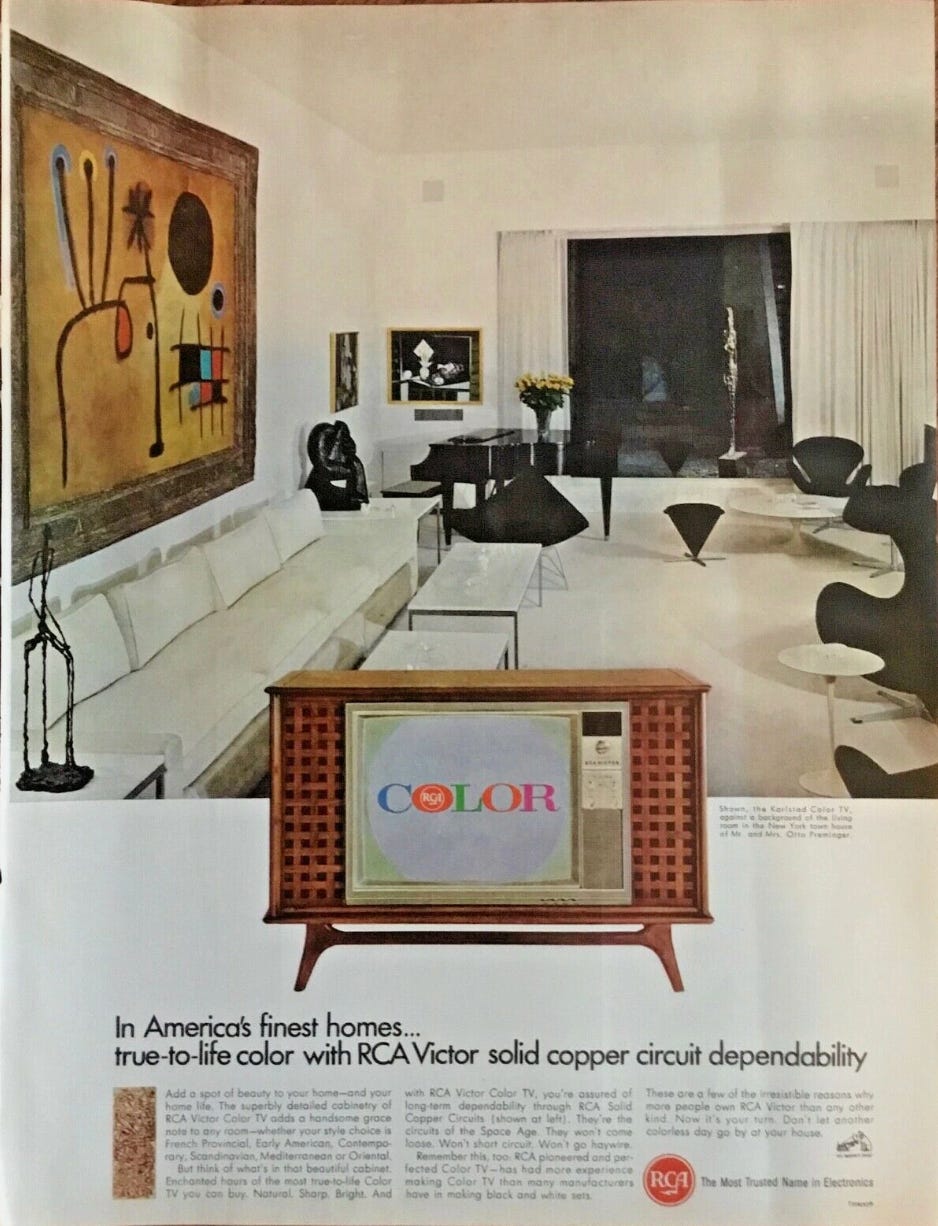
A 1966 RCA ad claims its Victor Color TV will add a spot of beauty to your home, even though there is no TV set visible in this ultra-chic living room.
If you are around 25 to 30 years old, your first TV would have had a screen about twice as big, at 24 to 27 inches. In the late 1990s, these would often reside behind the doors of a cute French Country or Mission Style armoire-style cabinet.
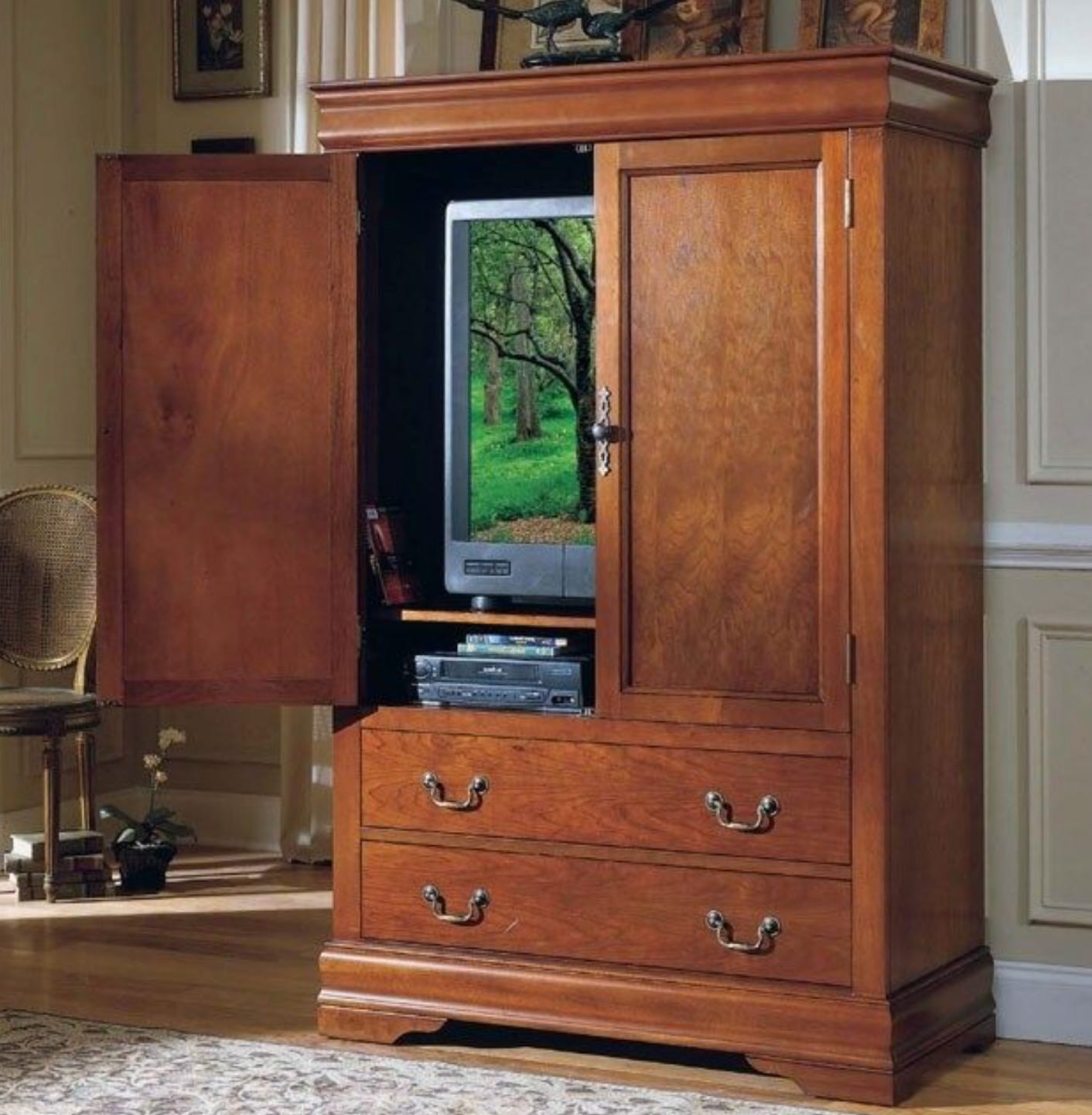
As outdated as they might seem now, media armoires were a great way to contain the black hole of a constantly growing TV screen.
The armoires, wall units, and media cabinets that Gen X, Millenials, and Gen Z grew up with have become all but useless, since their framework for a TV is now too small. They are also considered dated as a furniture style.
One of the greatest advantages of the flat-screen TV evolution for the apartment and small home dweller is that wall-hung TVs take virtually no floor space, a complete departure from the big pieces of furniture in decades past. But they are somewhat of an eyesore without some kind of framework to make the big black screen look like it belongs. If the wall-hung TV can’t contribute to the aesthetic of a room, then it needs to blend in.
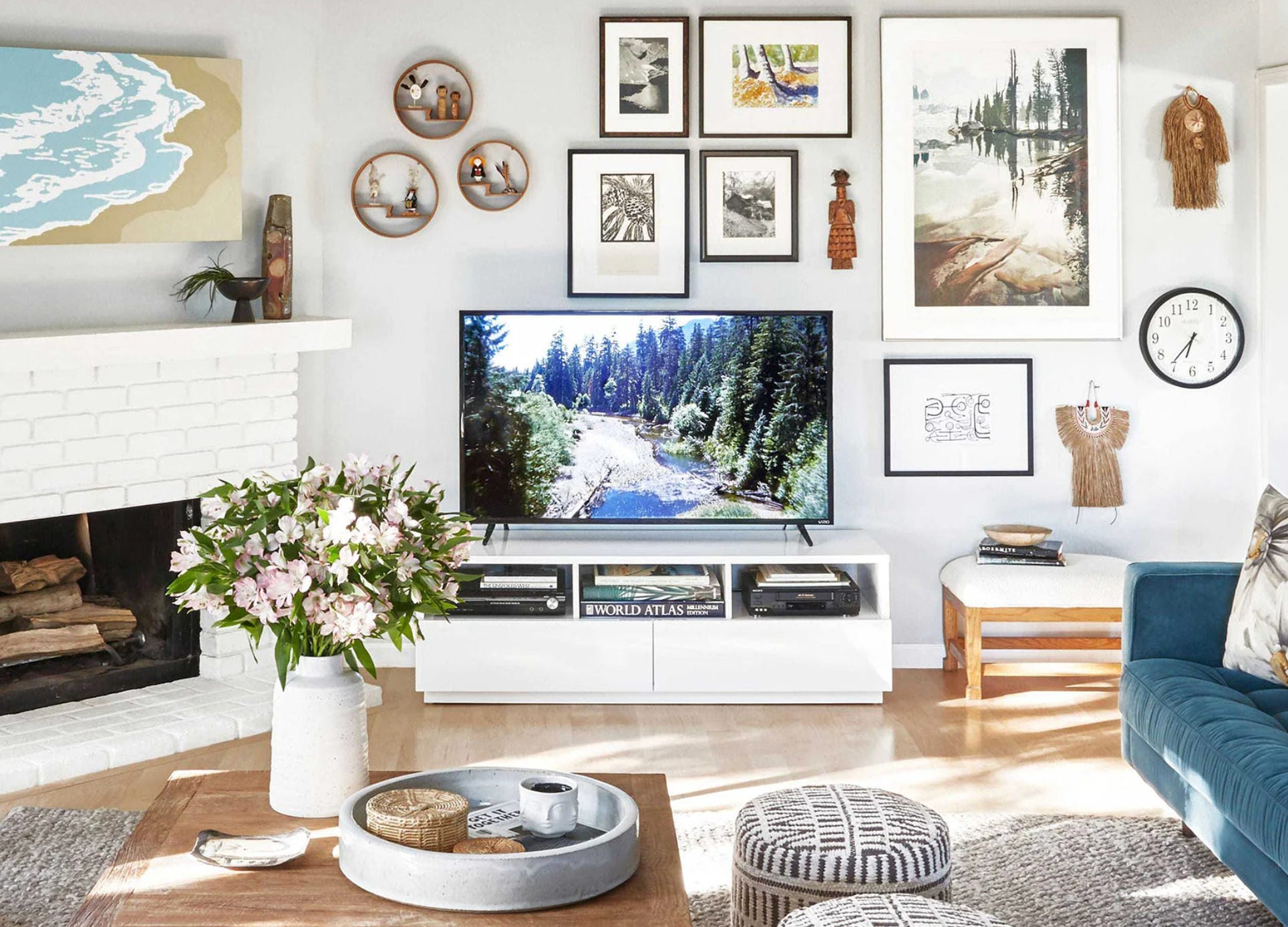
Designer Orlando Soria says this about TVs over fireplaces: “The only thing I care about in this world is TV’s NOT being above fireplaces. It’s the hill I chose to die on years ago.” This layout is one of his ideas for avoiding it. (Photo: Orlando Soria)
Going back to the fireplace debate, it’s a fact that using the wall above the fireplace for the TV is a very popular choice. Whether the TV is an art TV or a black screen, people have learned to live with it as a focal point, maybe hoping the beautiful fireplace below would act as a counterbalance. But it has a cost other than aesthetics, as you’ll see in the photo below.
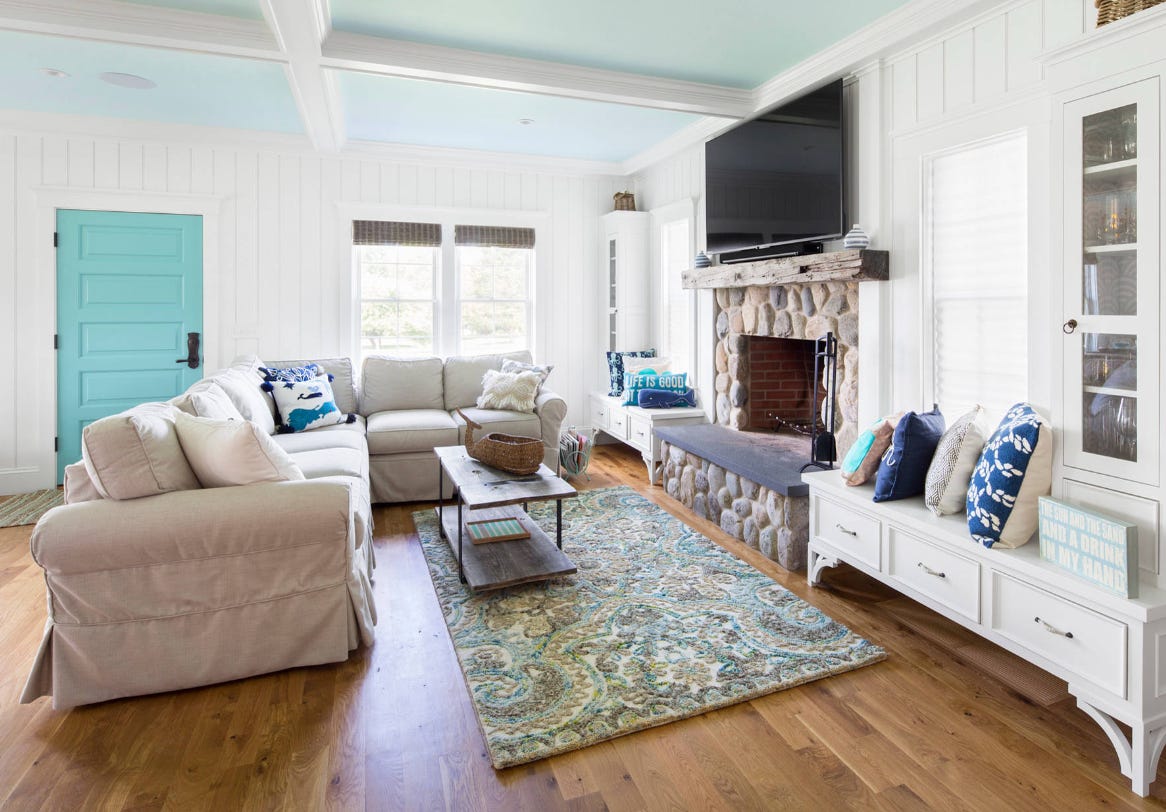
The optimum height for a TV is at eye level … when you are sitting down. Obviously not the case here, even though it is a pretty living room. That’s another point scored for the old-fashioned TV consoles: they offered a better position for viewing. (Photo: Houzz)
The current disguise solution is Art TV, which uses sensors and non-reflective glass to display very real-looking Picassos and Van Goghs on your TV screen. Originally launched by Samsung as The Frame TV in 2017, it’s now available from a number of makers. Keep in mind that these TVs often have reduced picture quality and color vibrancy, at least according to this critic. There’s always a tradeoff.
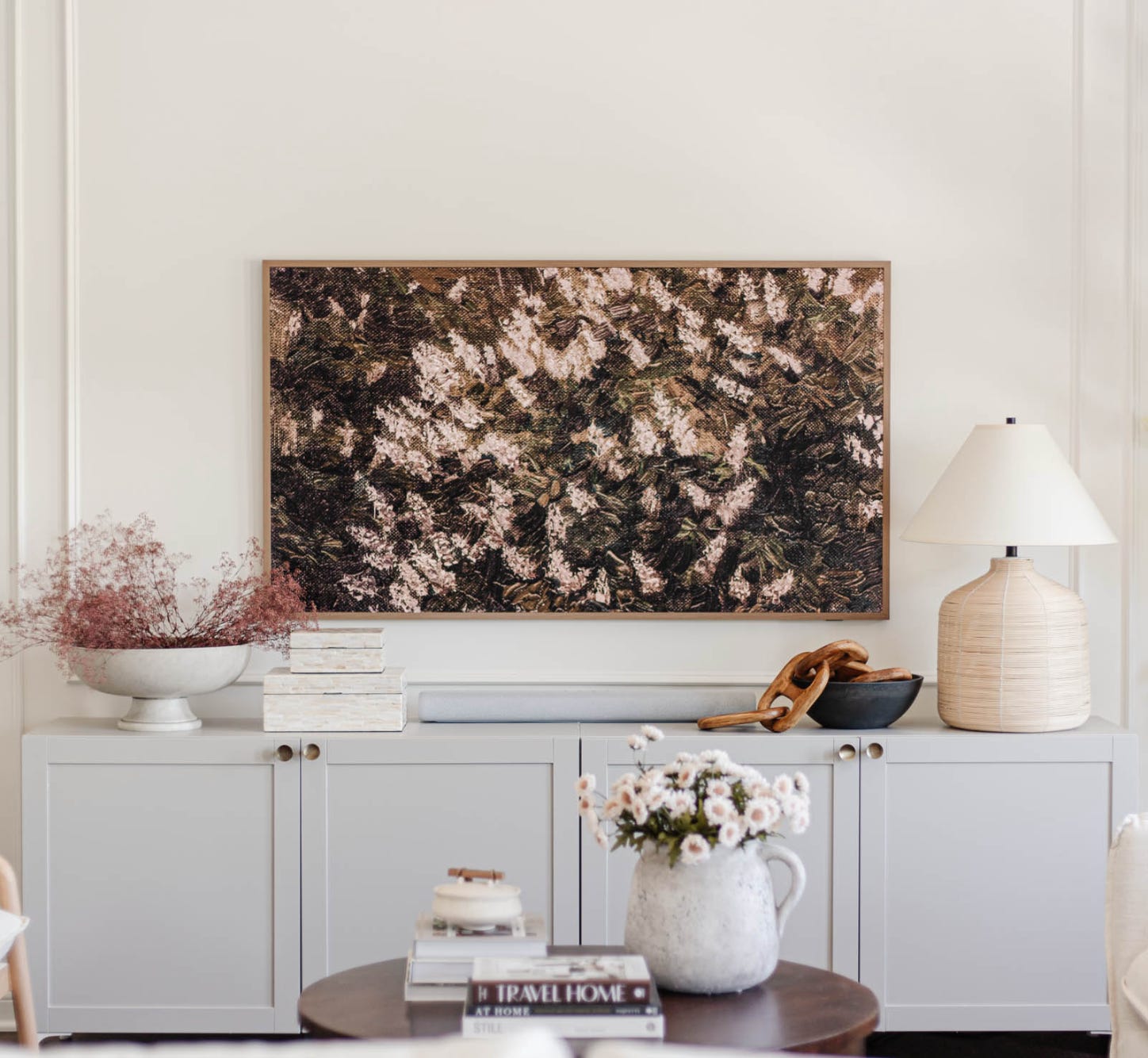
Art TV displays “play” your favorite artwork when the TV is not in use. The edges of the screen are magnetized so you can snap on the frame of your choice. (Photo: Caitlin Marie Design)
A modest solution
When we moved to our current home, the owners asked if we wanted to keep their TV in place. Since it was larger than what we had, we said yes.
Not wanting to do anything expensive or elaborate for a home we will live in for only a couple of years, we started looking for a simple media table that the TV could float above.
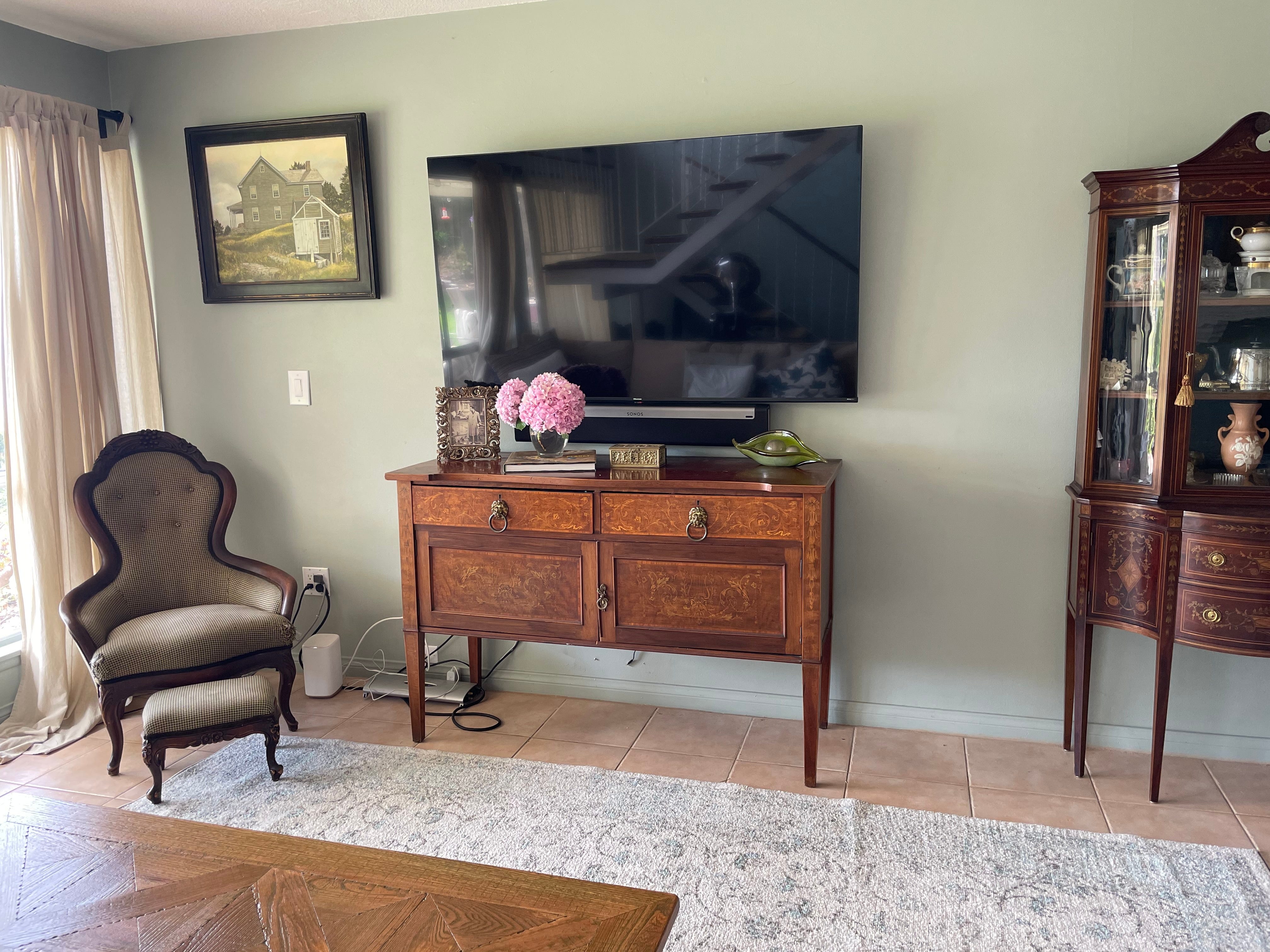
This late 19th-century sideboard never thought it would be put to use as a media table. But here we are.
Before we bought anything, we decided to see if our cherished English sideboard would fit under the monster TV. Nope … not until Tim carefully removed the back piece that would have hit the sound bar. Then, wonder of wonders, it fit and looked good doing so.
I hope you agree that this isn’t a bad solution to the modern TV dilemma.
I am ready to try the Art TV. I never liked having our TV over our fireplace but in our one-wall living room, we had no other options. Having a "painting" over the fireplace feels more civilized. :-)