

Some of you, like me, grew up with an eccentric piece of furniture or decorative object you naïvely assumed everyone in the world knew about. For me, this was the tansu.
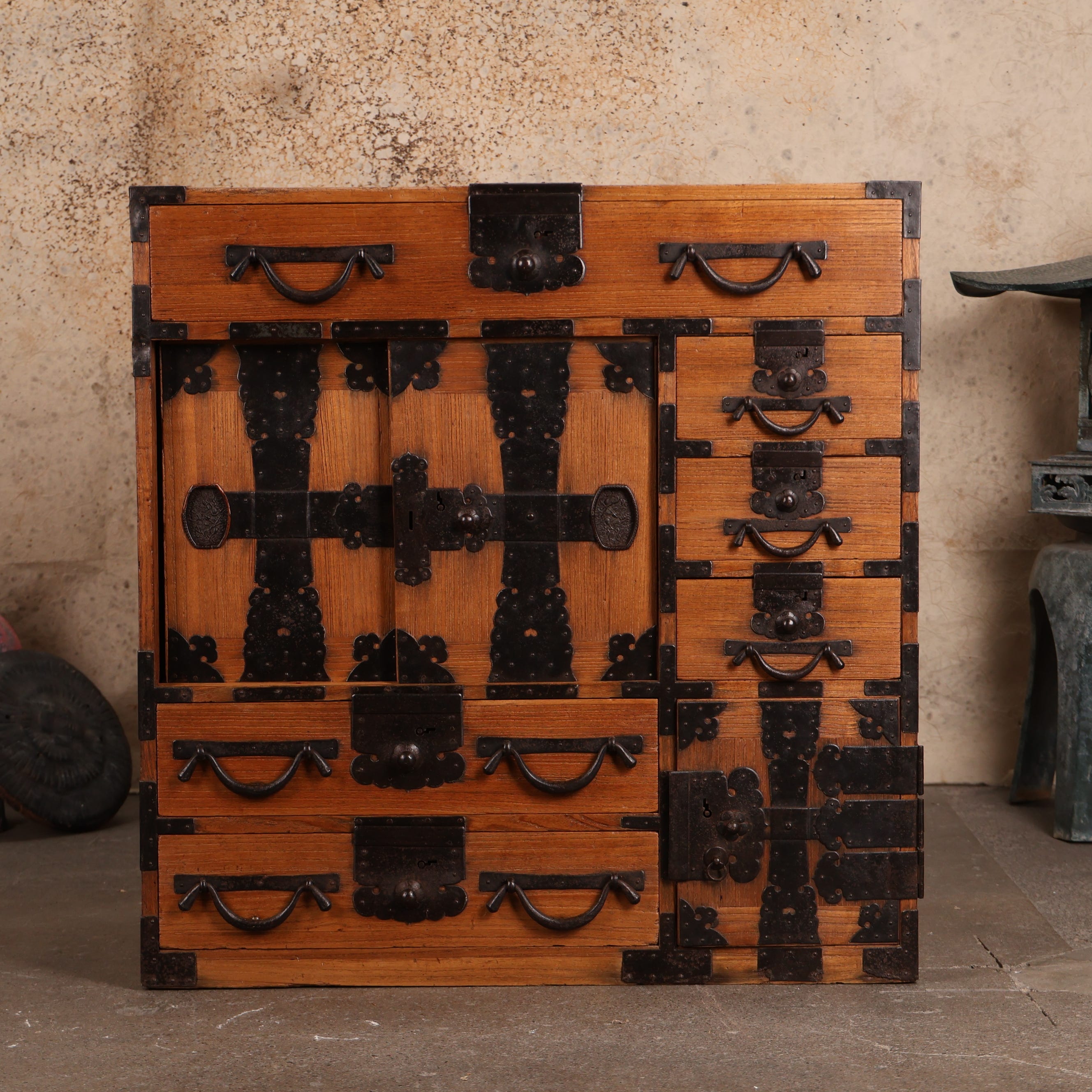
Light, strong wood species with interesting grains combined with elaborate black metal hardware make the tansu a very distinctive piece of furniture. (Photo © Eastern Classics LLC / tansushop.com)
My mother admired Asian design and dotted our homes with Japanese prints, Chinese ginger jars, and even a curious porcelain neck pillow. Her style was completely anti-style and was defined mostly by color (lots of it), ethnicity (a little something from every country she or her friends traveled to), and comfort.
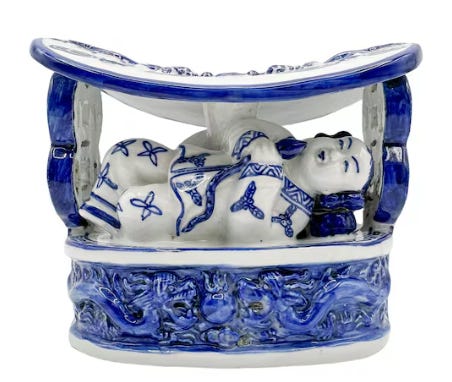
A Chinese neck pillow—these became popular in the sixth century, to keep elaborate hair styles intact. (Photo: Poshmark)
But the most beloved of her possessions were a couple of Japanese tansu cabinets. They have a place in my memory (and endless family photos), sitting quietly in the background, holding keys, knickknacks, and a lamp or two.
One small tansu in particular followed my mom into her final days. It acted as a nightstand, with a generous surface for all the paraphernalia of the elderly. The various-size drawers were easy for her to access as she spent more and more time in her bed. Missing hearing aids? Check the tansu.
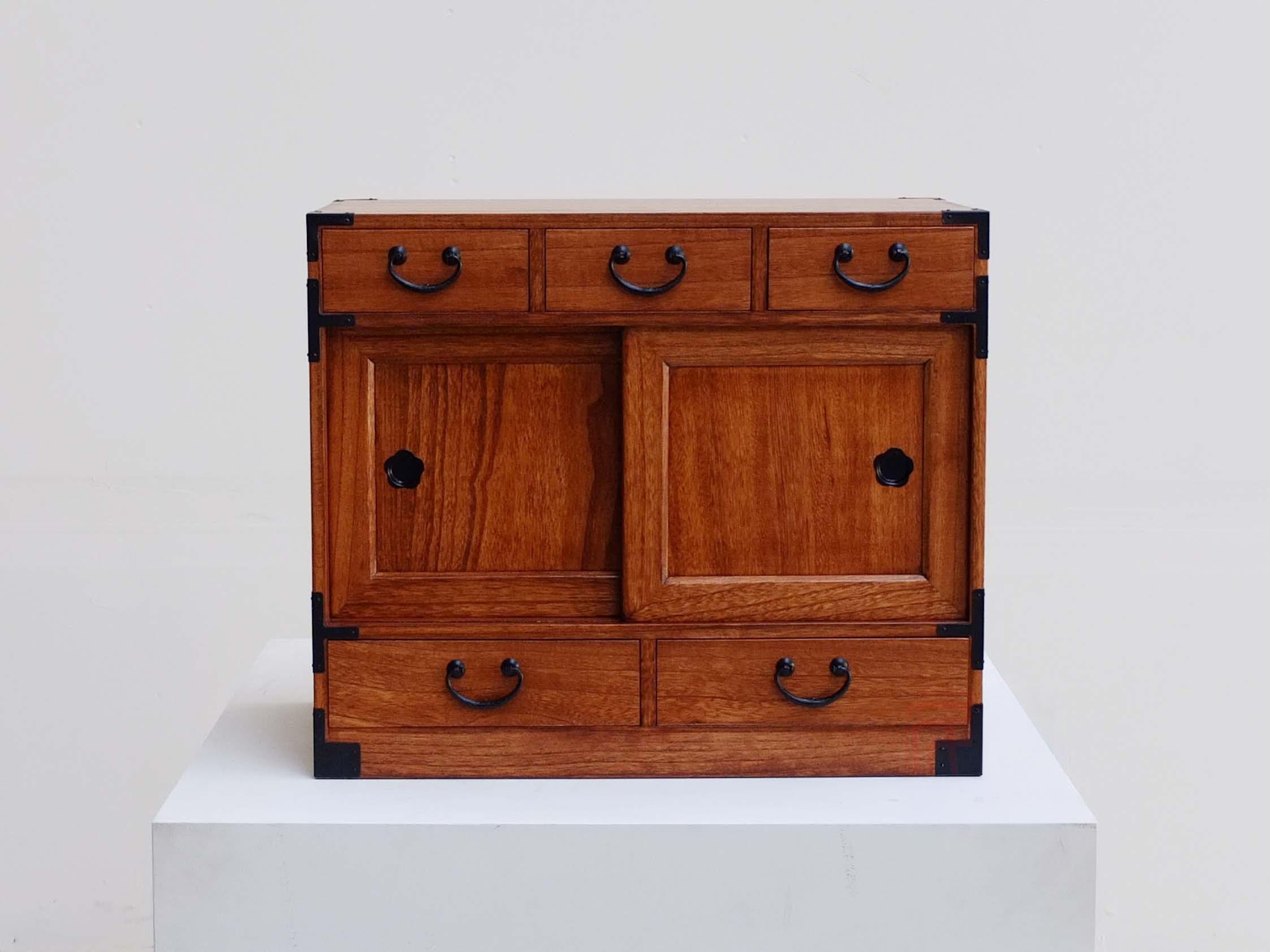
My mother’s tansu looked a lot like this one. Its size is ideal for a nightstand. (Photo © Eastern Classics LLC / Tansushop.com)
History of Tansu
Tansu’s meaning comes from two Japanese characters denoting the functions of carrying firewood and storage. While the earliest existing tansu dates back to 647, its tap roots formed in the 17th century, when the Tokugama family ruled from 1603-1868. The Edo Period (named for a small castle town that ultimately became Tokyo) lasted for 250 years and saw a massive evolution of tansu production, diversifying by usage, wood species, decoration, and regional specialties.
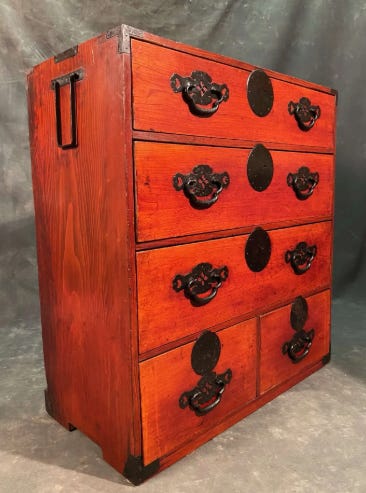
This antique tansu has a wiped lacquer finish with two large drawers to hold kimonos and two small drawers to hold accessories. Note the U-shaped handle, designed so that the chest can be more easily carried. (Photo: Zentner Collection)
Despite their popularity, these ancient tansu were heavily regulated by the Shogun, who only allowed the wealthy and royalty to have fancy ones. Each piece was designed both for its ultimate function and for the owner’s socio-economic status.
Tansus were extremely useful; their lightness and mobility were well suited to the traditional Japanese interior. Despite their simplicity, these cabinets were very well made, using finely grained wood and secure joinery that withstood the pressure of constant carrying and movement.
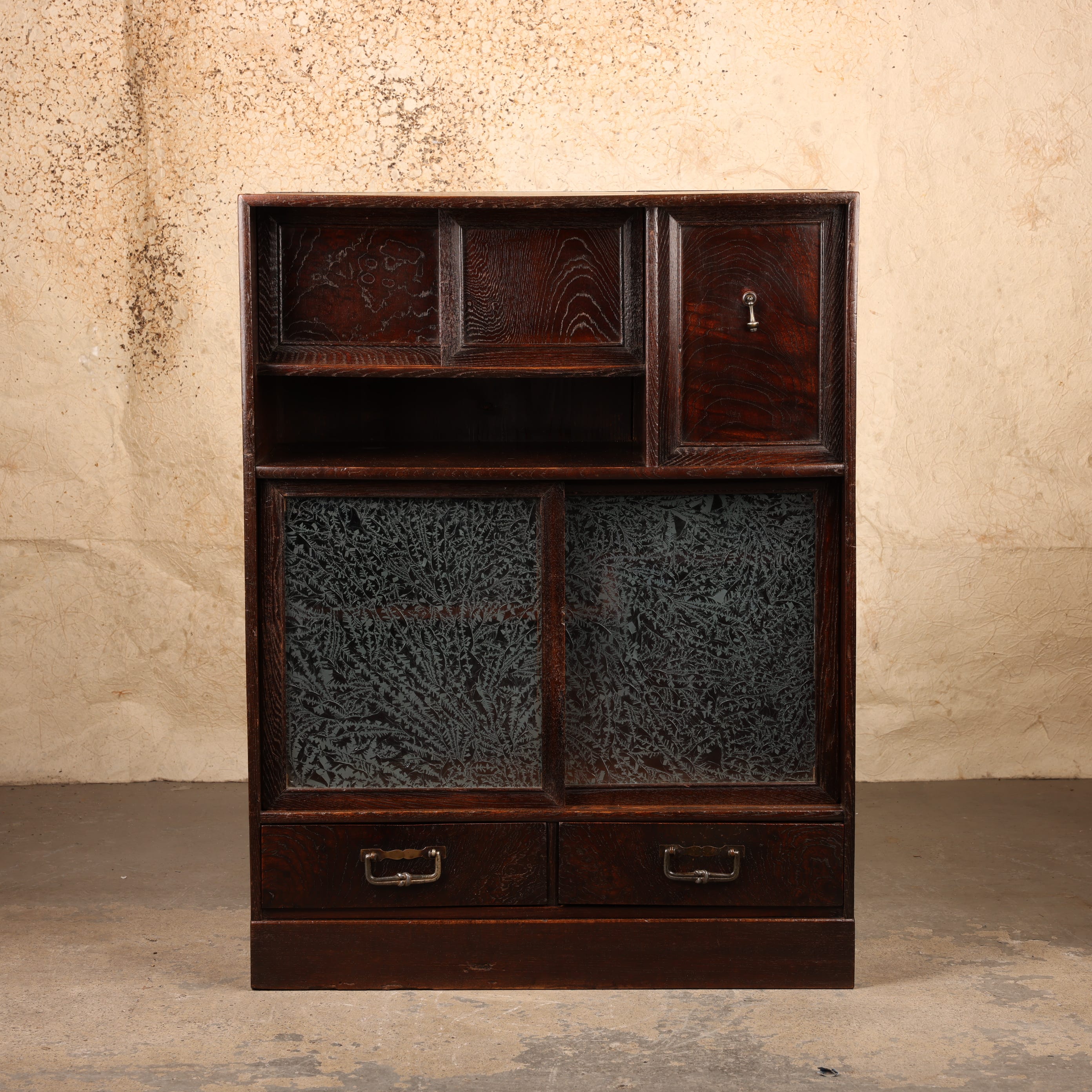
The cha-dansu was made for storing tea and tea supplies. This 100-year-old cabinet is a stunner, with pressed glass cabinet doors and a deep, dark oil finish. (Photo © Eastern Classics LLC / Tansushop.com)
The Meiji period (1868-1912) was when Japan broke loose from its feudal isolationist past and began to develop its technological prowess. New tools, machinery, and the tastes of a global market advanced tansu making into an art form. Pieces from the late 19th and early 20th century show an elaborate array of designs stamped into the metal trims and locks. Cheaper and easier to produce, tansus became a significant export.
Types of tansu
The word “tansu” refers to the general category of furniture or cabinet. But when you add a prefix to indicate exact usage of the tansu, it becomes dansu. Got that?
In the caption above, “cha” refers to tea service; it is followed by dansu. Here are some more typical prefixes that indicate the tansu’s function:
Choba-dansu: For storing account books
Funa-dansu: Trunks used by sea merchants. Though well-used, these small trunks were often very ornamental since they were brought to wealthy business partners.
Isho-dansu: Used for clothing, these were coated with lacquer and finished with fancy iron hardware
Katana-dansu: Chest with long drawers for storing swords
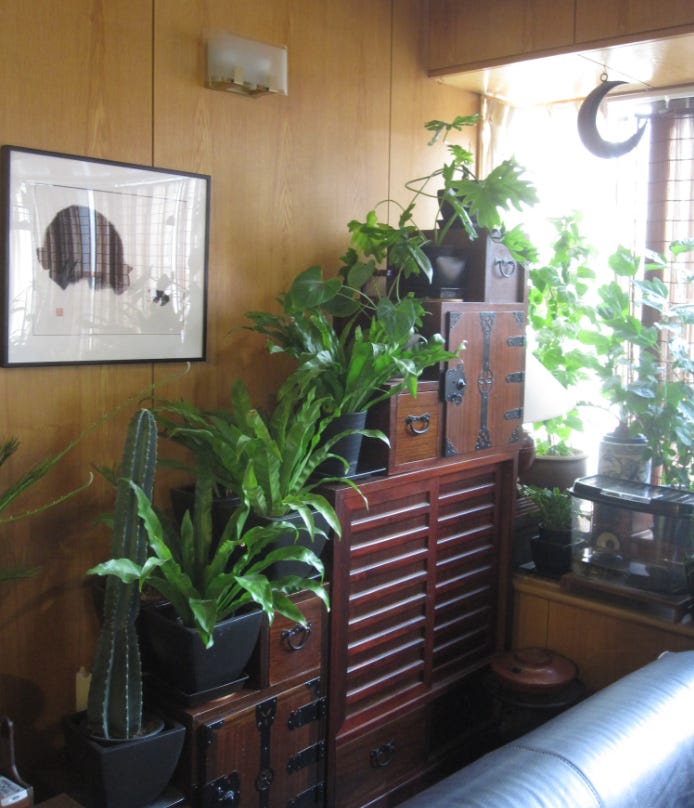
A kaidan-dansu is used to support a host of indoor plants. (Photo: Tokyo Jinja in Doha)
Kaidan-dansu: Very distinctive set of drawers and cabinets shaped like stairs. They may have been used for getting into attics, but are mostly decorative and for multi-purpose storage.
Kusuri-dansu: Apothecary chests
Mizuya-dansu: A kitchen cabinet, like a pantry or a sideboard
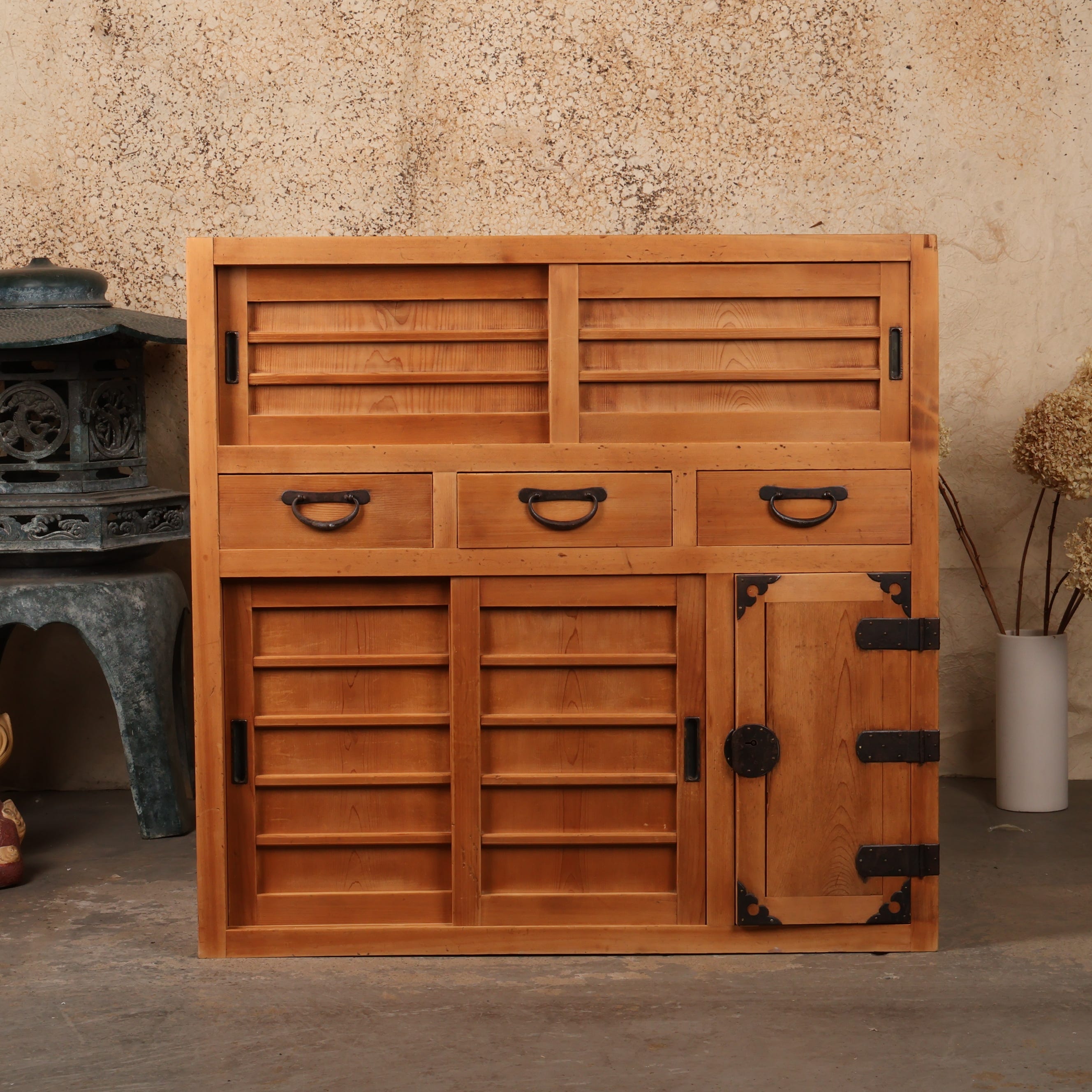
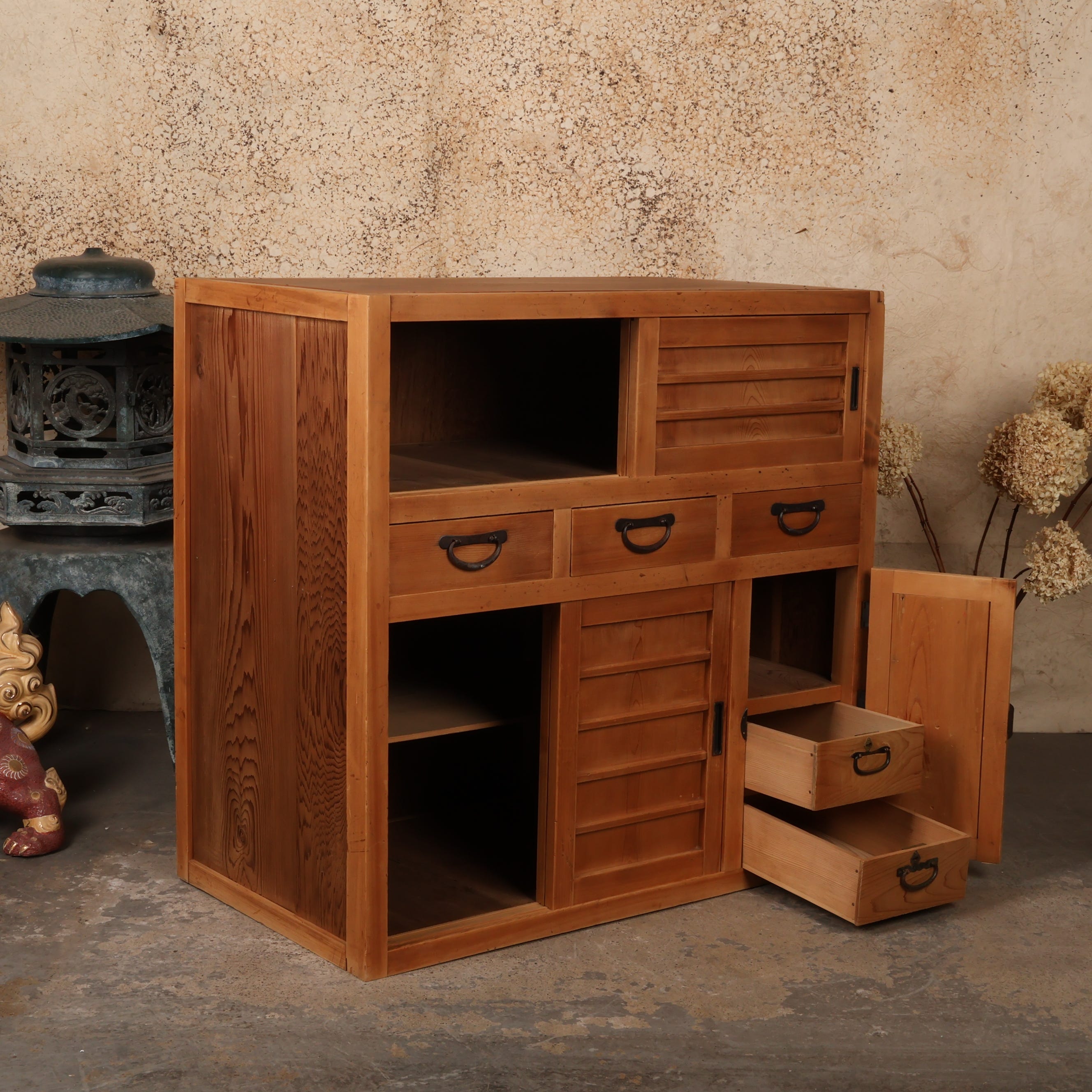
Tansu have a surprising amount of space and different ways to store things. Shelves, drawers, and cubbies all present in this mizuya-dansu, perfect for use as a pantry or a china cabinet. (Photo © Eastern Classics LLC / Tansushop.com)
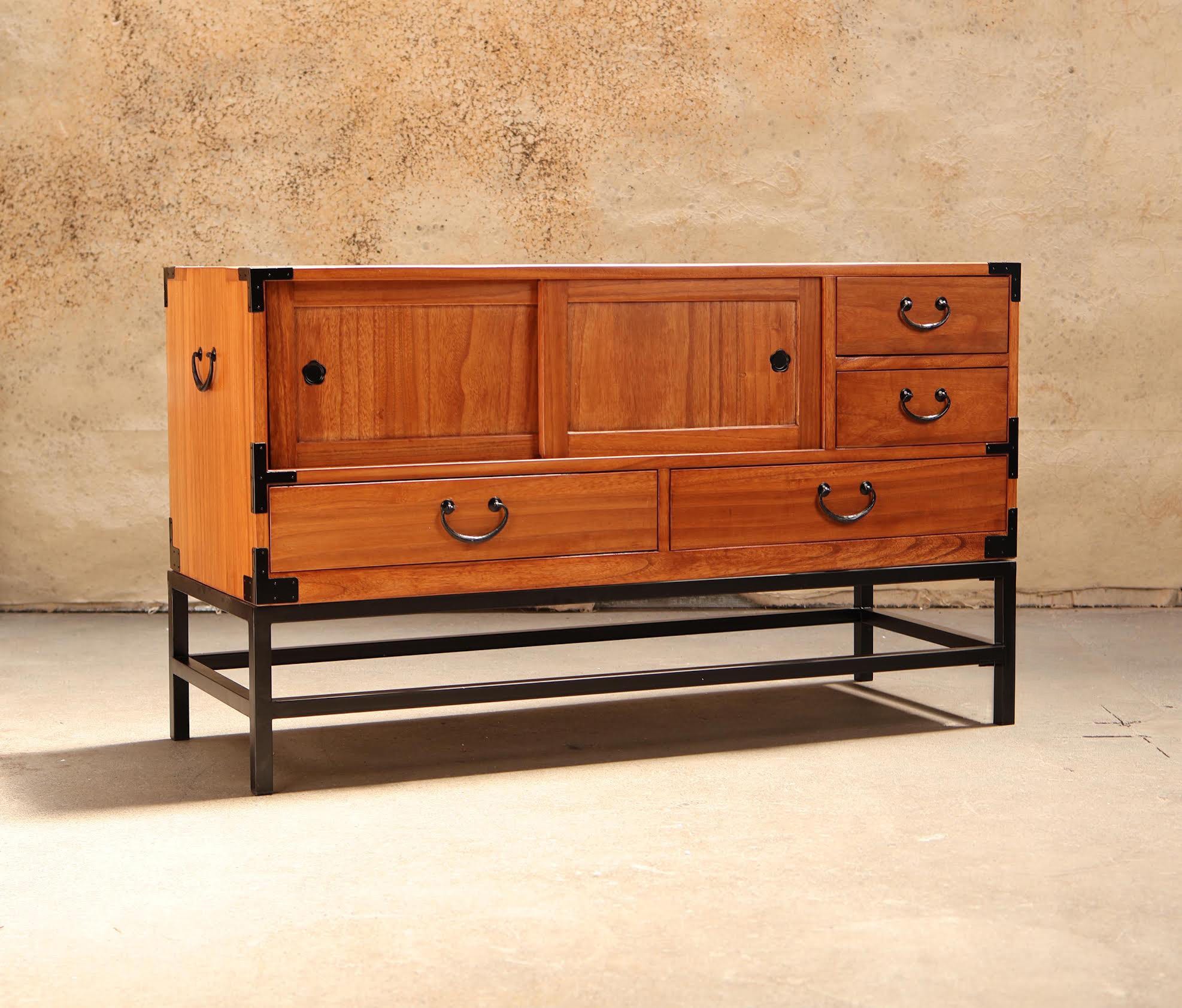
Raised on metal legs, this handsome mizuya-dansu makes a stunning media table. (Photo © Eastern Classics LLC / Tansushop.com)
Tansu for Today
Built with simplicity and care, the tansu has maintained its popularity for four centuries. Any of these pieces (and this is just a small fraction of the sizes and designs available) would complement all types of room layouts. The best aspects of classic Japanese design tradition married to modern construction and materials result in a furniture piece that looks as good as it functions.
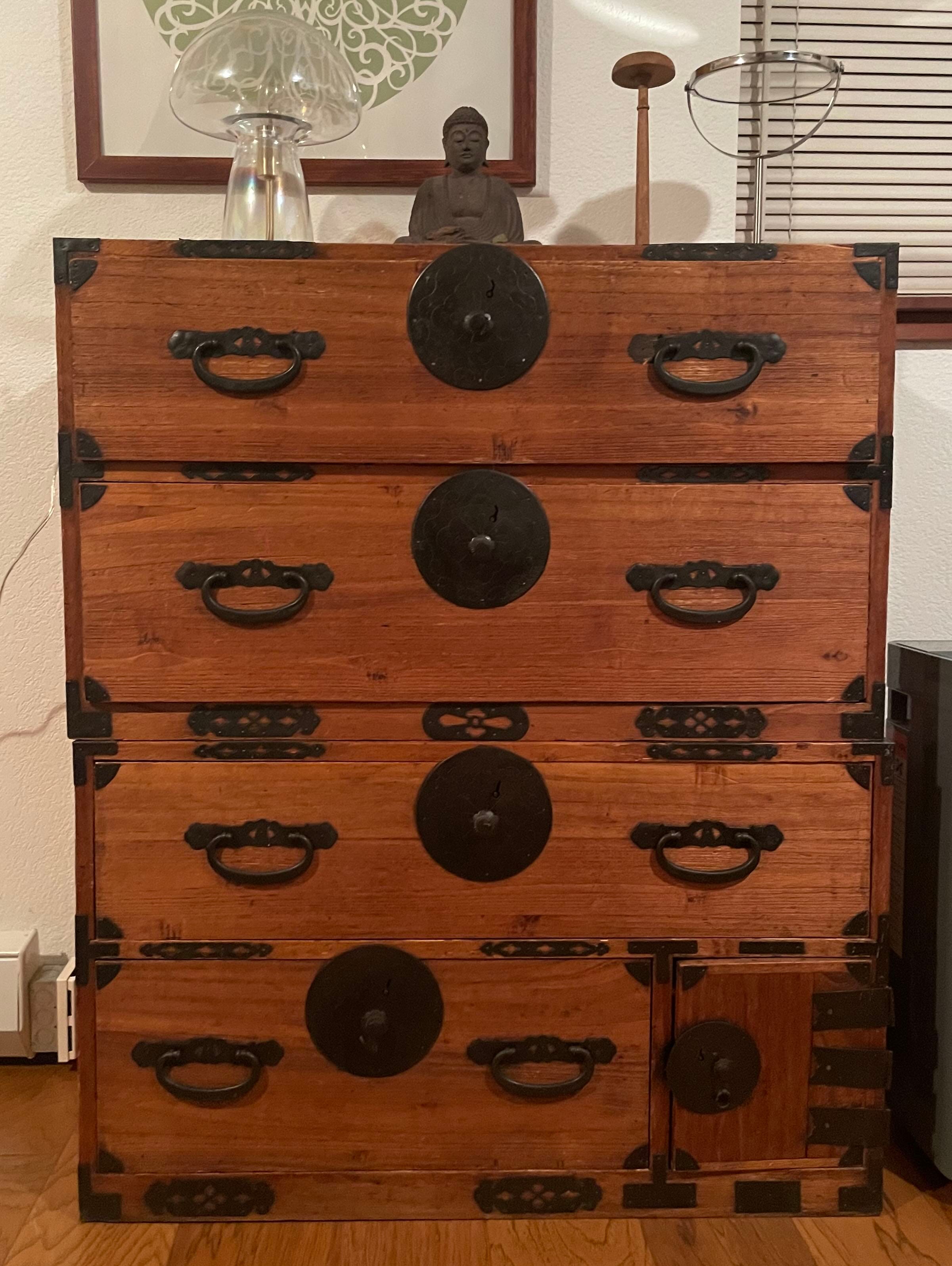
This tansu is two chests stacked on top of each other. It was in the bedroom of an Airbnb rental where I stayed recently. I thought it added a lot of style to the space.
I guess Mom was onto something.
Resources
Eastern Classics/Tansu Shop, Berkeley, CA
FEA Home, Yonkers, NY
Shogun’s Gallery, Portland, OR
Zentner Collection, Emeryville, CA
These are really nice examples, and I love all the different ways a tansu provides storage