

For a brief period of time I worked at the corporate headquarters of The Closet Factory in a gritty part of Los Angeles called Willowbrook. It was a tough commute, they offered no health insurance, and our ceo liked to stand at the front door watching us file in a few minutes late, cigarette in hand, glint in his eye.
Not a shining example of people-first corporate culture, but I did learn a lot about closets.
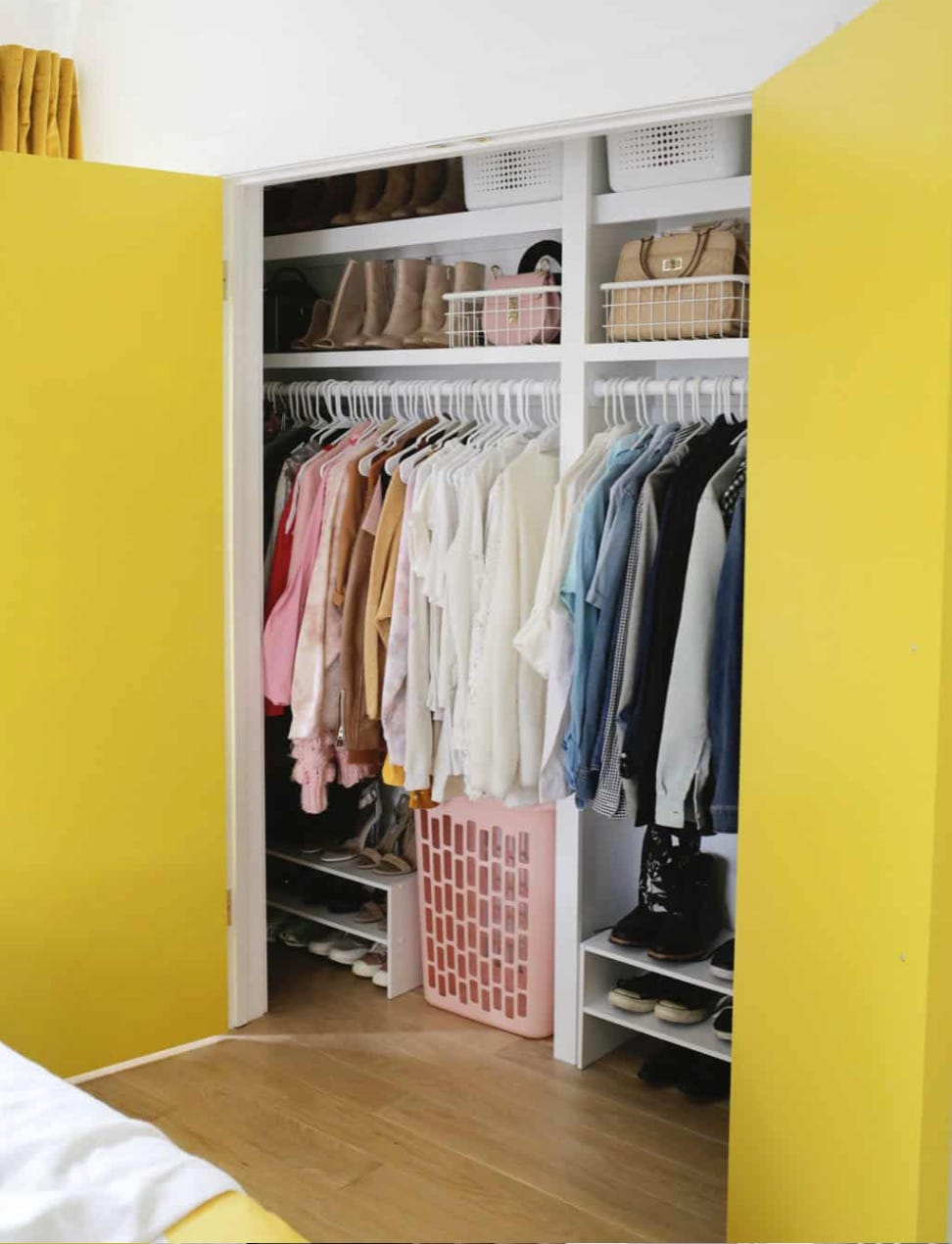
Builder-grade wall closets are empty canvases waiting to be transformed by … you. This is one great example by Laura Gummerman of A Beautiful Mess. (Photo: A Beautiful Mess)
There are three main problems with built-in closets:
Most wall closets (or built-in closets) are budget afterthoughts, with one rod and one shelf placed about five feet high. This rod-and-shelf combo typically runs the length of the closet. And that’s it.
Typical wall closets have “returns” on each side (that 1-2 foot part where you shove stuff you don’t use as much because it’s hard to reach). The header at the top of the closet closes off much of any potential storage near the ceiling.
The floor is where we usually put shoes but it is a flat, disorganized void. Limited visibility due to low-hanging clothes and awkward to reach, the bare floor is a wasted opportunity.
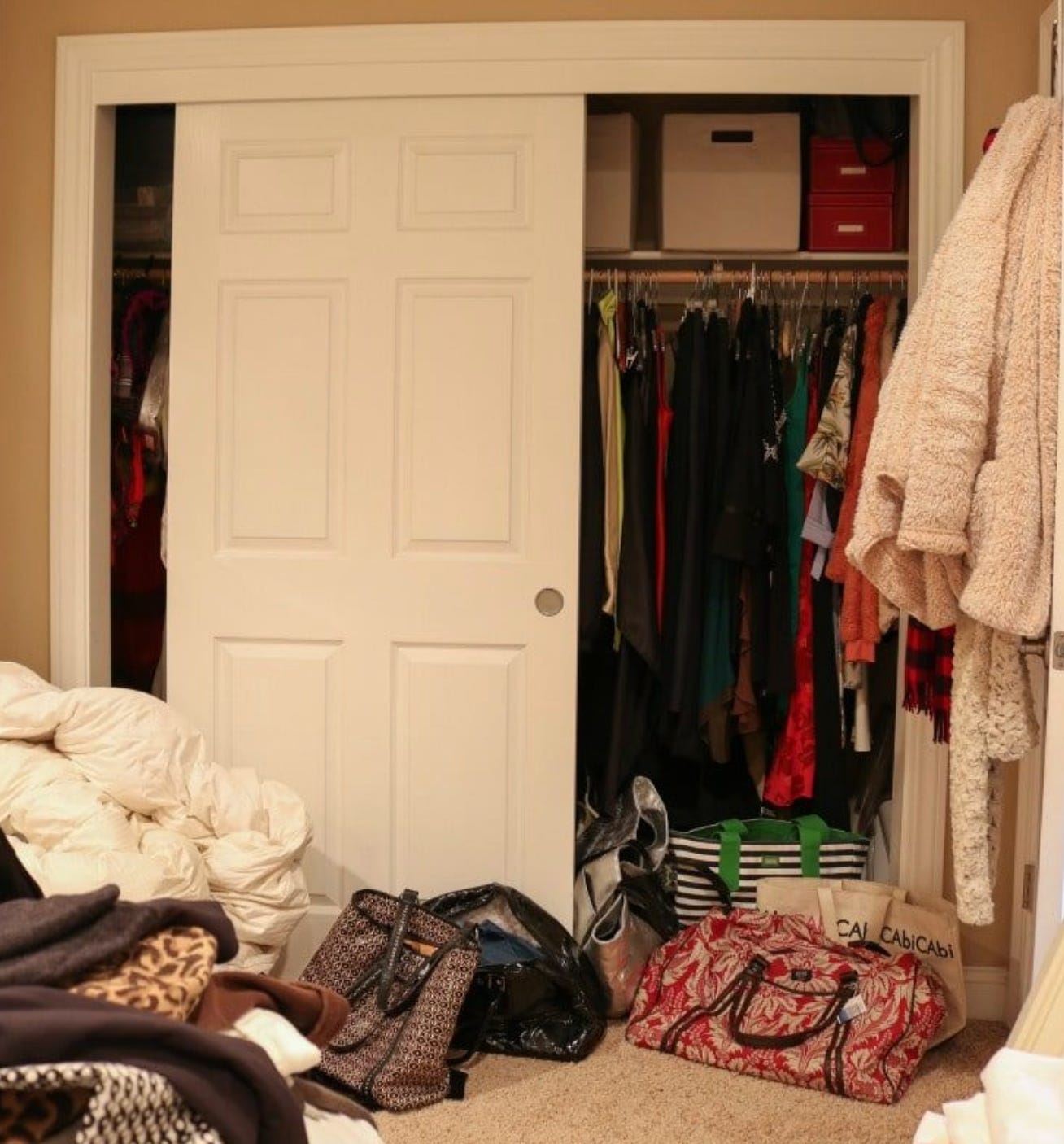
Look familiar? This is a closet we all know and loathe. The good news is that you can make dramatic improvements yourself. Photo: The Design Twins)
Shelving and rod placement
Every little thing you do to improve your closet’s storage capacity is to be applauded. A good place to start would be repositioning your rod so that instead of a single long one, you have two or three at varying heights.
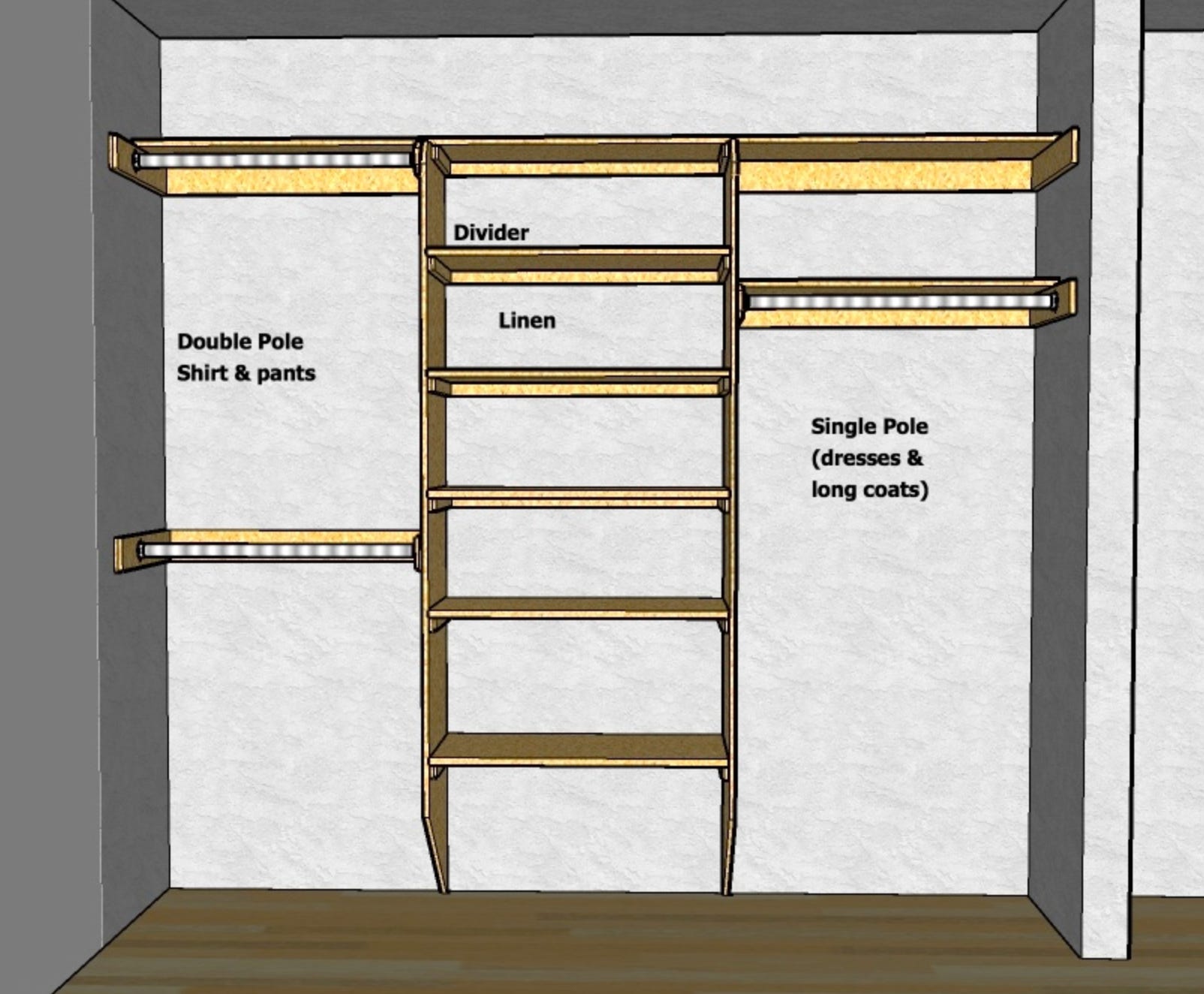
This is a good layout for a standard walk-in closet. Three zones for hanging clothes and a large panel of shelving allow you to sort clothing by type. (Photo: This is Carpentry)
A typical rod height of about 60” means that the hanging clothes will prevent good use of the lower and floor space. The layout above includes a section with double rods so that you get twice the space for your shorter-hang clothing. On the right, a single pole is placed 66” high for coats and longer dresses. You could even put it higher, directly under the upper shelf, so that the floor below can be used for a shoe rack.
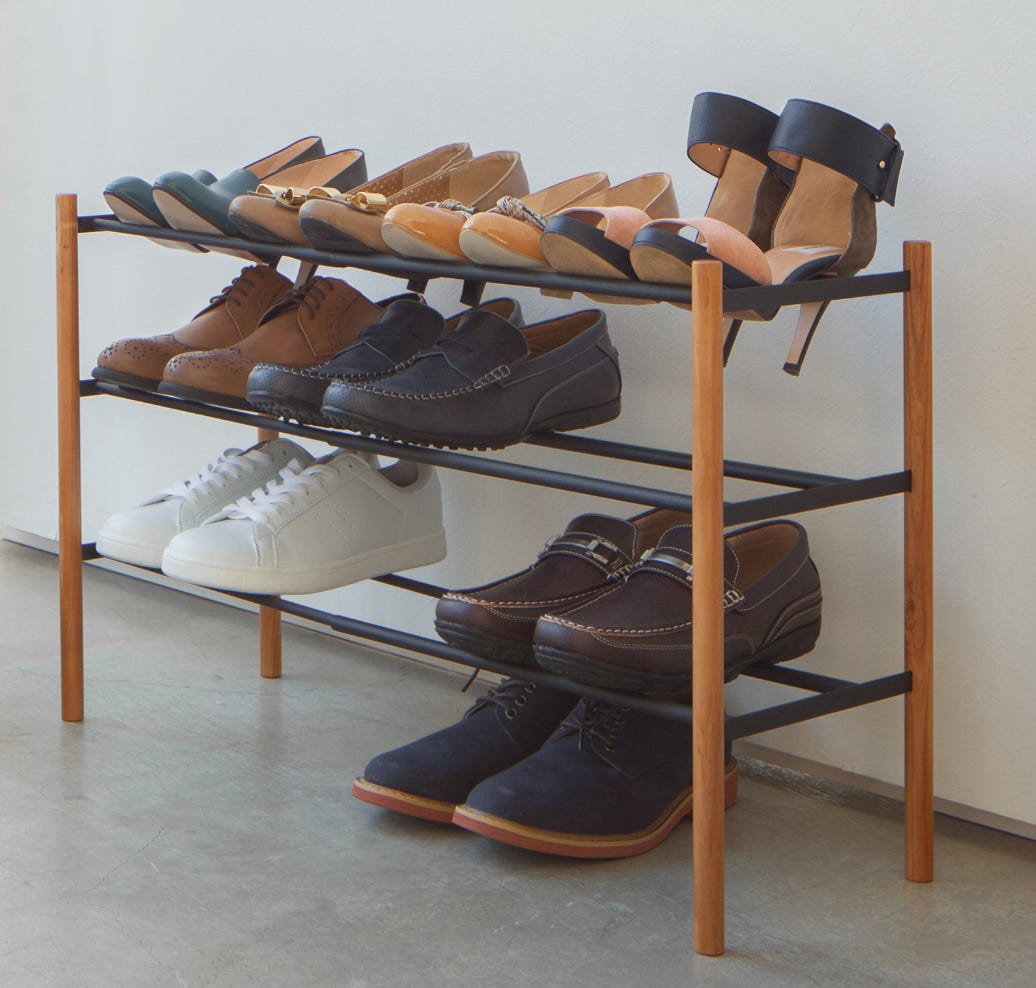
This shoe rack from Yamazaki Home expands from 16” to 27”, great for a small closet.
TIP: Wood shelving beats wire shelving every time. My experience with wire shelving and baskets has been frustrating; the structures are often flimsy and awkward. They just don’t perform like solid wood or even melamine.
If you like the single-rod style of your closet and just need to find other ways to create order, then build at least one additional shelf above the one you have. Make sure the depth of the shelf allows for space to hoist your boxes through, past the closet header. Our high shelf has a 12” depth and the total depth from the header measures 24”. It’s enough to allow for bins and suitcases.
The other great place to install shelving is in the two returns. Here are some ideas:
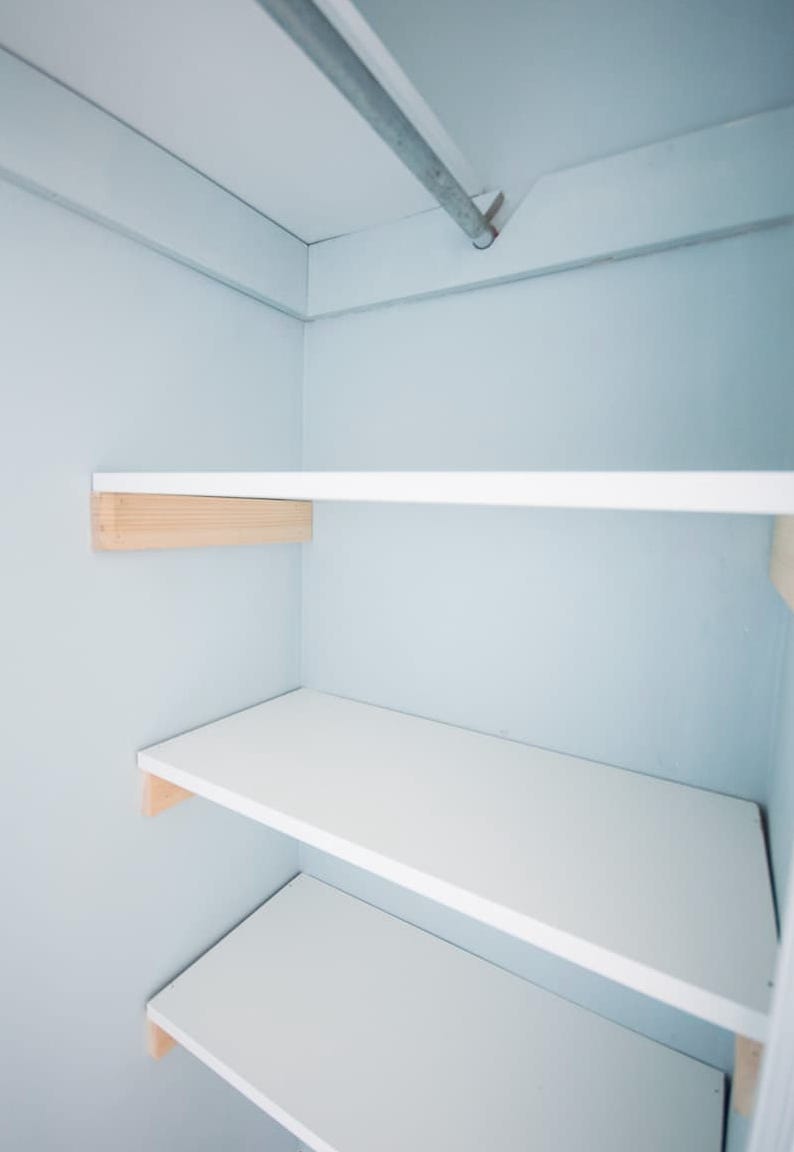
No-brainer DIY shelves triple the capacity of this closet corner. I like using cleats for supports if the shelves are on the shorter side. They’re easy and sturdy. (Photo: Jenna Kate at Home)
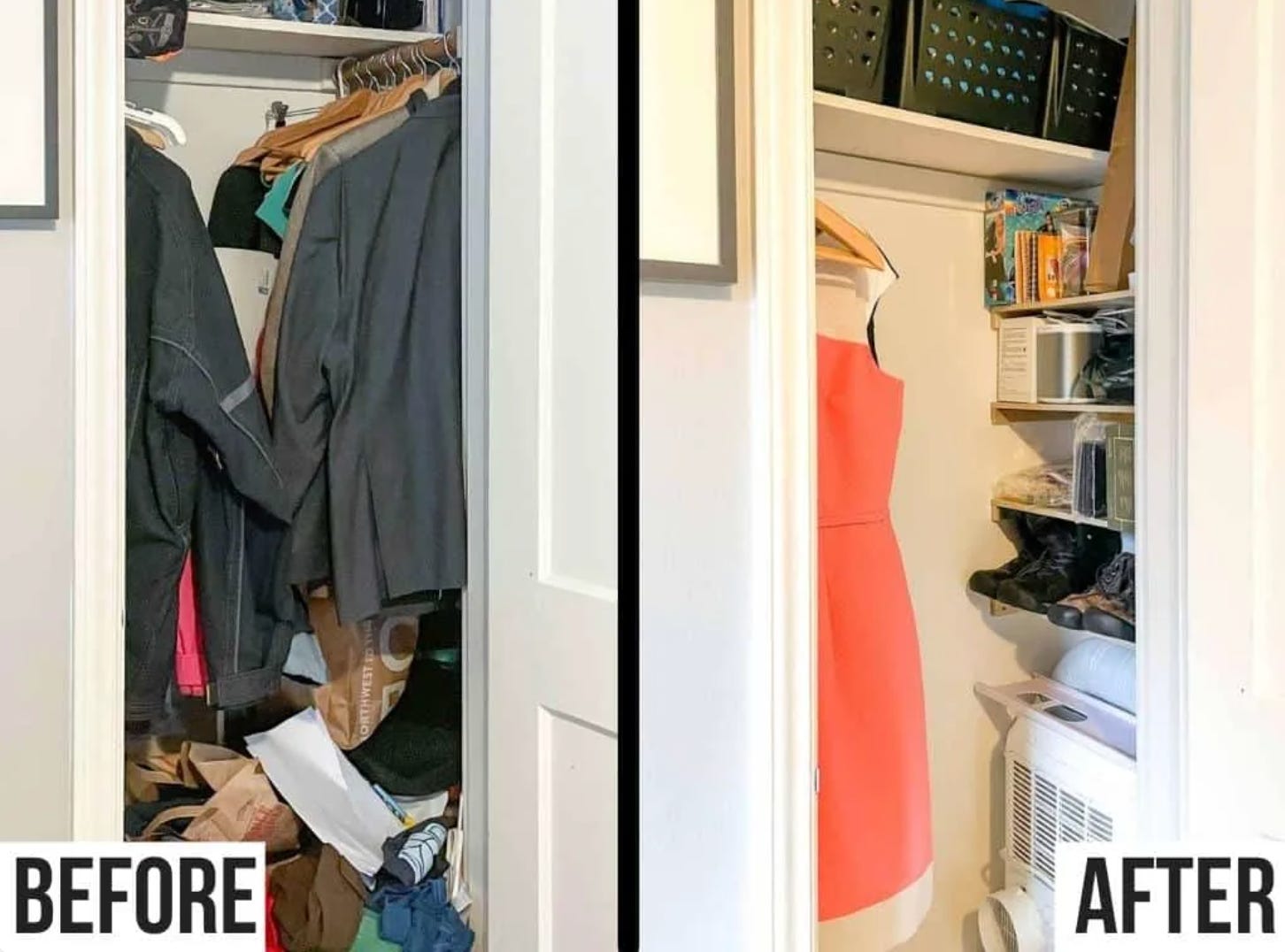
This person needed a dedicated space for her portable air conditioner, so she designed her corner shelves to fit it underneath the last shelf. (Photo: The Handyman’s Daughter)
What if you ditched the doors?
It seems counterintuitive, but removing the doors from a closet can actually add square footage to your room. The resulting alcove could total as much as 14 square feet.
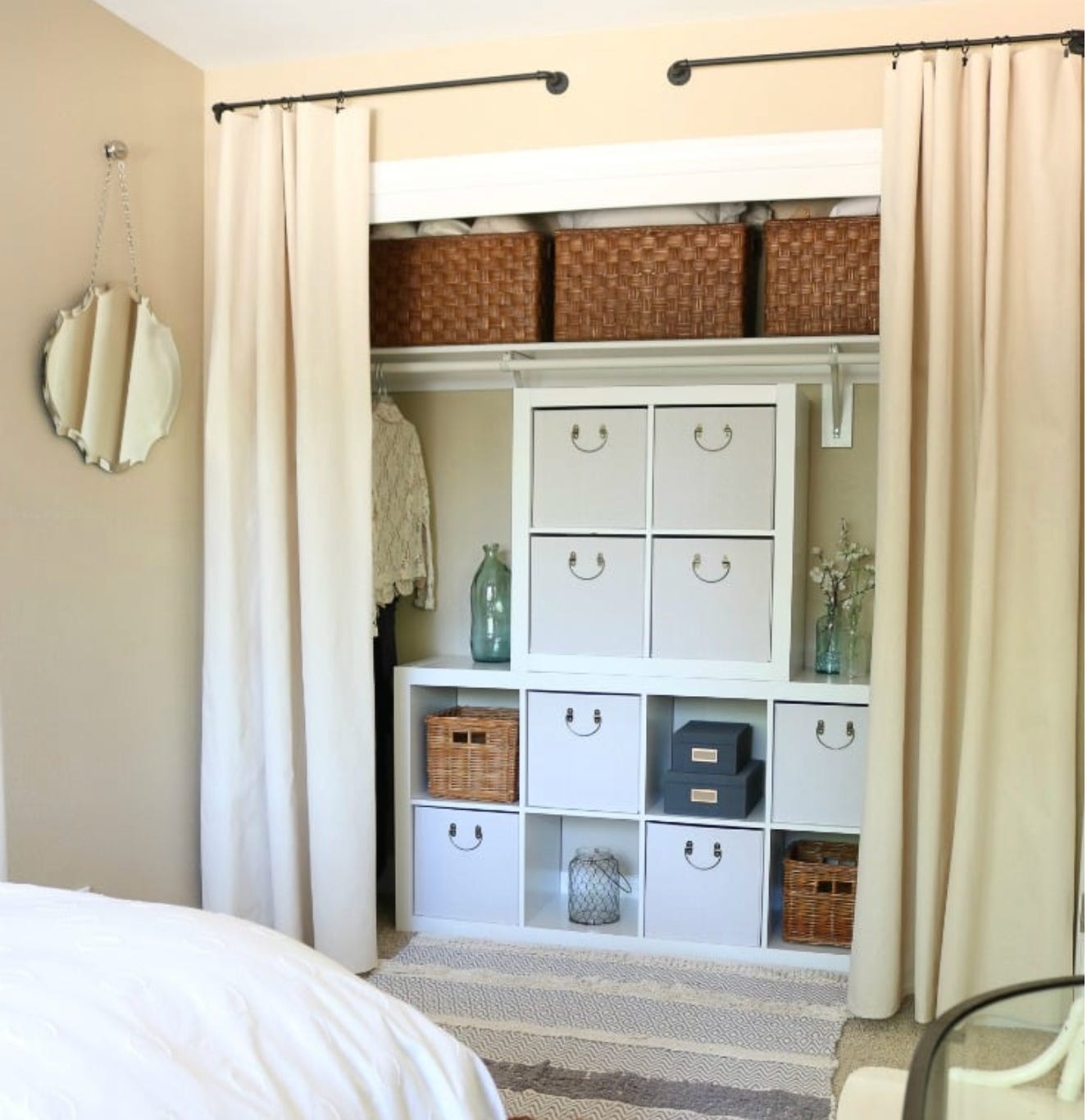
This fabulous doorless closet is the end result of the messy closet shown above (The Design Twins). The big challenge here is keeping the closet scrupulously neat and organized.
It doesn’t sound like a lot, but adding 14 square feet to a small room can be a genius move. Large closed doors create a visual barrier that tends to make a room feel smaller. With good design and high-quality built-ins and/or custom shelving, you can create an open closet that blends attractively with the rest of the room.
This isn’t an easy thing but there are times when your rooms may not even have a closet and you have to create a space. That’s when good design principles and an investment in the right armoire/built-in/shelving unit will go a long way.
Divide and conquer
The closet at the top of this post has a small but important tweak. Laura Gummerman of A Beautiful Mess put in a vertical divider so that she and her husband could more effectively share the space.
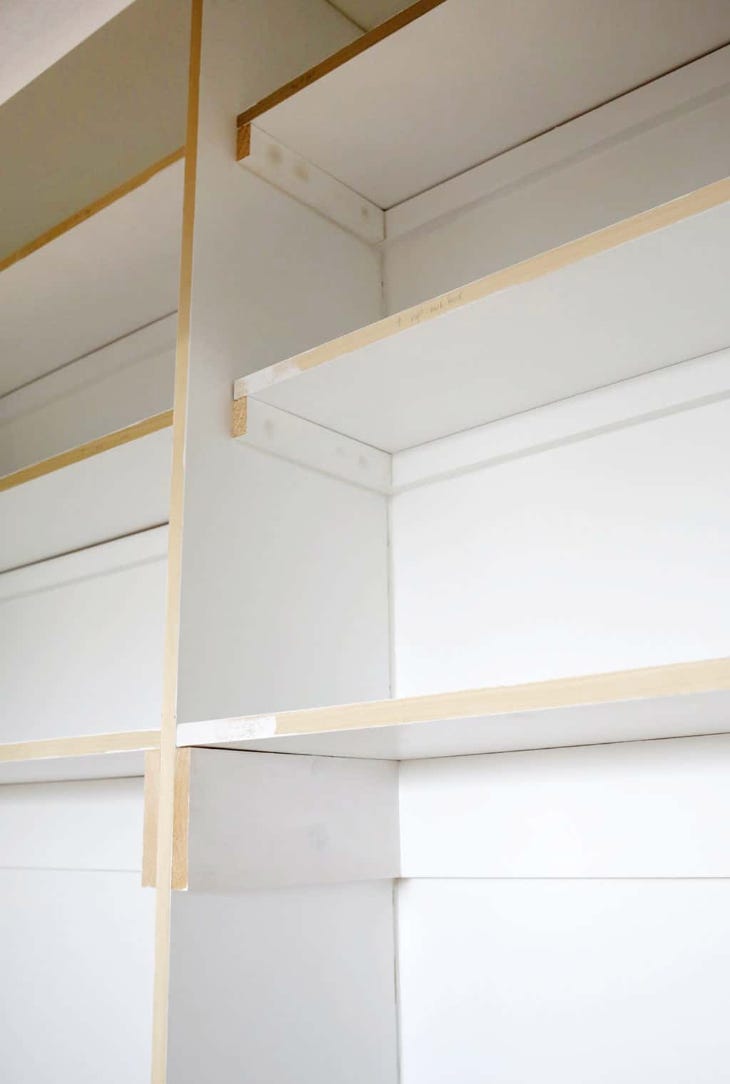
She also added two more shelves above the hanging rod, which are used primarily for shoes.
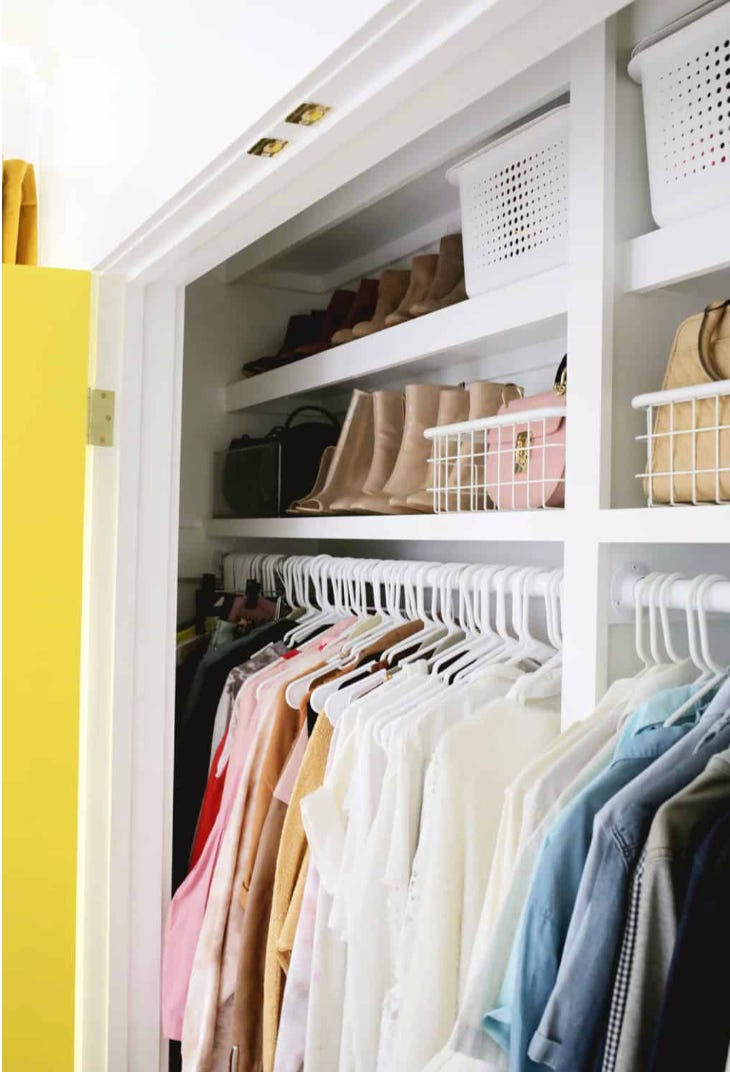
Adding a vertical closet divider keeps a couple’s wardrobe separate and easier to organize. This divider is integrated into the shelves above it, with the same depth, to create a very cohesive design. (Photos: A Beautiful Mess)
These were small changes that changed everything. You’re going from a large empty box to a compartmentalized box with increased capacity and improved “user experience.”
The two positive things you can say about builder-grade wall closets is that they allow for personal customization that fits your own wardrobe and storage needs. The second thing is that even one small improvement can make your month.
My own favorite closet upgrade
With that said, I’m going to share with you the best accessory for a well-dressed closet.
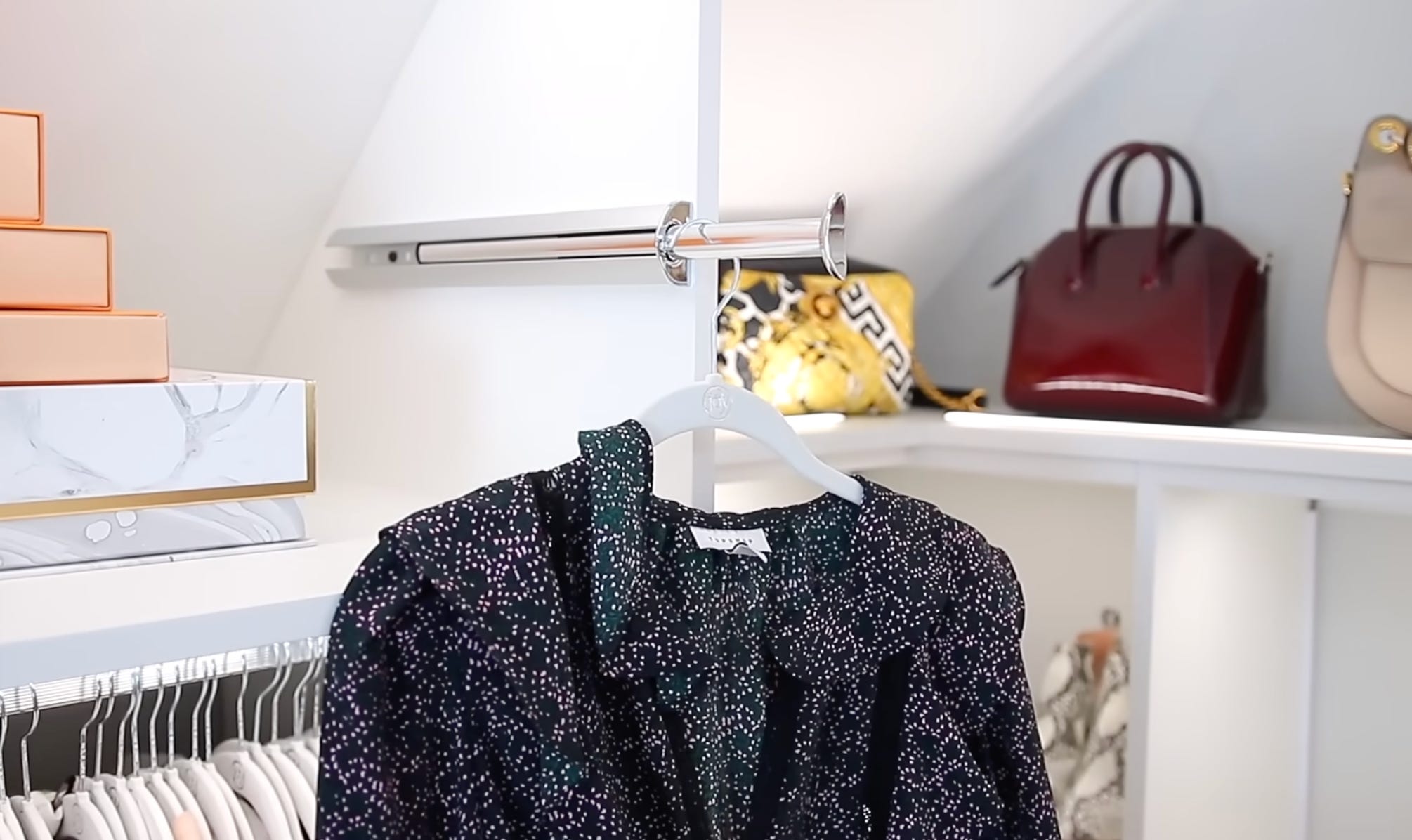
Valet rods are something you can really hang your hat on (or what you’ll be wearing tomorrow).
Yes, ladies and gentlemen, it’s the valet rod! If you are a clothes liner-upper, you need one (or two) of these. Use one for the times you need to reorganize your closet and need a place to hang extra clothing. They are also terrific in your ironing station, if you are lucky enough to have one.
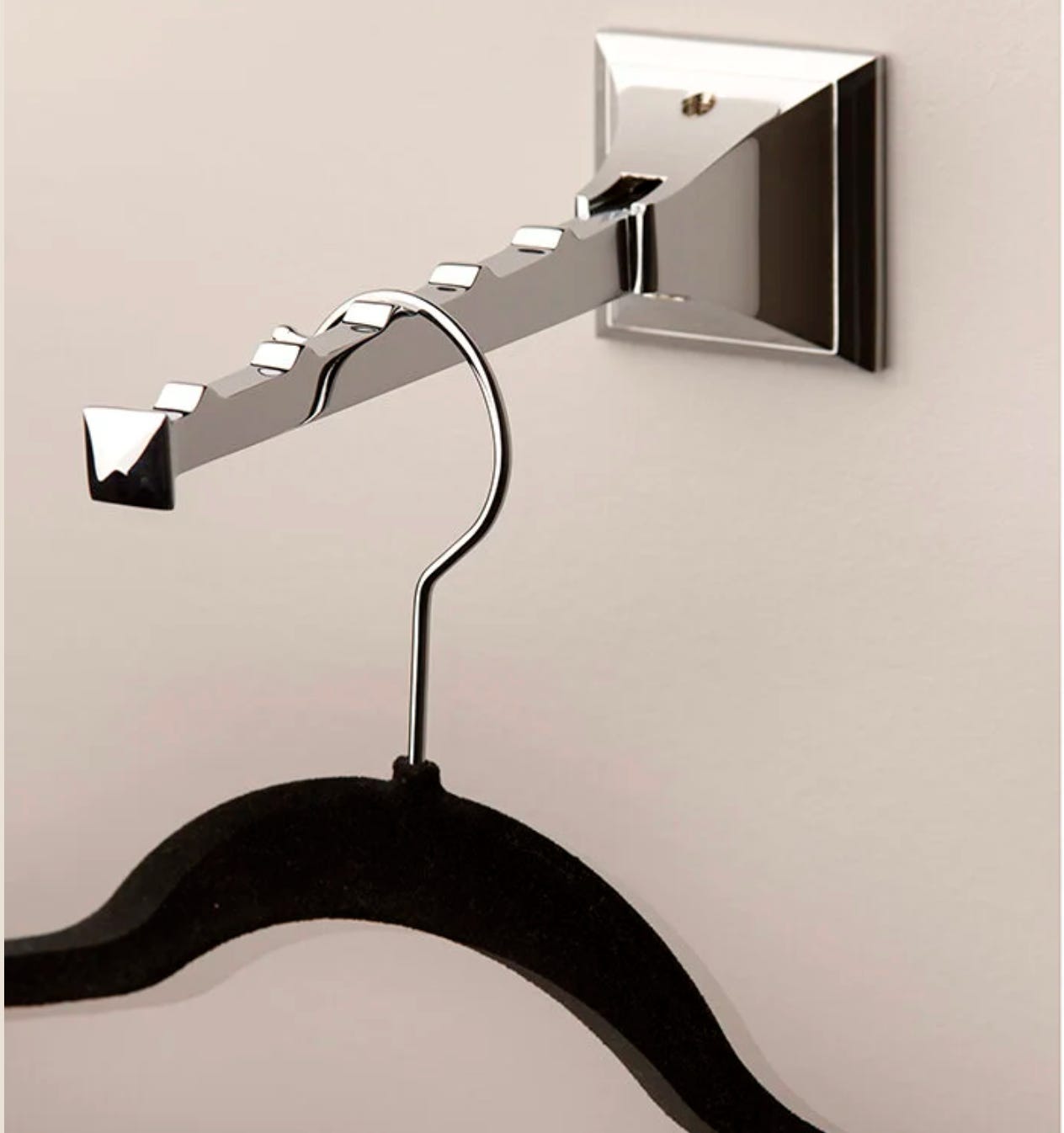
For frequent travelers, a valet rod really helps with packing. You can place all of your hanging clothes that are coming with you in one place, very visible, so you don’t forget anything.
I’ve always considered store design a good model to follow. Valet rods are one of retailers’ best merchandising tools. Supposedly they are also the mark of a luxurious and well-appointed closet.
My partiality for built-ins and valet rods are attributable to my time as content director at the Closet Factory. And for that, if nothing else, I am grateful.
So weird — I’ve been looking at nice closets on Pinterest all week!
Great tips — my last two closets have had curtains instead of doors and honestly I think I’m starting to like the look better than a typical sliding door.
Also loved this intro lol.