

Many people live on boats, from Sausalito, California’s famed Richardson Bay to the Aberdeen Fishing Village in Hong Kong, and countless other communities in between. But if you ever stepped aboard the (as in the only) old Yankee Ferry, trimmed with fanciful diamond shingle siding and quietly living out its life in a Staten Island dock, you would know it was … and is … something quite extraordinary.
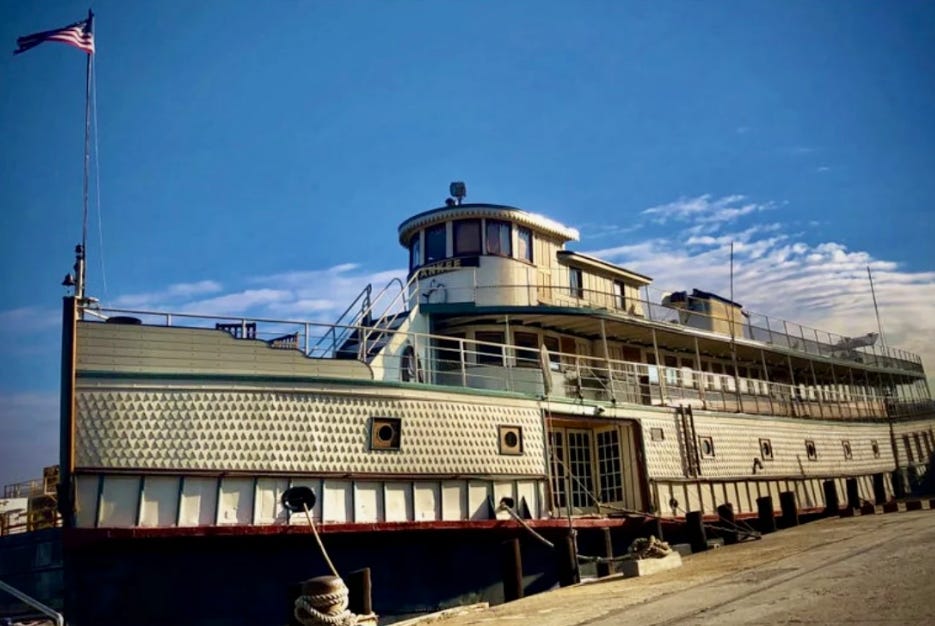
The life story of this ferry boat is like the waves: up and down and then up again. It includes about 30 years of disuse and disrepair, until the MacKenzie-Childses decided to buy it for a studio after their company was acquired in 2001. (Photo: Victoria and Richard Emprise)
Expect nothing less from the floating home of Victoria and Richard MacKenzie-Childs, founders of the famed MacKenzie-Childs home décor brand in 1983. The couple created an entirely original aesthetic in home décor and touched the imaginations of millions with their line of brightly painted ceramics, furnishings, and textiles.
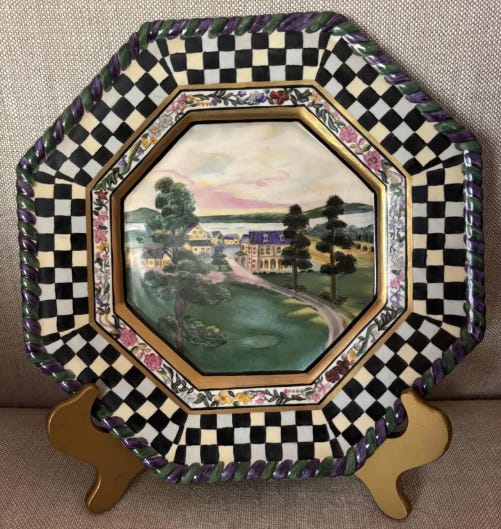
Victoria’s signature black-and-white “courtly check pattern” gained an avid following during the 1990s.
For years the MacKenzie-Childses lived in a fairy tale seven-bedroom Colonial manse in Aurora, New York. In the heyday of their business, they employed hundreds of local artists and workers to make product, run their retail, and ship orders. Their annual barn sale, launched in 1996 to sell overstock and discontinued items, attracted hundreds to the tiny village. It became a kind of cult event and is still going strong.
Then, in debt and overextended, the MacKenzie-Childses were bought out by the founder of American Girl, who then called in their $10 million loan and forced them to sign over their name and assets. Embattled and disillusioned, the couple decided to start over and try to refashion their brand on their own terms. But they needed an inexpensive studio and access to New York City to do so.
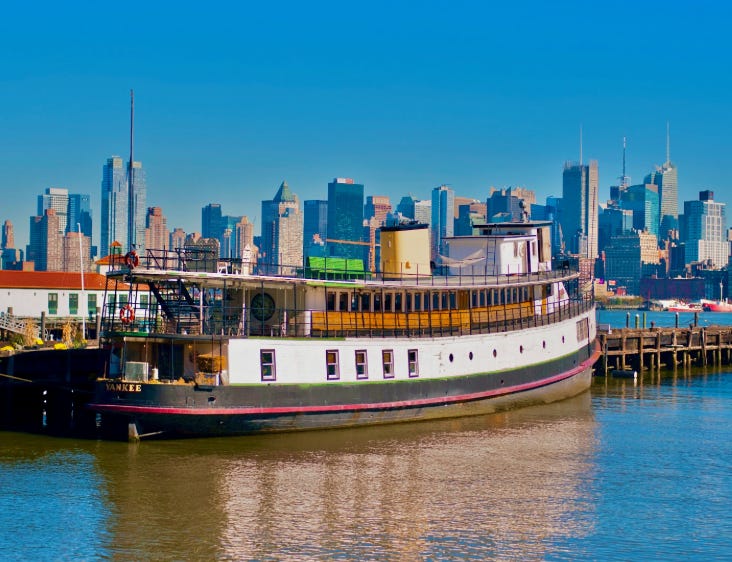
The idea was to use a boat for a studio but when they realized how big the Yankee Ferry was, Victorian and Richard looked at each other and said, why not move in? (Photo: Victoria and Richard Emprise)
A not-so-average restart
Victoria donned her in-line skates and cruised around Manhattan looking for something cheap but big, where she and Richard could set up their studio. Cheap and big are almost nonexistent in the city but as she nosed around the dockyards, Victoria began to see old boats that seemed livable.
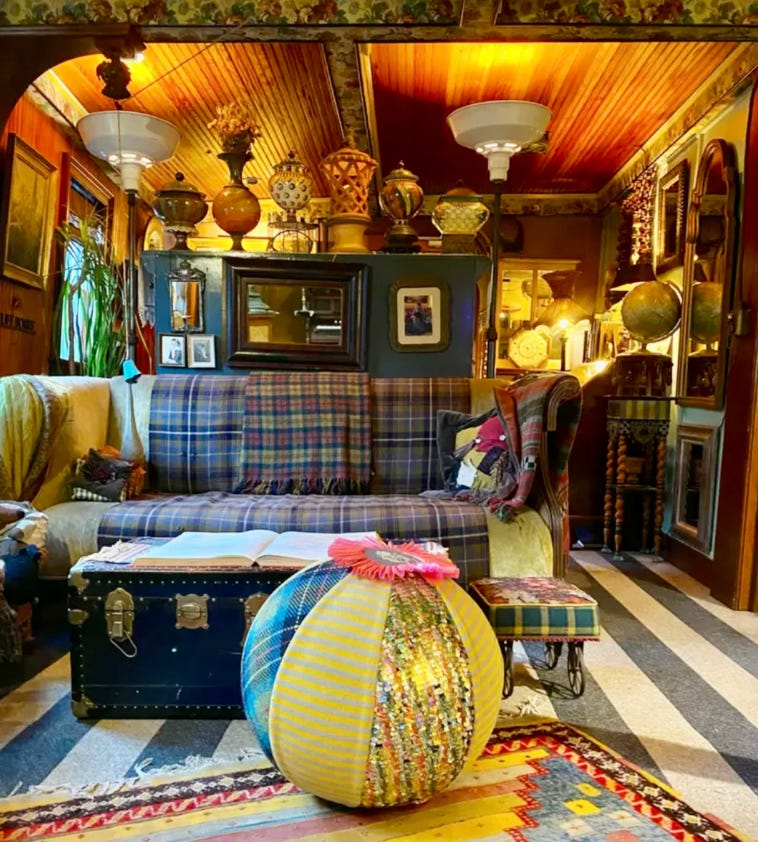
The ship’s living room is cozy and punctuated by colorful rugs, throws, light fixtures, and a sumptuous take on an ordinary beach ball. (Photo: Victoria and Richard Emprise)
After months of disappointment and “lady, are you crazy?” insults, Victoria spotted the old ferry. It was docked in Tribeca, off N. Moore Street, and although the owner had done what he could to restore it, it was pretty shabby. As Victoria negotiated with him, she realized he was pretty desperate to find a buyer and kept lowering his price. They finally came to a deal and the MacKenzie-Childses moved in.
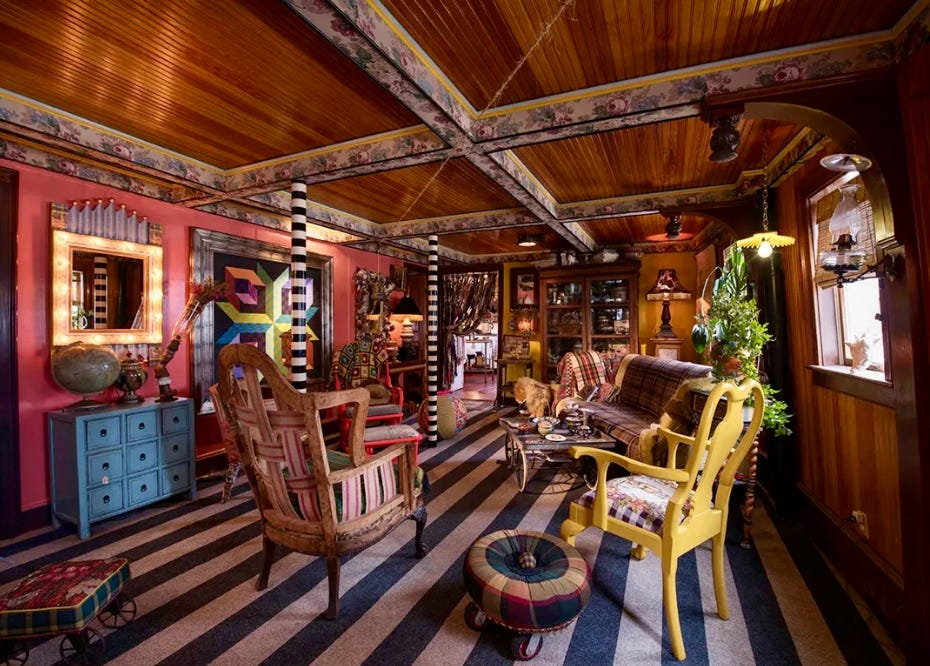
Despite the gigantic loss of their business, the couple forged ahead and produced new creations on a smaller scale. Mismatched, mishmash, Victoria’s innate sense of design captures what the inside of our imagination might look like. (Photo: Victoria and Richard Emprise)
The ferry was originally a semi-luxurious transport for the wealthy summer crowd headed to Maine’s Casco Bay islands. Fine woodwork remains throughout on the floors, the ceilings, and even the benches lining the decks. The gig didn’t last long. When World War I began, she operated as a patroller in the Boston Harbor before wending her way down to New York to transport newly arrived immigrants between Ellis Island and New York. Its humble, humanitarian purpose was a fitting canvas for the couple, who never cared about wealth, status, or conventionality.
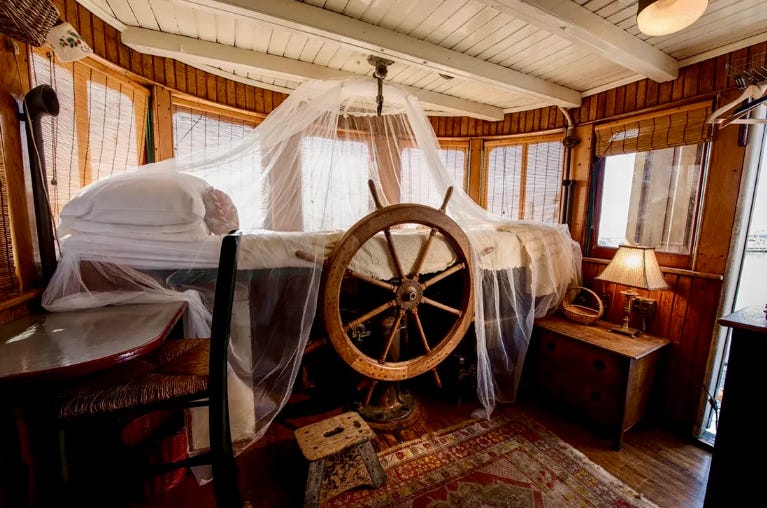
Tucked into one end of the boat (I’m guessing the bow — the wheel was my clue) is the sleeping area. It’s simple and beautifully appointed with a raised bed, netting, and a handful of smaller antiques. (Photo: Victoria and Richard Emprise)
Over the next 23 years, the boat was their home, painted and repainted and maintained as best they could. Inside is a tapestry of color, pattern, and patina that tells anyone without a doubt who lives in the cavernous quarters.
The MacKenzie-Childses were the subject of a documentary by Joshua Charow, who filmed the devoted older couple in their unusual home during the summer of 2025. Seven months later, Victoria died. The family listed the boat for sale at $1.25 million.
In the film, Victoria talks about her dislike of being called (or calling herself) an artist. Instead, she is drawn to the word artless. “It’s the most beautiful word in the world,” she says, struggling to make her meaning clear. “It means natural, and unsophisticated, having a natural grace.”
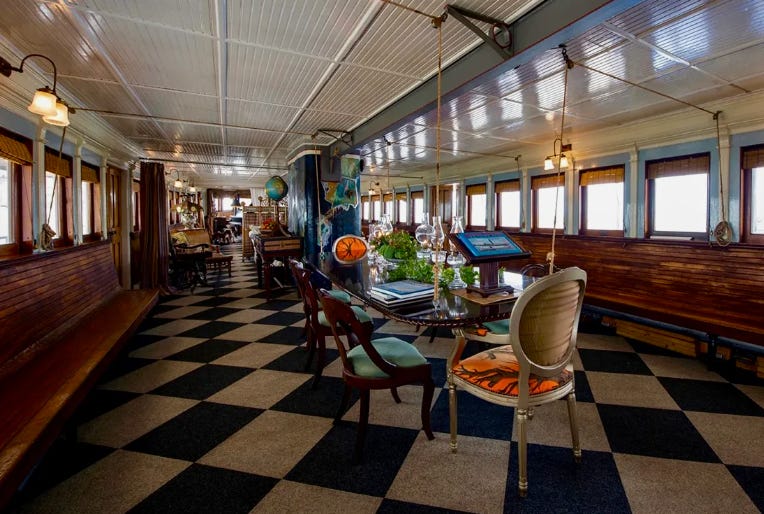
The formal dining table is legless. It is held aloft with ropes and pulleys, giving the sense of floating. The checkered floor is a nod to the famous MacKenzie-Childs courtly check pattern that put the original brand into décor history books. (Photo: Victoria and Richard Emprise)
My own remembrance of the Yankee Ferry
In the early 2000s I was working at Romantic Homes magazine and we did a feature on Victoria and Richard in their new funky home. I flew to New York and got to see the space in person, which was really something. There was nothing to do for styling, except maybe move things around a little bit and clear away some odds and ends. I remember the floating table and the intimate living room. I remember feeling amazed that they had the courage to start over without seeming too concerned about what the future would bring.
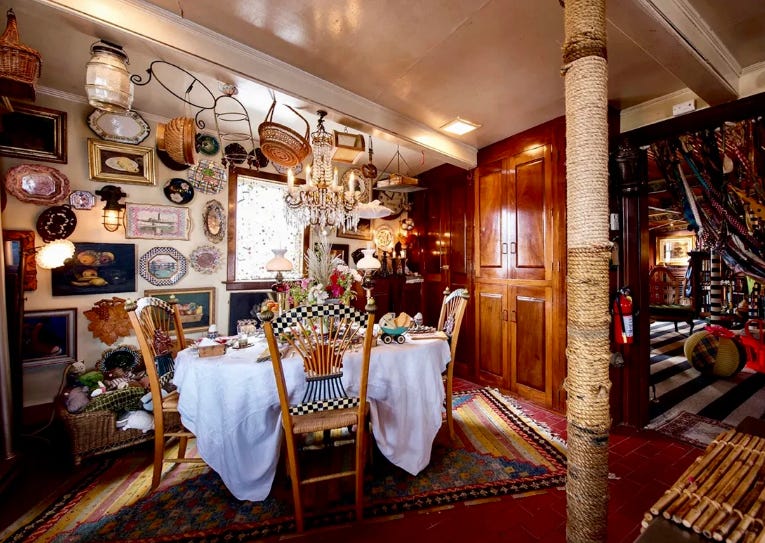
Around every corner is a vignette filled with curiosities that delight and welcome the visitor. (Photo: Victoria and Richard Emprise)
Creative people like Victoria and Richard often choose odd, challenging ways to live and to express themselves. They boldly restored an ancient, dilapidated boat that had already lived a dozen lives. The Yankee Ferry was cast off and waiting for its next owner—it had to be someone special. And it was.
The old, work-worn ferry was a muse and a sanctuary for two artless people. Let it be a model for what our own homes mean to us.
Their story is inspiring! Their home is truly unique.