

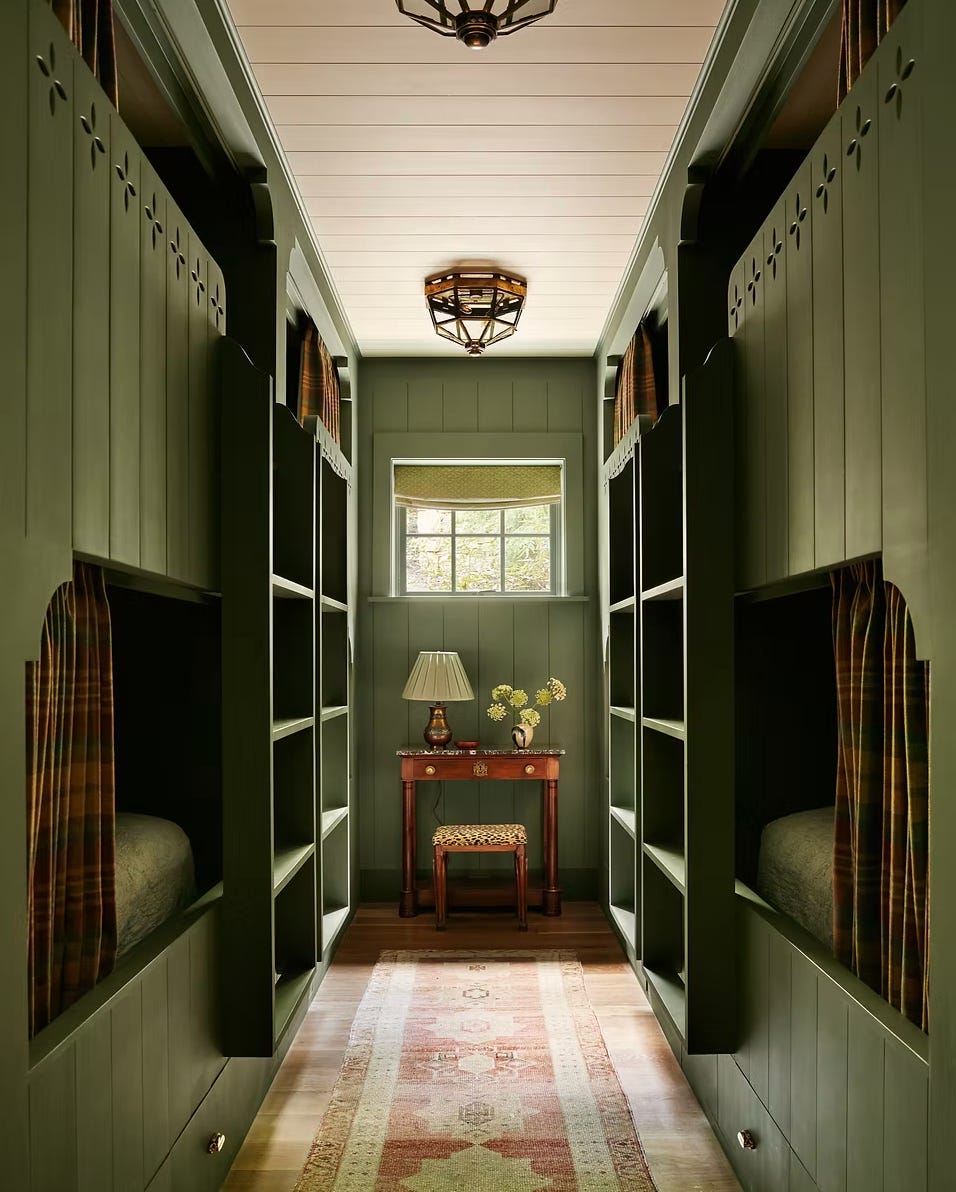
The Blackberry Bunkhouse is an ADU with nearly all of its 525 square feet of space dedicated to bunking. (Photography: Ethan Harrington for Norris Studio)
Sooner or later all of us struggle with the problem of overnight guests. Not that we don’t welcome them but we have nowhere to put them.
Enter the bunkhouse.
In the “why didn’t I ever think of that?” department, a bunkhouse is not that far off from a she shed, with one significant difference.
Instead of sleeping one or two, it sleeps six to eight. A mini dormitory, but much homier.
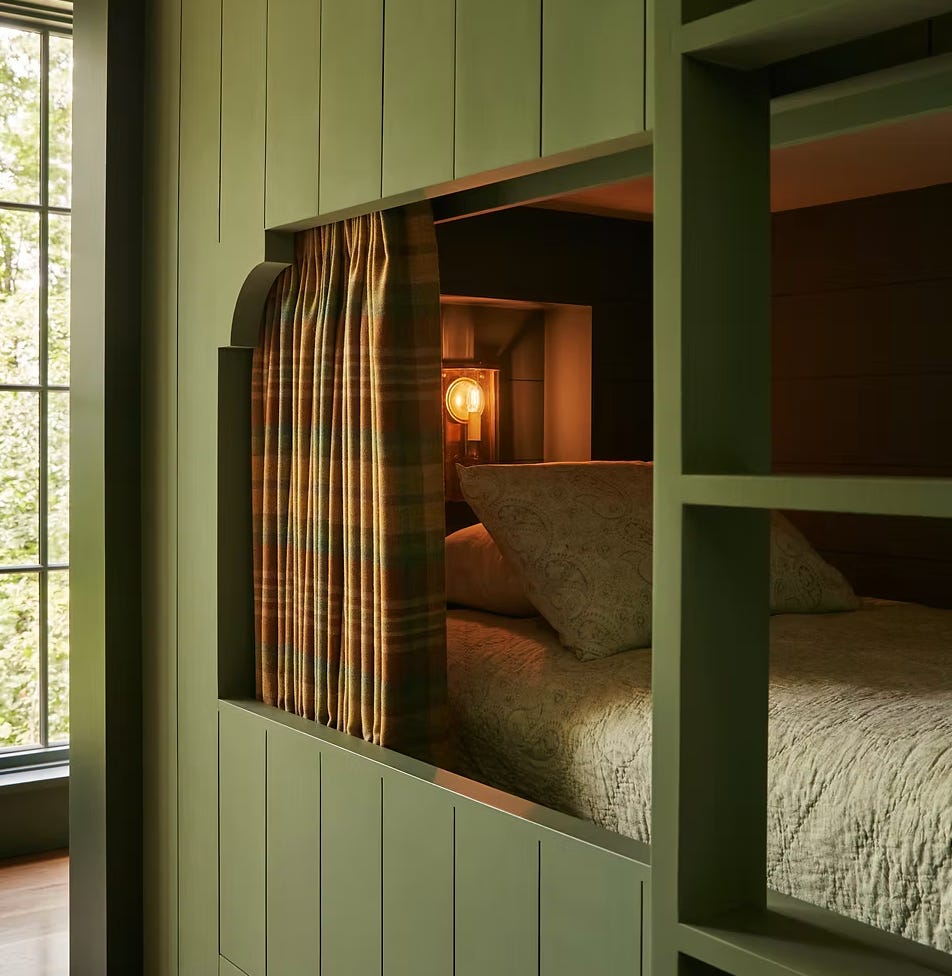
Architect Scott Harrop of Norris Studio stacked two bunkbeds on top of each other, two sets on each side, for a total of eight bunks. (Photo: Norris Studio)
You might say, “wouldn’t it be more useful as a fully articulated ADU, with a kitchen and living area?” The answer is an equivocal “depends.” It depends on your family configuration. Do you have one small family, or a couple, that visits most frequently? Will your mom or another senior relative need a place to live soon? Are you interested in creating rental income? Then a conventional ADU would be a better option.
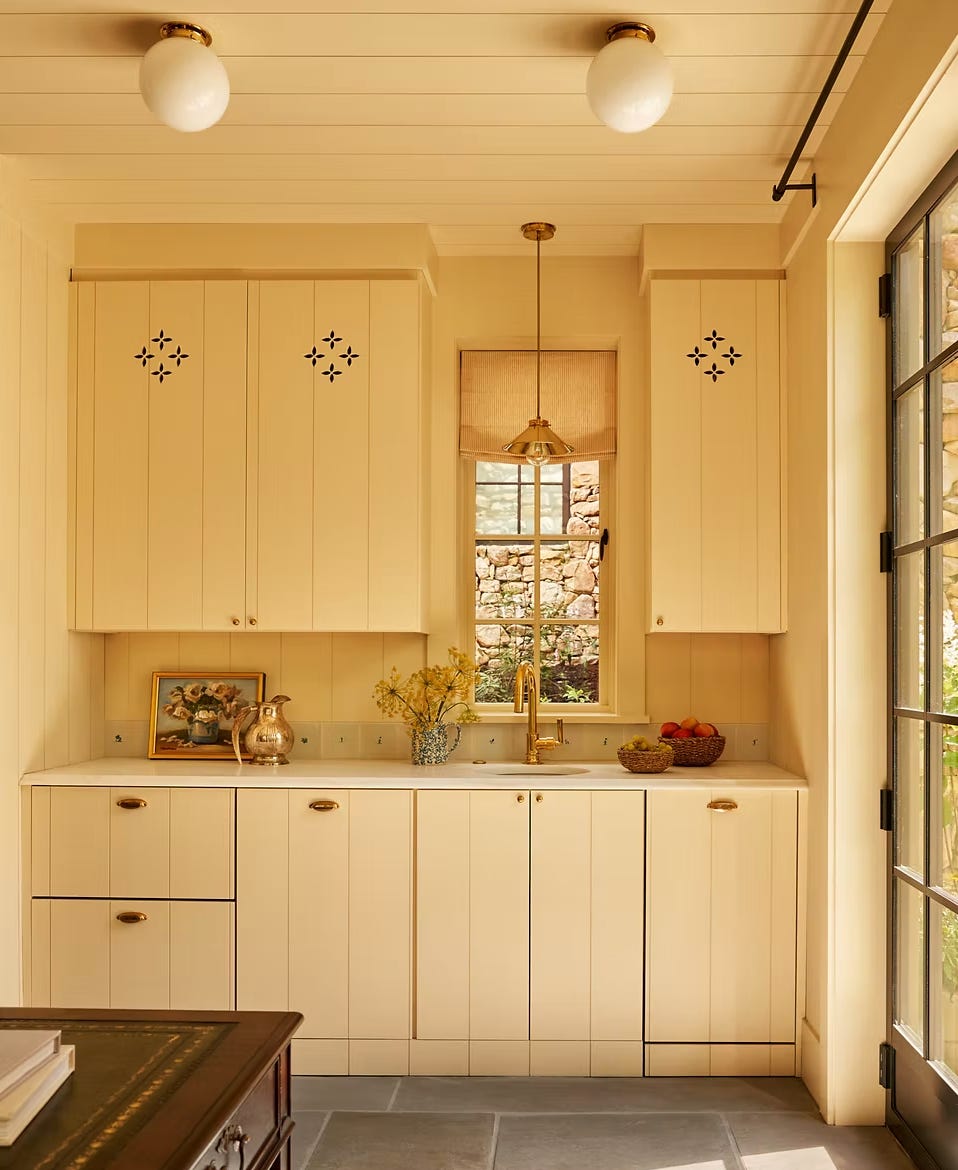
There’s probably a microwave or toaster oven in one of those drawers so this cottage-y wet bar serves well for midnight snacks. Paint used here is Matchstick by Farrow & Ball. (Photo: Norris Studio)
But if your life situation involves a gaggle of humans under 20 who you want to keep close by, then the bunkhouse could be a brilliant move. In this family’s case, the frequent visitors are friends or cousins of their three young sons. Instead of sleeping bags strewn all over the living room floor, they now have a clubhouse that is connected to the house by an outside stone pathway.
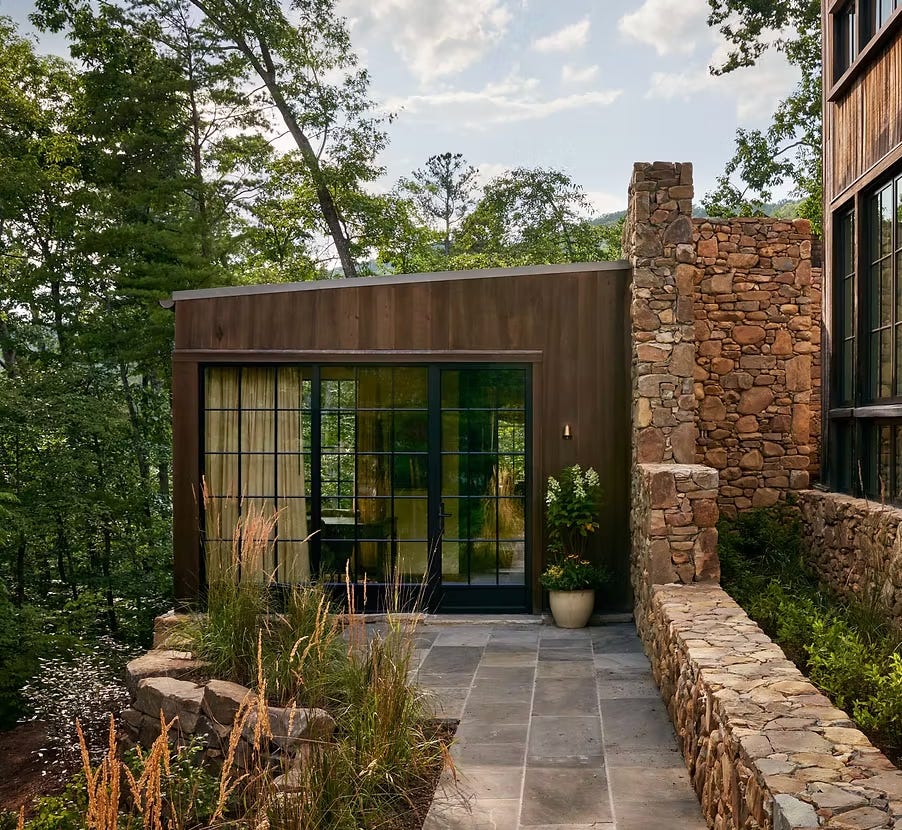
The bunkhouse is built on an outcrop of the back patio; part of the house but separate, too. At night when dinner and a family movie are over, the lucky bunkhousers each take a lantern and make their way to the sleeping chamber. (Photo: Norris Studio)
Each bed is extra long (probably Twin XL) so that the bunkhouse grows along with the kids. Designer Stephanie Feuer went for an English countryside effect with divided-lite large windows, lavish floor-length drapery panels, and plaid desk chairs. For the bunkbeds, pinch-pleat privacy curtains and a deep velvety green Farrow & Ball paint (Green Smoke) make the sleeping area super cozy.
She also tried to avoid any recessed lighting, a bold move in our downlight-obsessed era. Each bunkbed has a very Old World reading sconce from UK lighting designer Jamb.
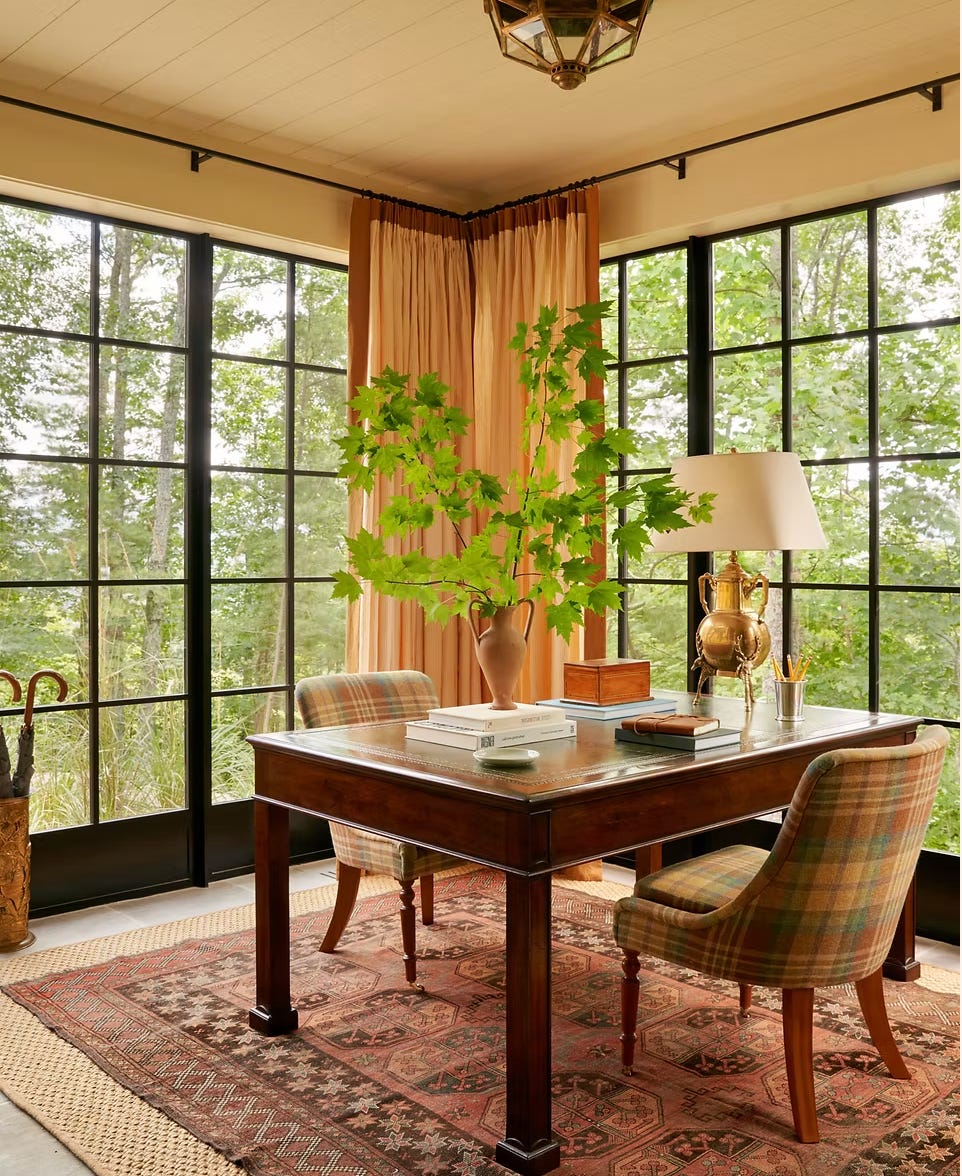
A partner desk allows plenty of space for two WFH guests. Designer Stephanie Feuer created layers of pattern in the textiles, softening the stone floor and expansive windows. (Photo: Norris Studio)
Although the bunkbeds take up a majority of the space, the bunkhouse still has room for a home office, a small snack kitchen, and a not-so-small bathroom with walk-in shower and double vanity.
With the many features and benefits of having a bunkhouse that turns your small home into a virtual B&B, this one is the best:
A bunkhouse is designed for sleeping, not isolation. Kids and guests will naturally rise from a good night’s sleep and follow the scent of cocoa, biscuits, and scrambled eggs back into the main house. Everyone will gather together again, as life is supposed to be lived.
This bunkhouse space is extremely nordic in design and concept. And charmingly so in the aesthetic as well. In Sweden we have 'stugar' (summer cottages) with spaces like these that are gorgeous, efficient, and comfortable - and especially cozy too. I love this concept for the functionality and ease in hositing visitors without having to have large unused extra rooms that are rarely used and require significantly more square footage. Thank you for sharing your post and ideas.
I loved this piece and it got me thinking about novel solutions to family visits. Very creative ideas and love the photos.