

There are a lot of references to the “kitchen table” in our culture. Businesses are launched at the kitchen table. People worry about “kitchen table issues,” such as the cost of fuel and clothing. The kitchen table represents the heart of domestic living even more so than the dining room table—it’s small, intimate, and closer to the life-giving source of food and drink.
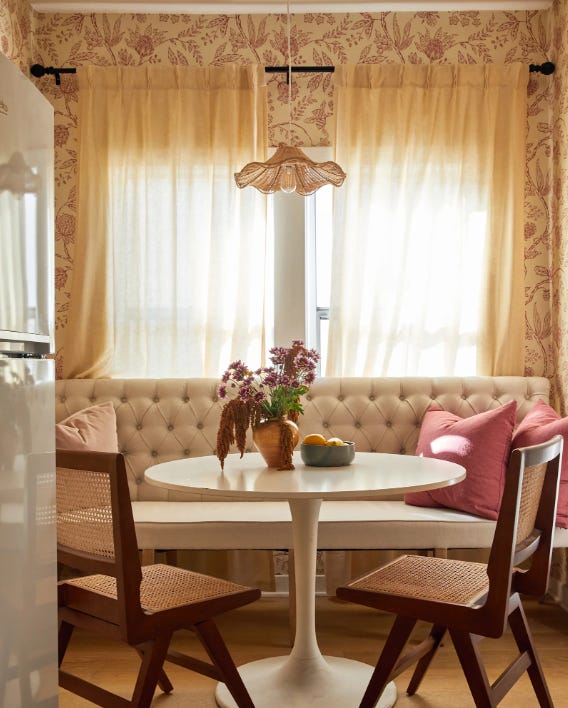
A generous tufted bench turns this small breakfast nook into a place where lively dinner parties of up to six people can sit. (Photo: Leela Cyd for Apartment Therapy)
Eating meals in a dedicated dining room was once commonplace, but not anymore. In a recent survey, home builders state that only 20% of their new house designs include a formal dining room. An architectural firm also notes that the majority of its remodel work is removing formal dining rooms to make larger open living space.
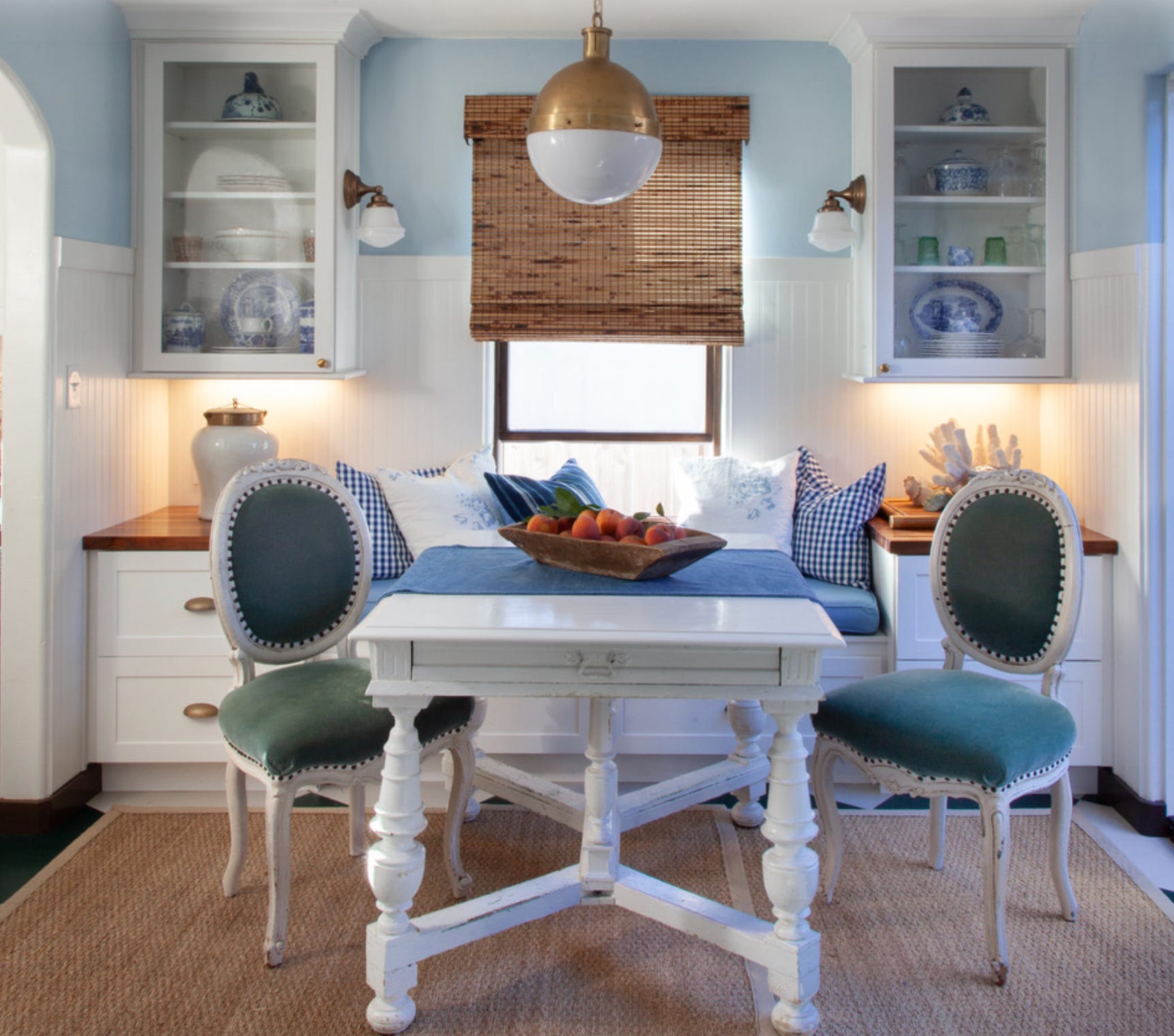
A miniature dining room is fashioned from an anteroom, with one wall designed as a combination cabinet and seating area. (Photo: Beth Boyne | Styled by Sunday Hendrickson)
The reasons include cost and consumer preference. You can build a 3-bedroom home with a kitchen eating nook for the same price as a 2-bedroom home with a formal dining room. Since dining rooms are one of the least-used rooms in the house, it’s difficult to justify in a small house.
The best place to gather for a meal may not be the room that was built purposefully for it.
Today’s dinner hour is more casual than in decades past. Work, sports, and recreational schedules get in the way of everyone trooping into the dining room every night. So even if you have a formal dining room, chances are you’re still mostly hanging around in the kitchen to eat.
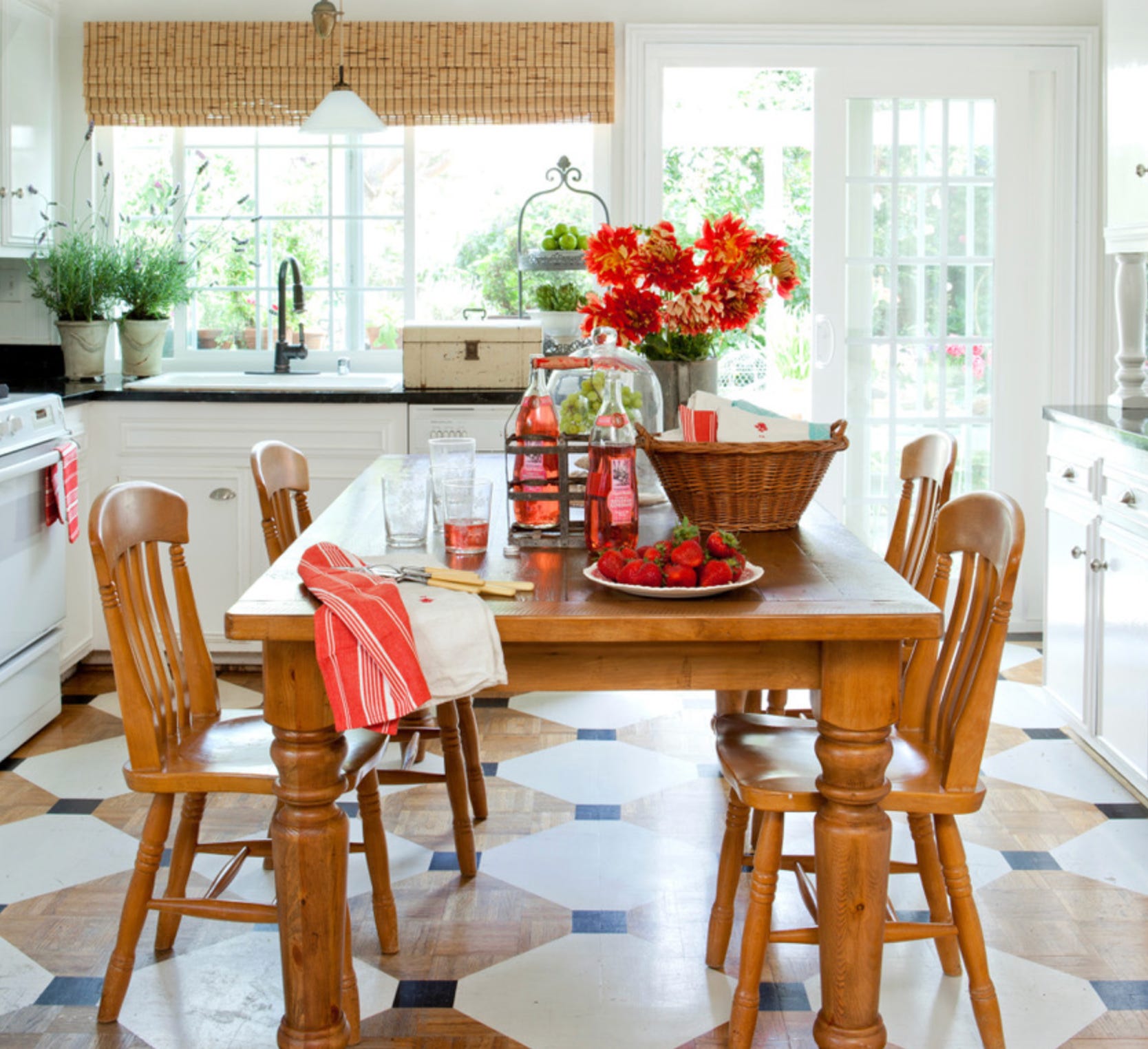
Instead of a traditional island, this kitchen’s central focus is a large farmhouse table for family gatherings. (Photo: Mark Lohman | Styled by Sunday Hendrickson)
A Cozier Corner
I’m not going to spend time lamenting the demise of formal family dinners or the casualification of just about everything we do. The goal of this piece is to show some attractive and functional alternatives. A well-designed eating area can exist in and around the kitchen and still nuture the elemental value of breaking bread together.
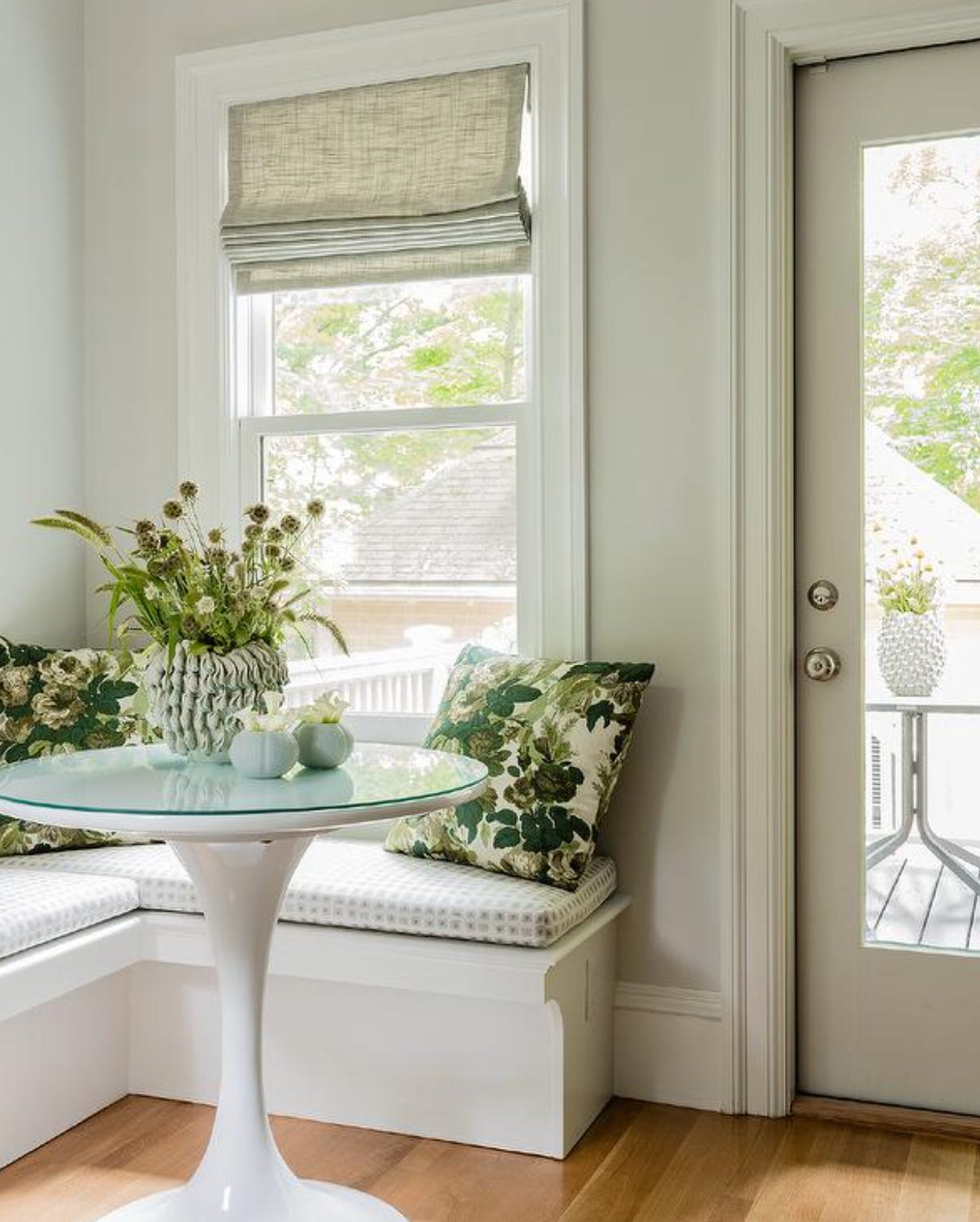
A corner banquette and small round table fits three for a meal, with room for more on the deck just out the back door. (Photo: Helen Bergen Interiors | DecorPad)
Gathering spaces rise and fall over time, but they are always imbued with meaning and memories.
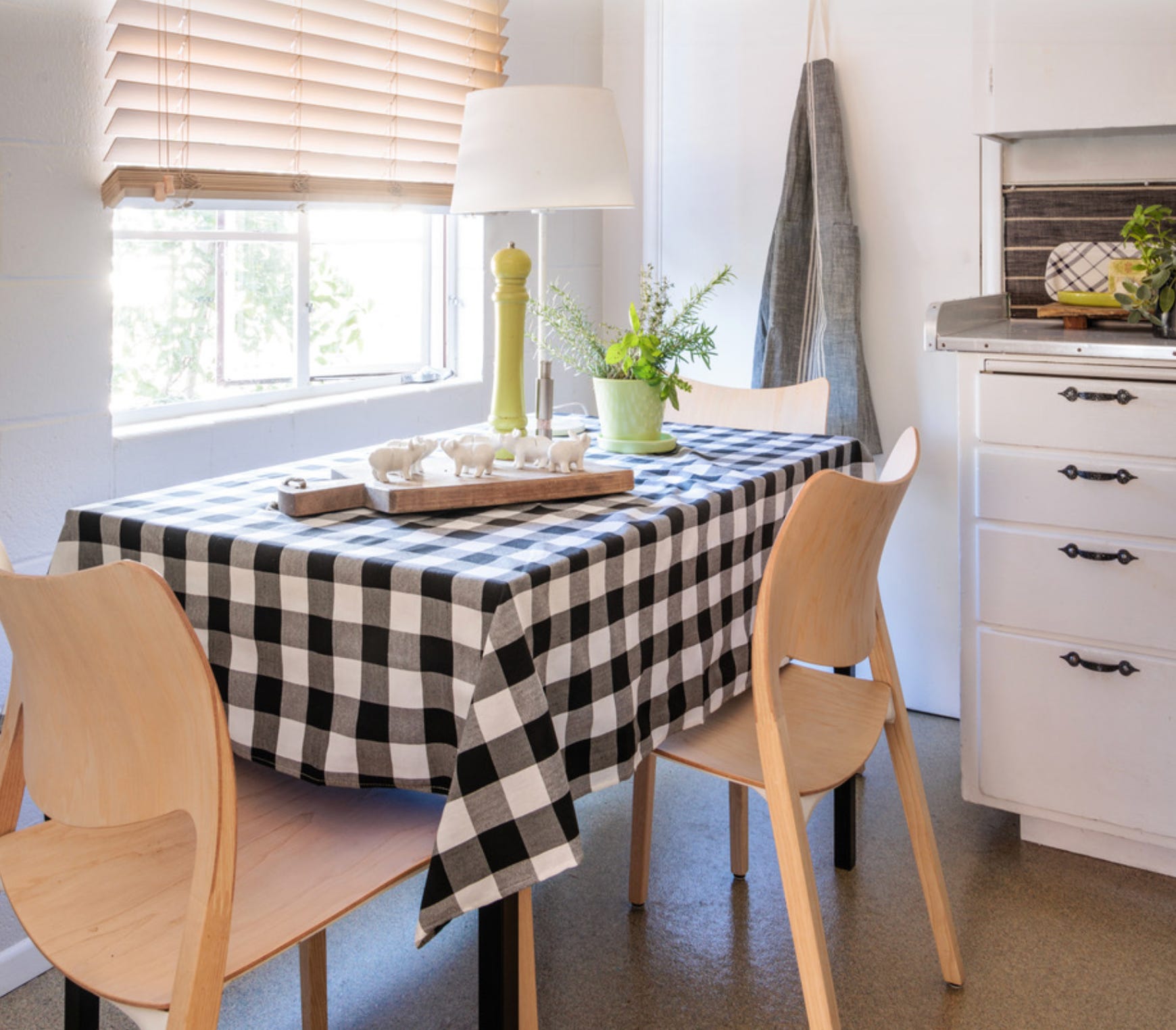
Look for a narrow table and armless chairs to create an eating nook even in the smallest of spaces. This wall area within the kitchen is only about 3 1/2 feet deep. (Photo: Mark Lohman | Styled by Sunday Hendrickson)
Think like a restaurant
A romantic table for two, reminiscent of a favorite restaurant, is possible (and fun!) to recreate in several areas of your house. It might be temporary—for winter, in front of the fireplace or come summertime, in a vine-covered corner of the garden—or permanent. Designing ad hoc seating allows for novelty and the chance to see your rooms in ways you haven’t before.
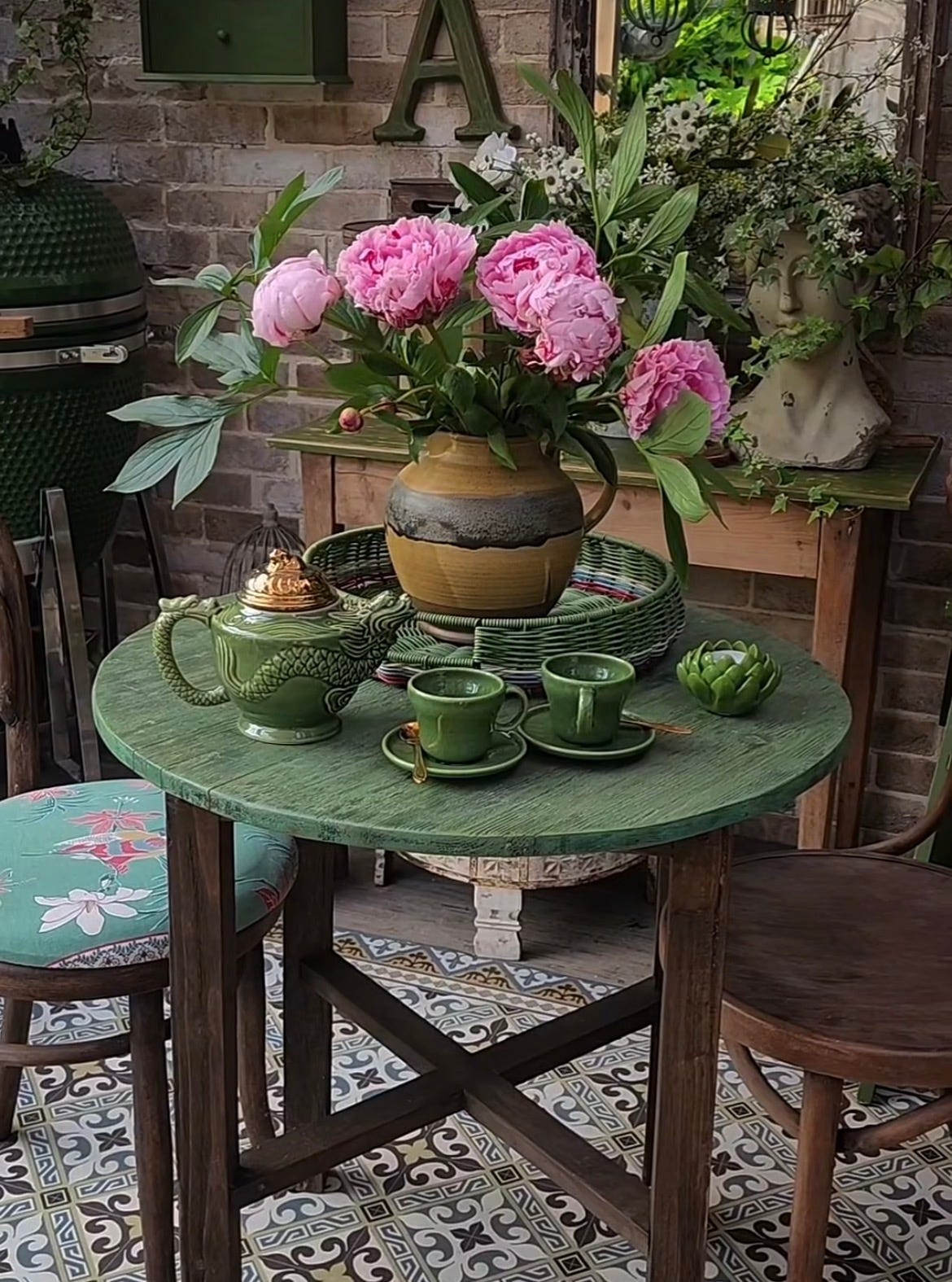
Be imaginative with your eating nooks. (Photo: Yvonne Purcell @sixat21)
The best place to gather for a meal may not be the room that was built purposefully for it. Experiment with table and chair placement, take advantage of windows and views, and consider underutilized floor space in your home to create a whole new experience when it comes to meaningful eating.
My favorite is the banquette. Booth seating is a cozy corner for me, add roman shades even better. Oh so cozy.
Another great decorating suggestion. I love the way you find new uses for small spaces. Always inspiring!