

Last weekend, as I waited for my friend outside the front entrance of the Rose Bowl Flea Market, I spotted something pretty incredible.
There, wrapped up in holiday trim, was the coolest, cutest little … um, camper? I’ve ever seen. I peeked inside and within the 10-foot span of what Happier Camper calls their HC1 Studio, I saw an impressive array of beds, benches, bathroom, and even a stove/refrigerator unit arranged neatly. Headroom is a little over 6’ 1”. It was attracting a pretty big crowd too, who like me were fantasizing about “oh, the places we’ll go!” with this compact trailer.
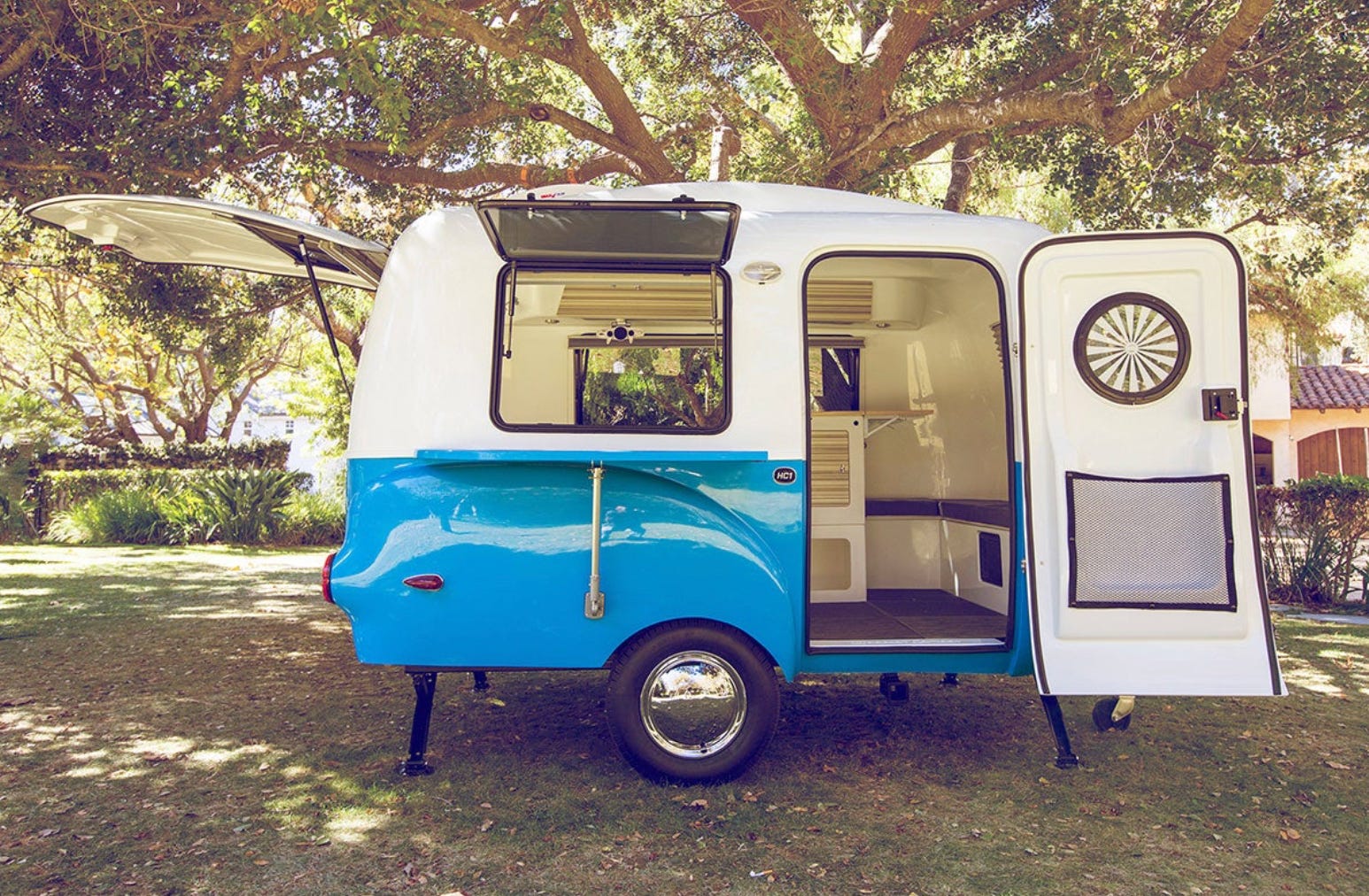
The campers take inspiration from the retro-groovy look of the VW bus. (Photo: Happier Camper)
To put things into perspective, RV trailers that are considered average or even small range from 16 to 25 feet. The Happier Camper HC1 (Traveler version) is 10 feet long (not including the tongue) and about 6 1/2 feet wide on the inside. This means you have about 60 square feet, 42 of which is considered living space. It puts the tiny in tiny living. But the modular, and modern, design of each camper maximizes every single inch of space in a brand new way.
You can move the furniture around
What’s different about this brand is that it offers these Adaptiv building blocks so that you can configure and reconfigure your interior just like playing Lego. The floor is divided into a grid of 20” x 20” squares. Then you place your furniture and components to fit in the squares. Everything is movable and removable.
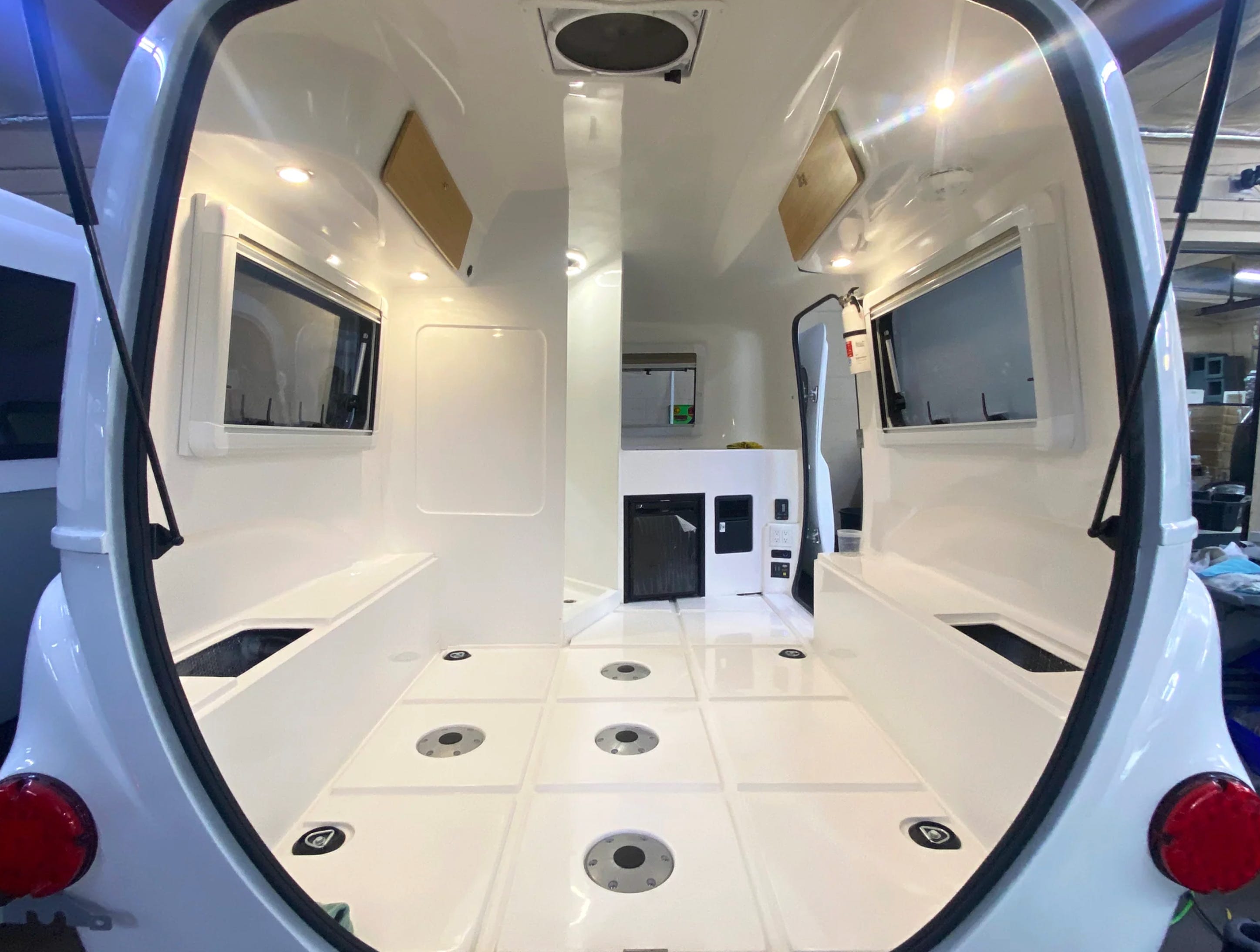
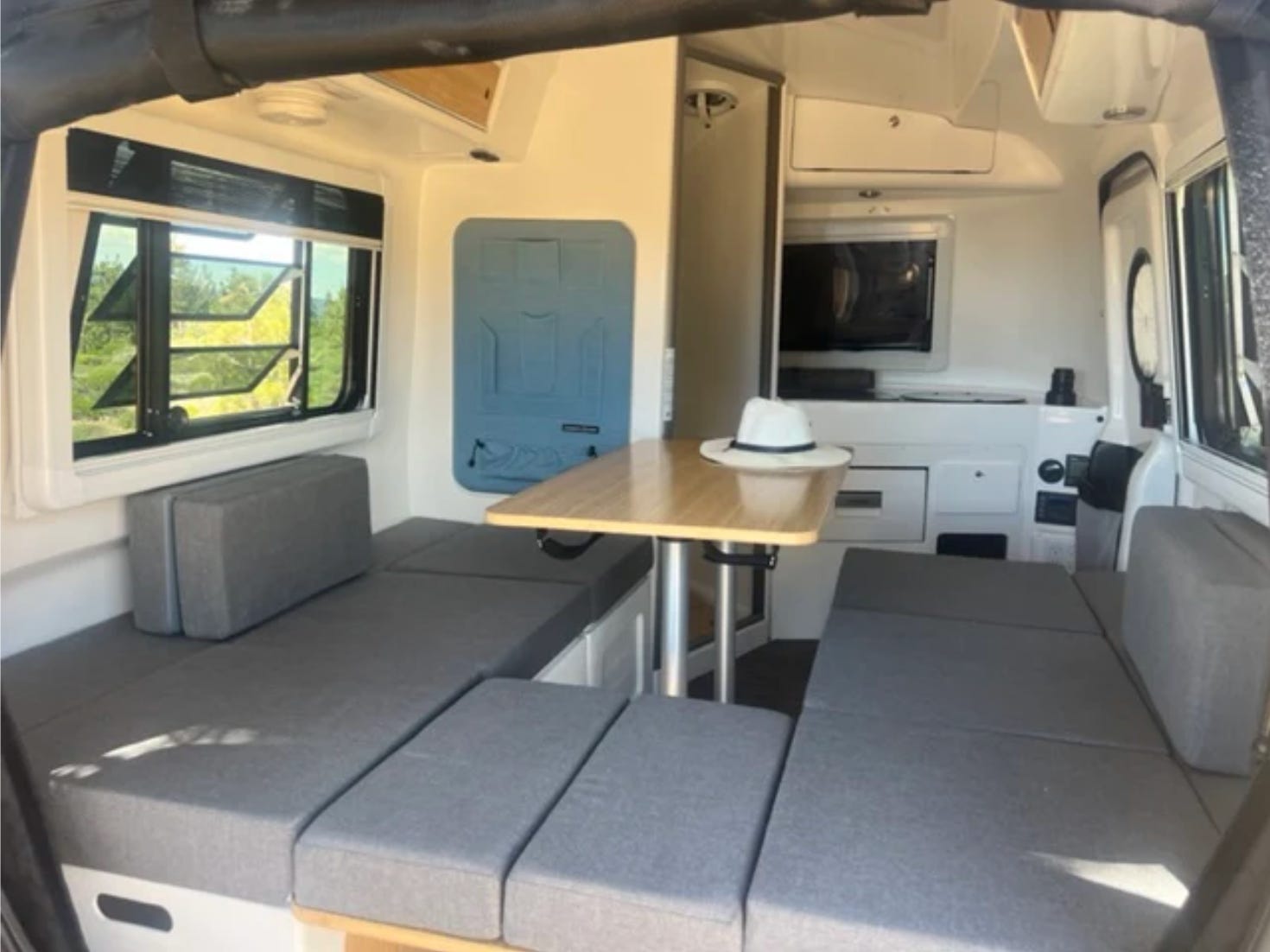
The interior can be fully outfitted for camping or remain empty for transporting bicycles, equipment, etc. (Photos: Happier Camper)
Essentials and Extras
The base building blocks are simply sturdy boxes, which serve as storage. To create seating, you place fitted cushions on top. Bed-sized cushions fit over multiple blocks. The HC1 Studio fits a queen-size bed that would extend across the entire width of the space. The camper I saw at the Rose Bowl had two twin mattresses with a walk space in between. Honestly they seemed a little narrower and shorter than a standard twin. But … it’s camping.
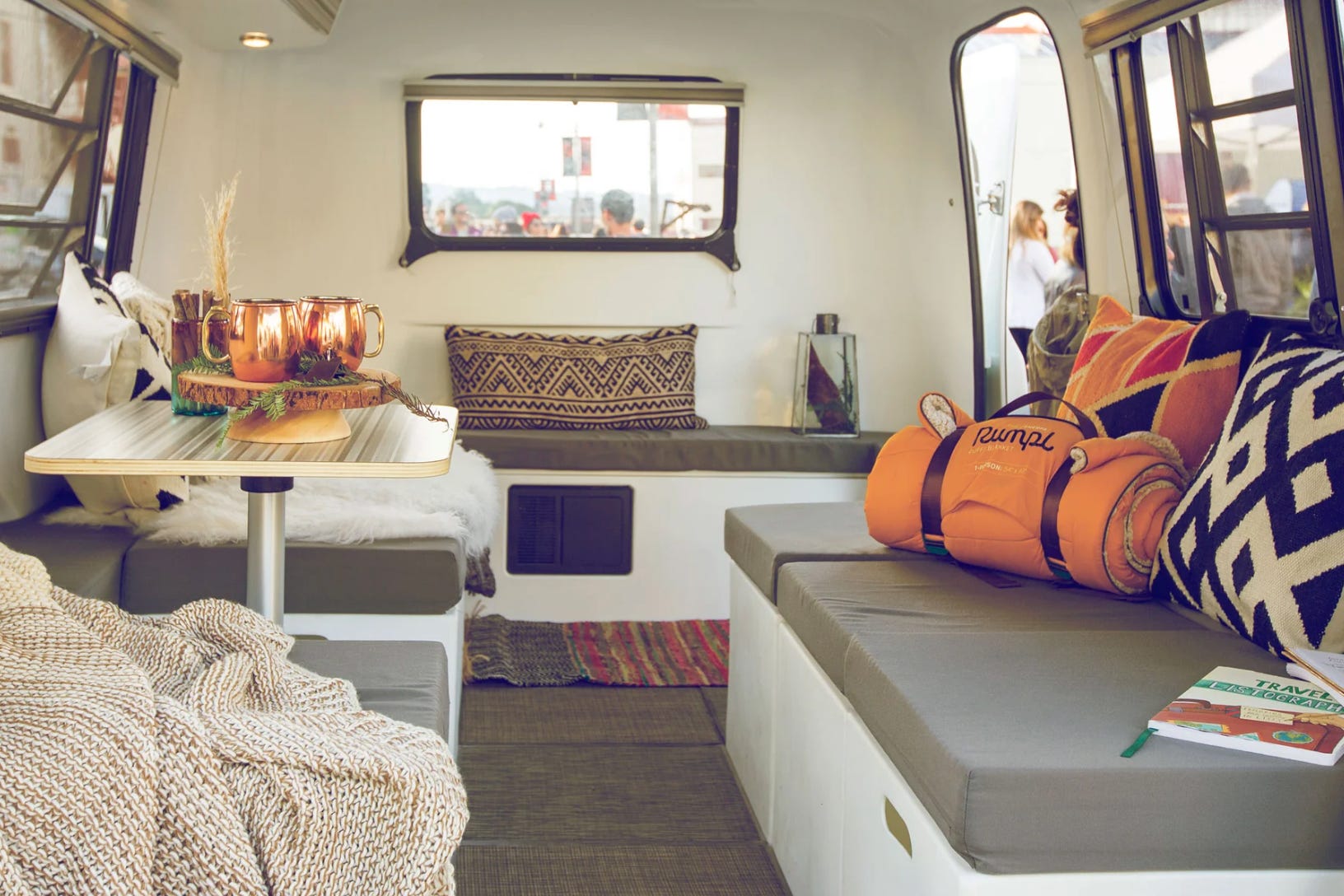
The interior’s components are easily removable, washable, and reconfigured. The campers are made with double fiberglass shells without seams, so no issues with leaks. (Photo: Happier Camper)
The table has a pole that fits into the leg-mount of a grid square. The kitchen is built in, featuring a two-burner range and a small refrigerator drawer. Next to it is a built-in toilet/shower area (other models come with a toilet as an option; you simply add it as an Adaptiv component). You have 17-gallon gray water and fresh water tanks and a forced-air heater that warms up the air and your water.
The modular, and modern, design of each camper maximizes every single inch of space in a brand new way
These are not your grandparents’ unwieldy gas-guzzling RVs. Happier Camper and other emerging camper brands are doing exciting things with size, modularity, and cleaner construction. (Photo: Happier Camper)
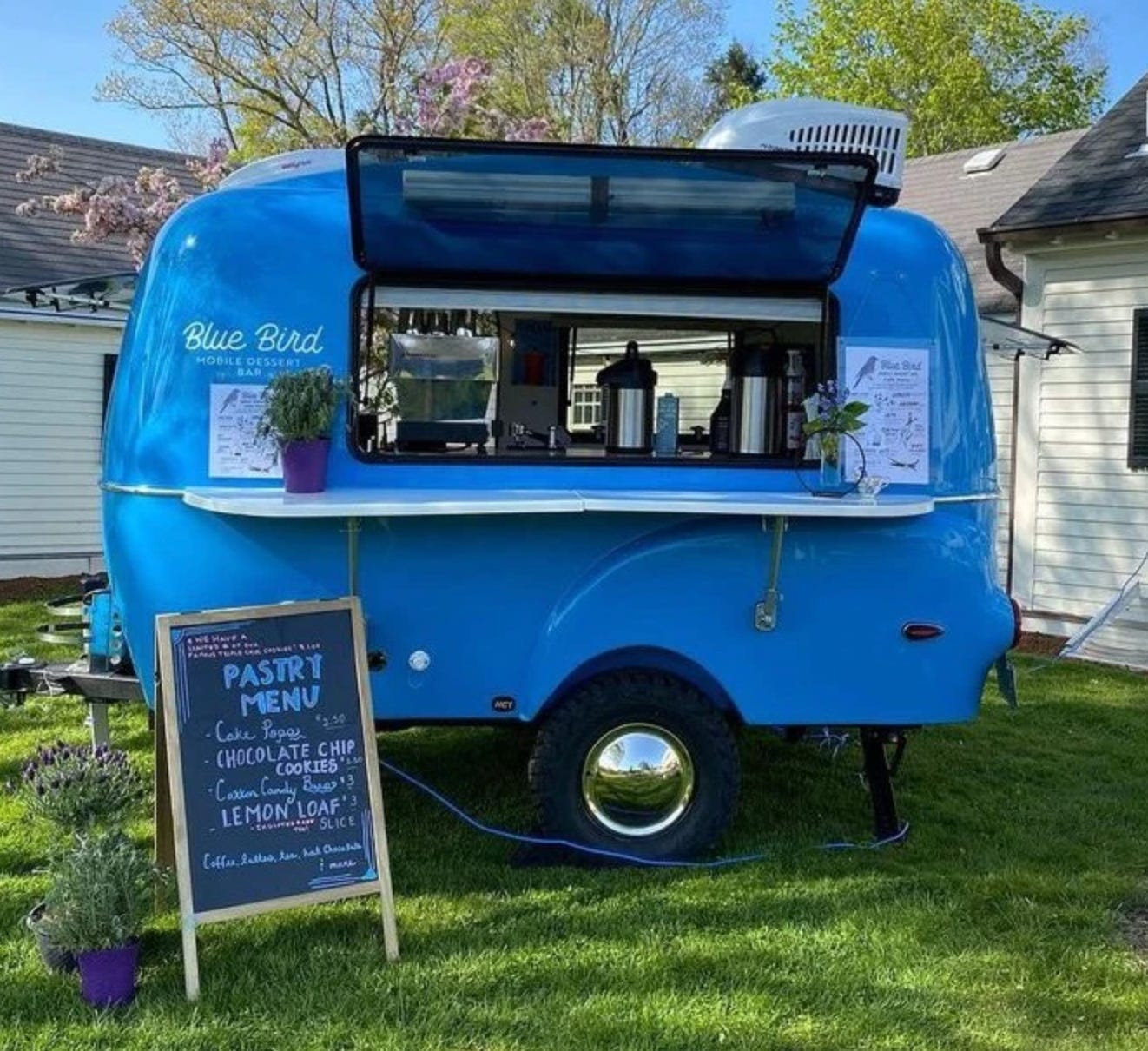
One of the most exciting ways to use these campers is for a mobile business. Have you ever wanted to open a little coffee kiosk or fresh flower business? The HC1 is towable by standard SUVs and trucks—most people recommend a vehicle that supports at least 3,500 pounds of towing weight. Even hybrid and electric vehicles are options (Tesla X, Audi E-Tron, Volvo C40, Ford F-150 Lightning, etc.).
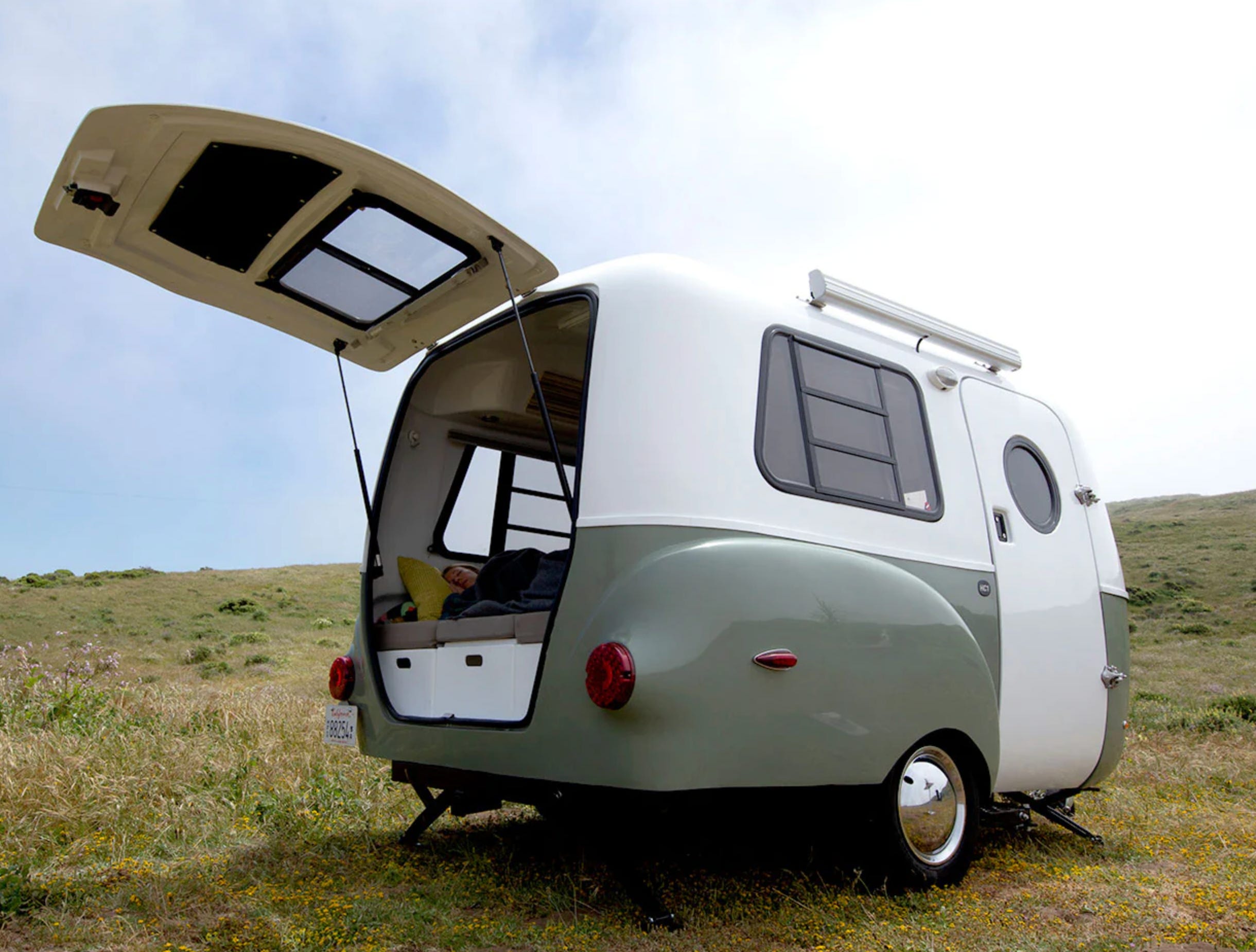
The large hatch opening in the back is really handy for getting stuff in and out (and serves as weather cover, too). Photo: Happier Camper
Made in LA
Happier Camper began in 2014 as a vintage camper restoration business, shortly before entrepreneur David Michael designed his first new camper. It is headquartered in Frogtown, a unique neighborhood in Los Angeles. Interesting to note that the $20 billion RV industry is dominated by US manufacturers, with Thor Industries being the largest (it owns Airstream, Jayco, Crosswinds, and many others).
What I like about this camper is how small and versatile it is. It is not the least expensive by any means (count on paying up to $40,000 for all of the extras you might want), but it is what I consider a lifestyle expander within reach. Just like the she sheds I’ve covered for years, it offers a chance for an “extra room” in your life that just so happens to be on wheels. You can take your vacation or your business anywhere you want.
And those were the sugarplum dreams floating through my head on a balmy December morning in Pasadena.

